
When a founder starts building a startup for real, it is about the idea, the product, the first users. Then slowly, another layer starts coming in. How long can we sustain this? How much room do we really have? Do we have enough runway to compete in the market?
That is when startup burn rate stops being a number on a sheet and starts influencing decisions.
Runway is not just a financial metric. It shapes how you hire, how you sell, how you prioritise, and how calmly you can operate when things do not go as planned.
The question is not just how to survive longer. It is how to extend the runway without slowing down the very growth you are trying to build.
Understanding Burn Rate and Runway
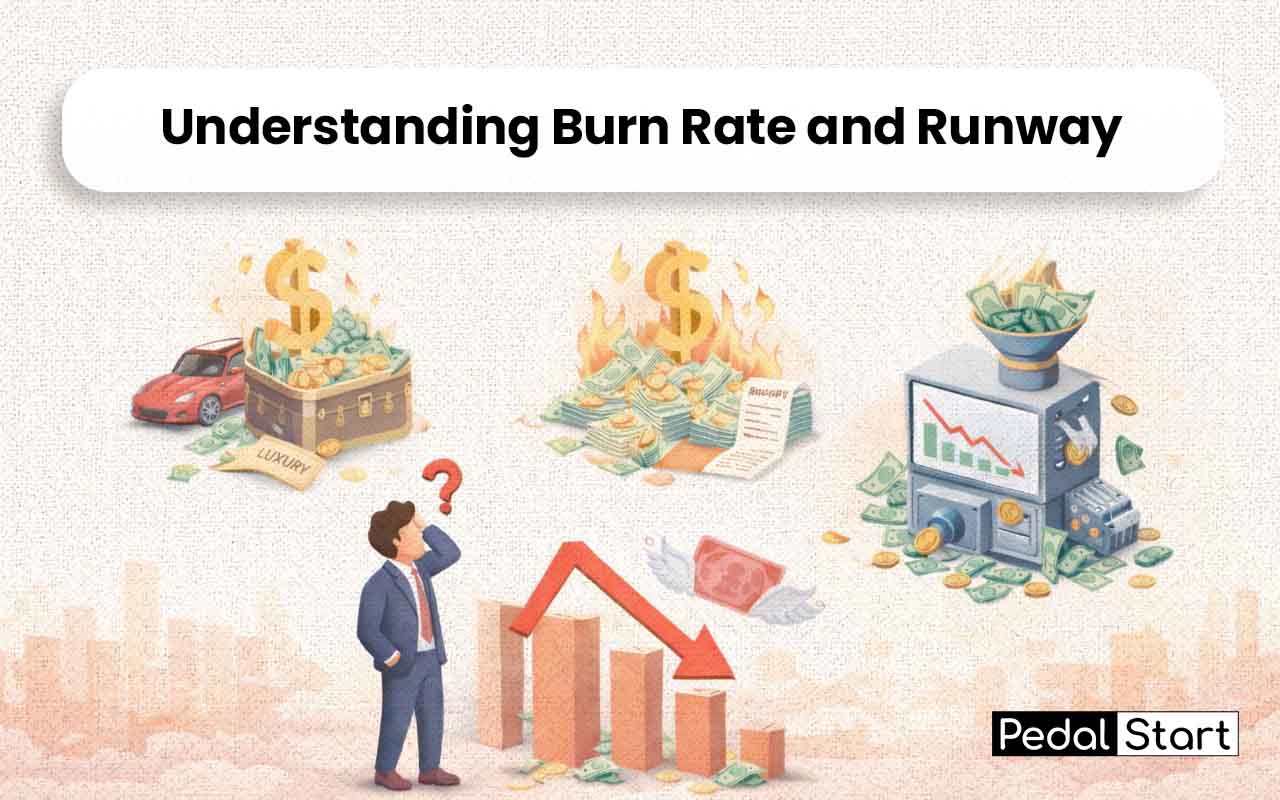
At a basic level, burn rate tells you how much capital is going out every month. Runway tells you how many months you have before that capital runs out.
But in practice, both numbers are more dynamic than they appear.
Burn is not fixed. It changes with hiring decisions, vendor costs, product investments, and revenue inflows. The runway is also not just a timeline. It is a reflection of how efficiently your business converts capital into progress.
This is where startup financial planning becomes more about decision-making.
Two startups with the same capital can have very different outcomes. One stretches every month into meaningful progress. The other moves fast but without direction and runs out of room before learning the process.
Understanding this difference early changes how you operate.
Common Spending Mistakes in Early Startups
Spending mistakes in the early phase rarely looks like mistakes when they happen. They often come disguised as growth decisions.
Hiring ahead of clarity is one of them. Building a team before the revenue engine is stable creates pressure quickly. Salaries become fixed obligations while the business is still figuring out consistency.
Another pattern is over-investing in product depth too early. Features get added based on assumptions rather than usage. Development cycles stretch, but user behaviour does not change proportionally.
Then there are operational expenses that feel small individually but compound over time. Tools, subscriptions, outsourced services, office costs. Each decision seems justified, but together they raise the baseline burn.
These are not reckless decisions. They are usually made with intent. The issue is timing only.
In early stage startup finance, when the business model is still forming, fixed costs reduce flexibility. And flexibility is what allows you to correct direction without heavy consequences.
Smart Cost Optimization Strategies

Cost optimization is often misunderstood as cost cutting but they are not the same.
Cutting costs reactively can slow down momentum. Optimising costs means aligning spending with outcomes that actually move the business forward.
The first step is visibility. You need to know where money is going, not just broadly, but at a level where each expense can be questioned.
Does this expense directly contribute to user acquisition, retention, or product improvement? If removed, what changes in the next thirty days
One practical approach to reduce startup costs is to keep fixed expenses low for as long as possible. This includes hiring, long-term contracts, and infrastructure commitments.
Instead of building full teams early, many founders work with contractors or specialists for defined outcomes. This keeps the cost structure flexible while still moving work forward.
Vendor negotiations also matter more than they appear. Payment terms, pricing flexibility, and bundled services can significantly change monthly burn without affecting output.
The goal is not to operate in scarcity. It is to ensure that every rupee spent has a clear role in progress.
Revenue Levers to Extend Runway

The other side of the equation is revenue.
Runway does not only extend by reducing burn. It extends when cash starts coming in consistently.
Early revenue is often underestimated because it may not look large. But even small inflows change how the business breathes.
The focus at this stage is not scale. It is movement.
Can you bring forward revenue through early pricing experiments?
Can you convert interest into paid pilots?
Can you structure offerings that generate cash even before the full product is built?
These decisions are part of understanding how to extend the runway without waiting for perfect product readiness.
In some cases, founders close smaller deals faster rather than chasing larger but slower opportunities. In others, they narrow their target segment to improve conversion.
Revenue at this stage is not just income. It is validation combined with financial support which reduces dependence on capital and increases control over timelines.
Building Financial Discipline Early

Financial discipline cannot be built when funds start running low. It is built when things feel comfortable.When capital is available, it is easy to justify spending. The pressure to optimise is low. But this is also when habits form.
Tracking burn monthly is not enough. You need to understand why it changed. What drove the increase or decrease. Which decisions had the biggest impact.
Founders who build this habit early tend to make better trade-offs later.
Startup financial planning at this stage is less about projections and more about awareness. Knowing your numbers without needing to look them up. Understanding how each decision reflects on your runway.
This is also where alignment within the team matters. Everyone does not need to know every detail, but key decisions should reflect a shared understanding of constraints.
Managing startup burn rate is not about playing safe. It is about staying in the game long enough for the right things to work.
There will always be uncertainty. Some decisions will not go as planned. Some bets will not pay off immediately.
But when burn is controlled and runway is protected, you give yourself the ability to respond, adjust, and continue building without panic.
That is the real advantage.