

ESOP (Employee Stock Option Plan) gives employees the right to own shares in a company at a pre-decided price, helping them participate in the company’s long-term value creation.
Understanding ESOP Meaning and Structure

Employee Stock Option Plan (ESOP) is a structured way for startups to offer ownership to employees without immediate cash payouts.
But in practice, ESOPs are not just compensation. They are alignment tools.
For founders, ESOPs help attract and retain talent when cash is limited. For employees, ESOPs represent potential upside tied to the company’s growth.
This is why most early-stage startups in India treat ESOPs as a core part of their hiring and retention strategy, not an add-on.
How ESOP Works in Indian Startups
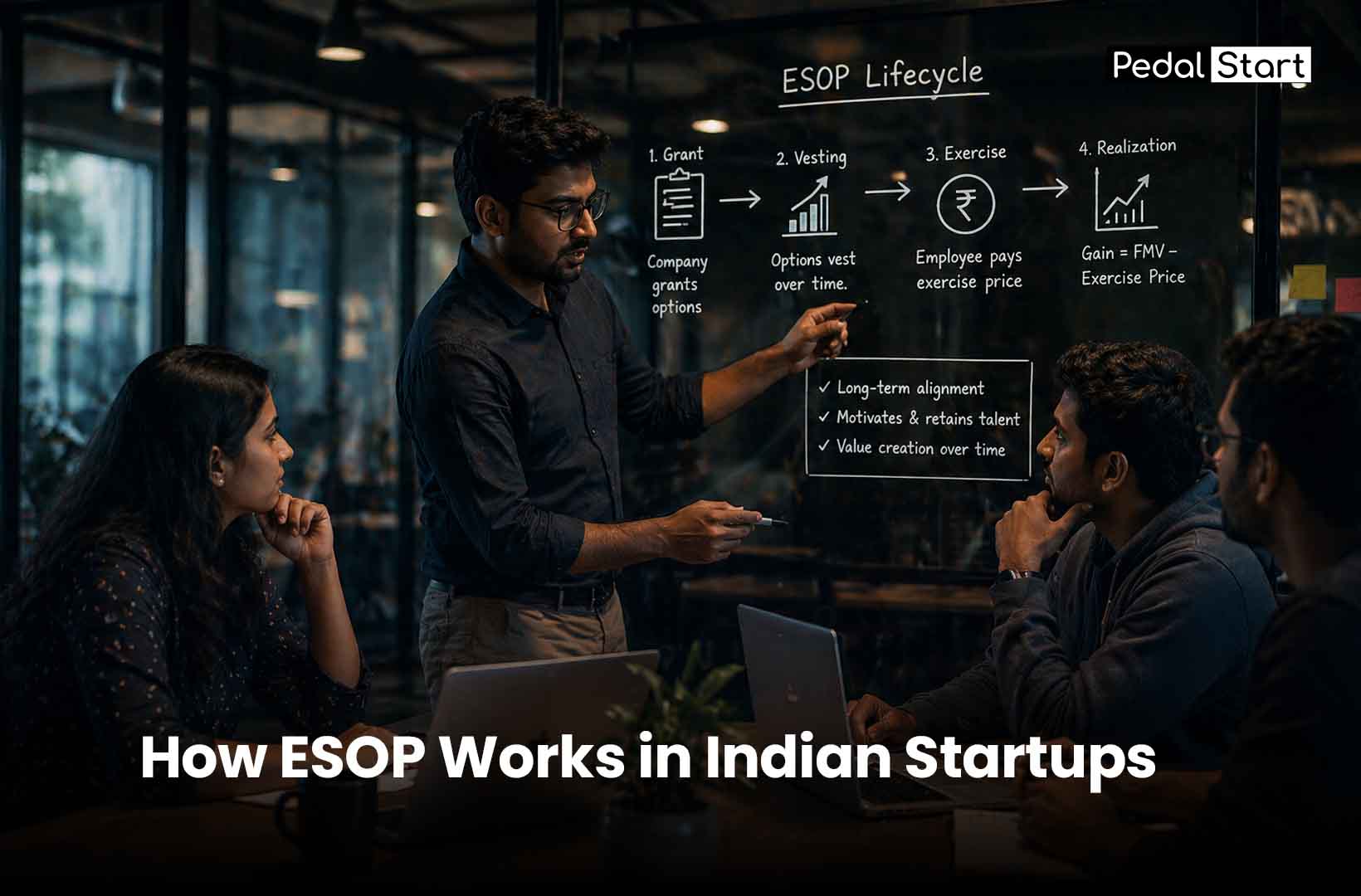
An esop scheme typically follows a simple lifecycle.
The company grants options to an employee. These options do not convert into shares immediately. They vest over time. Once vested, the employee can exercise them by paying a predefined price, known as the exercise price.
The difference between the exercise price and the company’s fair market value becomes the potential gain.
From a founder’s side, this creates long-term alignment without immediate dilution. From an employee’s side, it creates a reason to stay and contribute as the company grows.
However, the real value of ESOPs depends heavily on how the company performs over time.
ESOP Pool Sizing and When to Create It
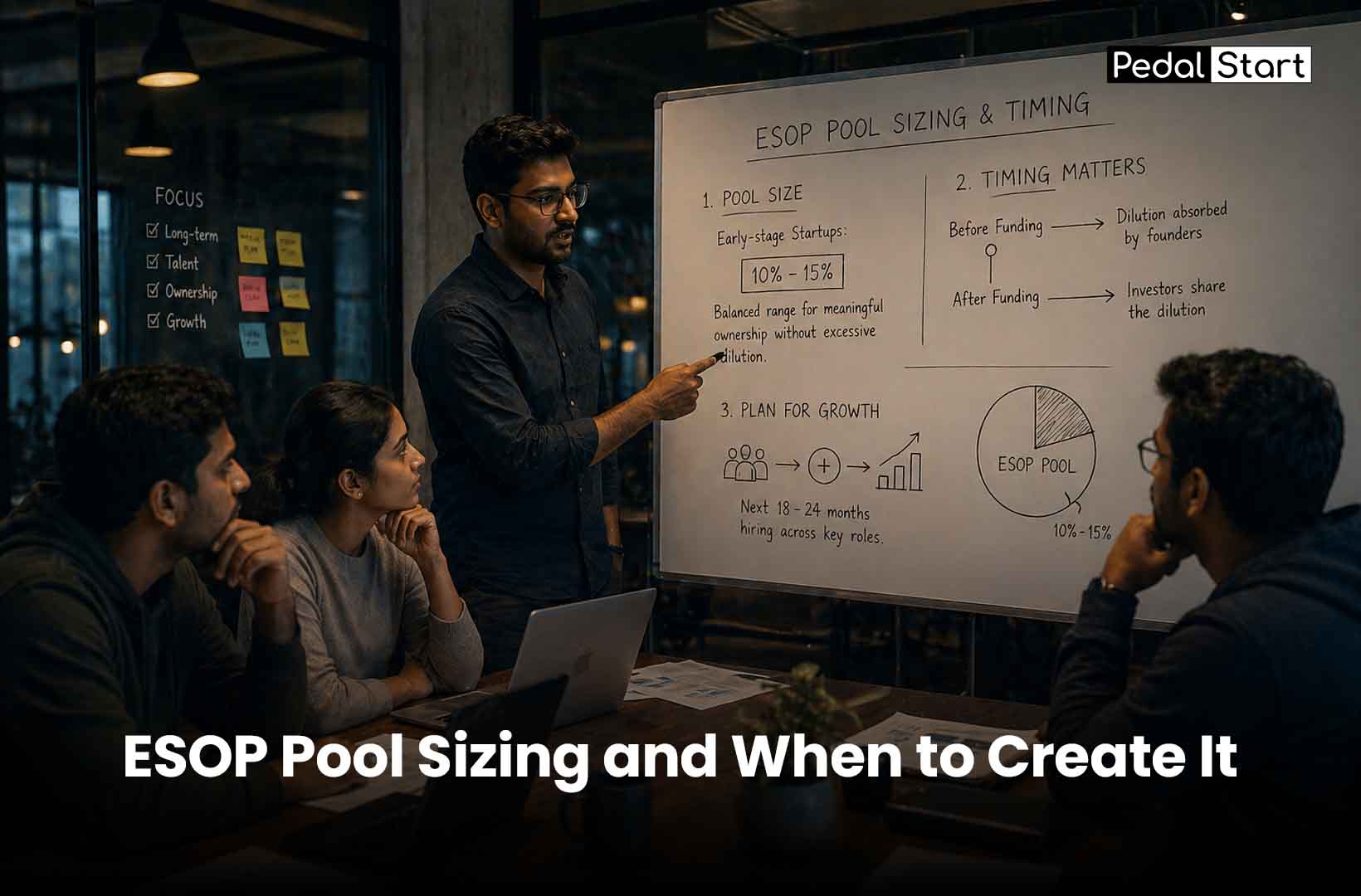
The esop pool is the total percentage of company equity reserved for employees.
In India, early-stage startups typically allocate between 10 to 15 percent. This is considered a balanced range that allows meaningful employee ownership without excessive dilution.
The timing of creating the ESOP pool matters just as much as the size.
If the pool is created before a funding round, the dilution impact is usually absorbed by founders. If it is created after, investors may share part of that dilution.
This is where many founders miscalculate. They focus on immediate dilution rather than long-term hiring needs.
A well-planned esop pool is not just about today’s team. It should account for the next 18 to 24 months of hiring across key roles.
Vesting Period in ESOP Explained
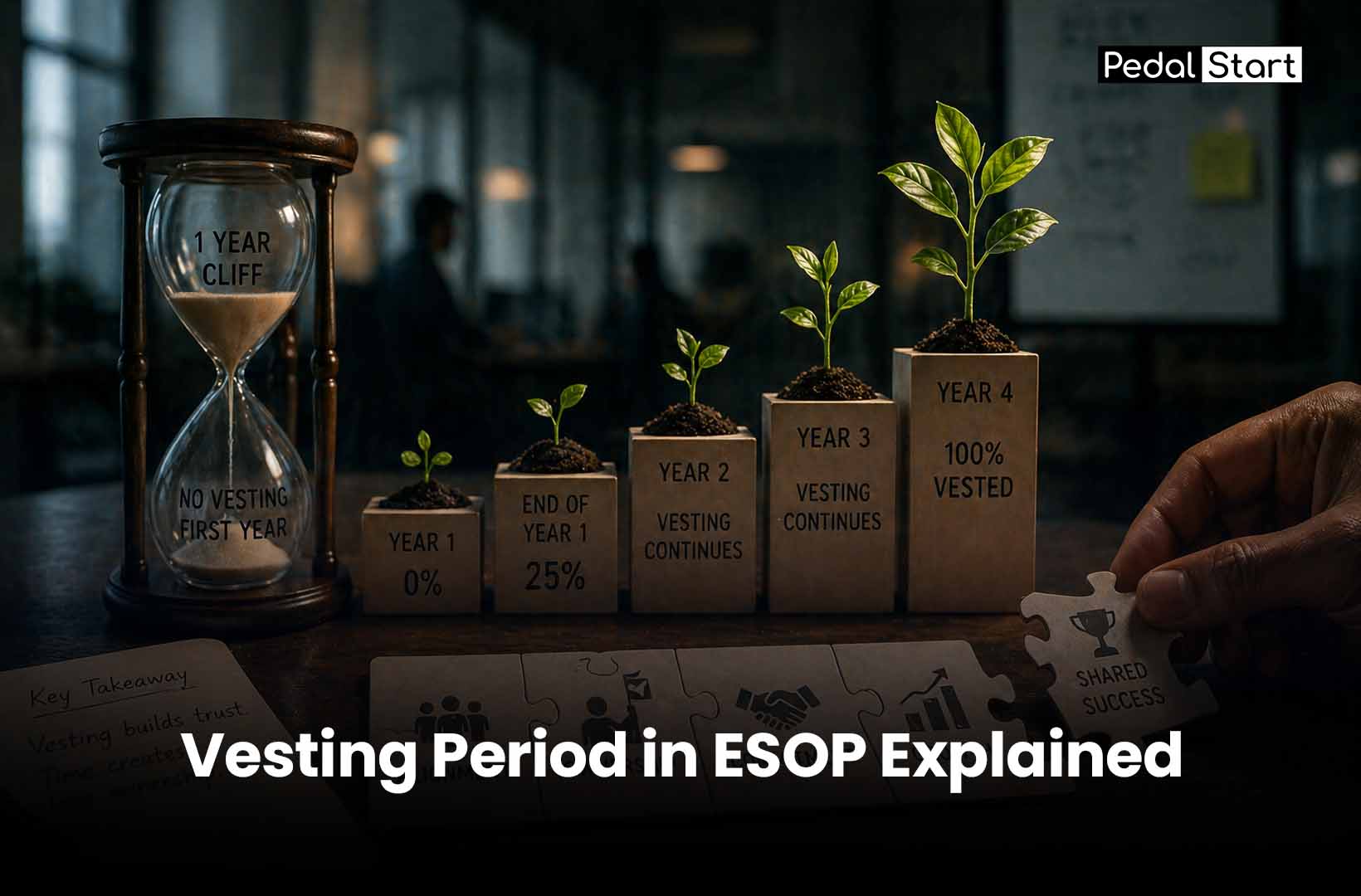
The vesting period in esop determines when employees actually earn their shares.
The standard structure in India is a 4-year vesting schedule with a 1-year cliff.
This means no shares vest in the first year. At the end of 12 months, 25 percent vests. The remaining 75 percent vests monthly or quarterly over the next three years.
Understanding vesting periods in esop is critical from both sides.
For founders, it ensures employees stay long enough to contribute meaningfully.
For employees, it defines when ownership actually becomes real. Leaving before the cliff usually means walking away with nothing.
ESOP Taxation in India
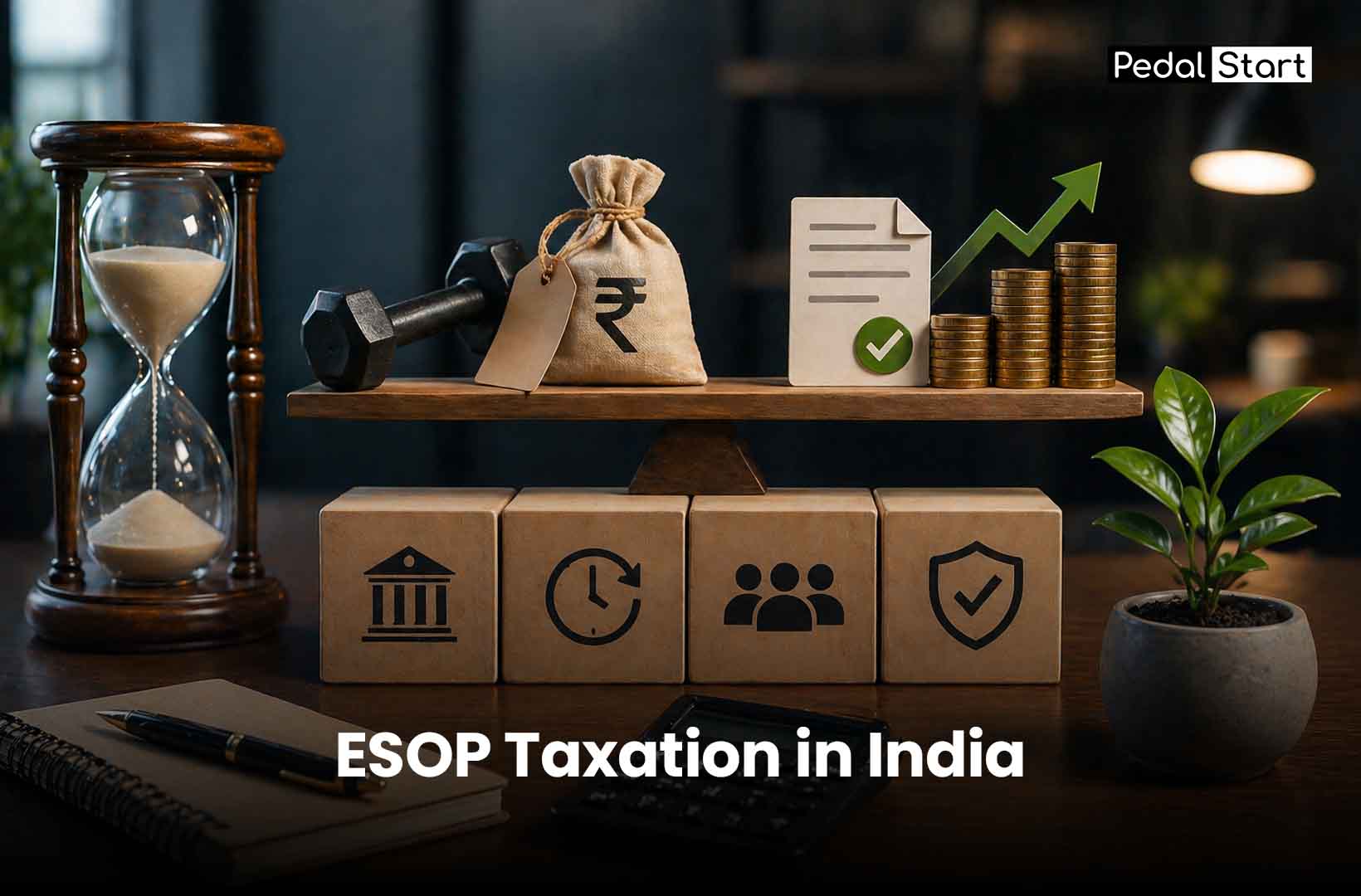
ESOP taxation in India happens at two stages, and this is where most confusion exists.
The first is at the time of exercise. The difference between the fair market value and the exercise price is treated as perquisite income and taxed as salary.
The second is at the time of sale. Any additional gain is taxed as capital gains, either short-term or long-term depending on the holding period.
There is an important exception for eligible startups recognized by the Government of India.
Under the deferral benefit framework linked to DPIIT recognition, tax on the perquisite value can be deferred. Employees can pay this tax at a later event such as sale of shares or exit from the company.
This provision improves liquidity for employees, especially in early-stage companies where shares are not immediately tradable.
ESOP vs RSU vs Sweat Equity

Understanding esop vs rsu becomes important as companies mature.
ESOPs give employees the option to buy shares at a fixed price in the future. The value depends on how the company grows.
RSUs, or Restricted Stock Units, are shares granted directly, usually without requiring purchase. These are more common in later-stage or listed companies.
Sweat equity is issued to founders or early contributors in exchange for non-cash contributions like intellectual property or early effort.
The key difference lies in risk and timing. ESOPs carry risk but offer upside. RSUs are more predictable. Sweat equity is tied to foundational contribution.
Common ESOP Mistakes Founders Make
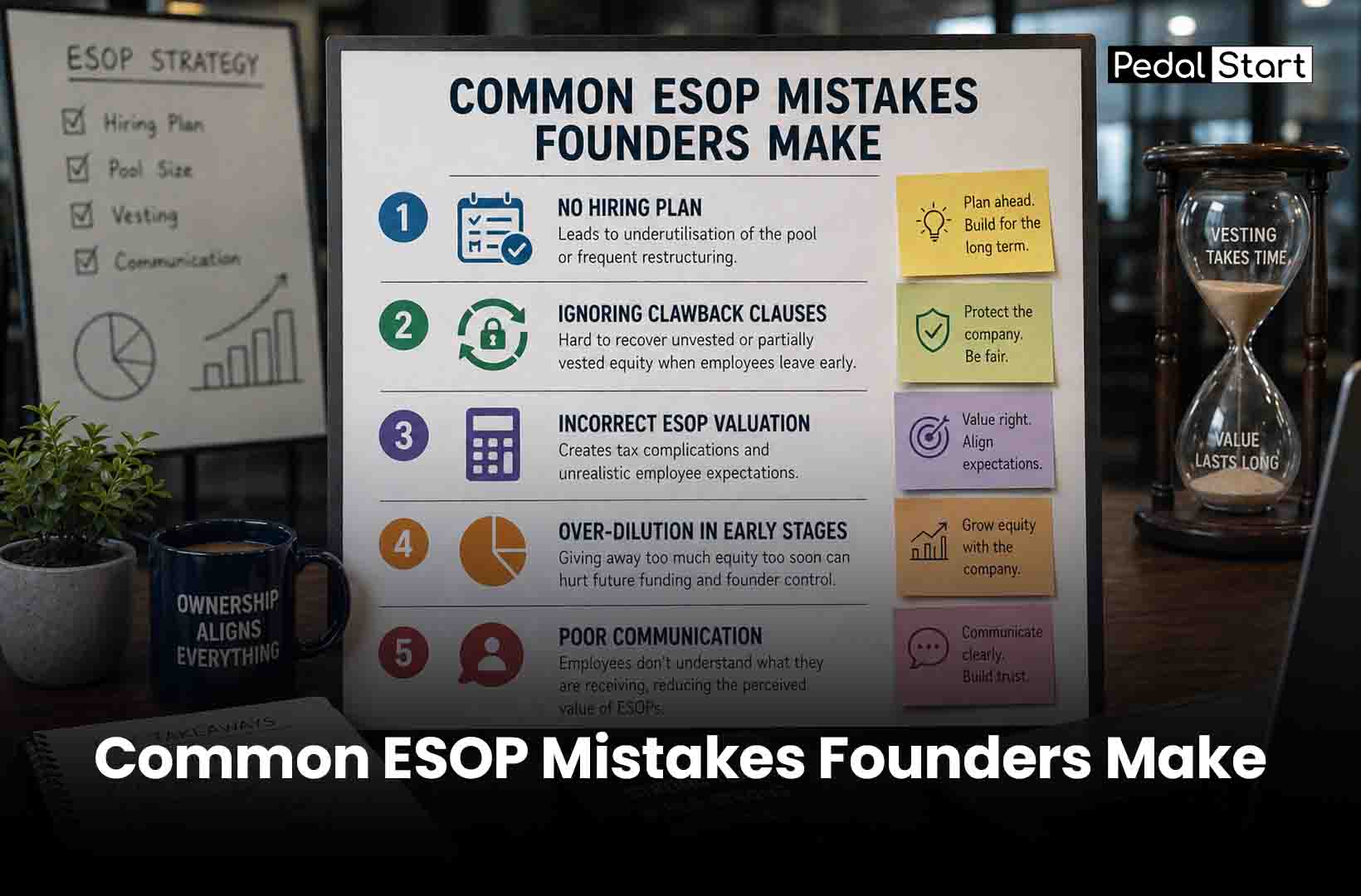
The first mistake is creating an ESOP pool without a hiring plan. This leads to either underutilisation or frequent restructuring.
The second is ignoring clawback clauses. Without these, companies may struggle to recover unvested or partially vested equity when employees leave early.
The third is incorrect esop valuation, which can create tax complications and unrealistic employee expectations.
The fourth is over-dilution in early stages. Giving away too much equity too soon can create challenges in future funding rounds.
The fifth is poor communication. Many employees do not fully understand what they are receiving, which reduces the perceived value of ESOPs.
What Employees Should Evaluate Before Accepting ESOPs
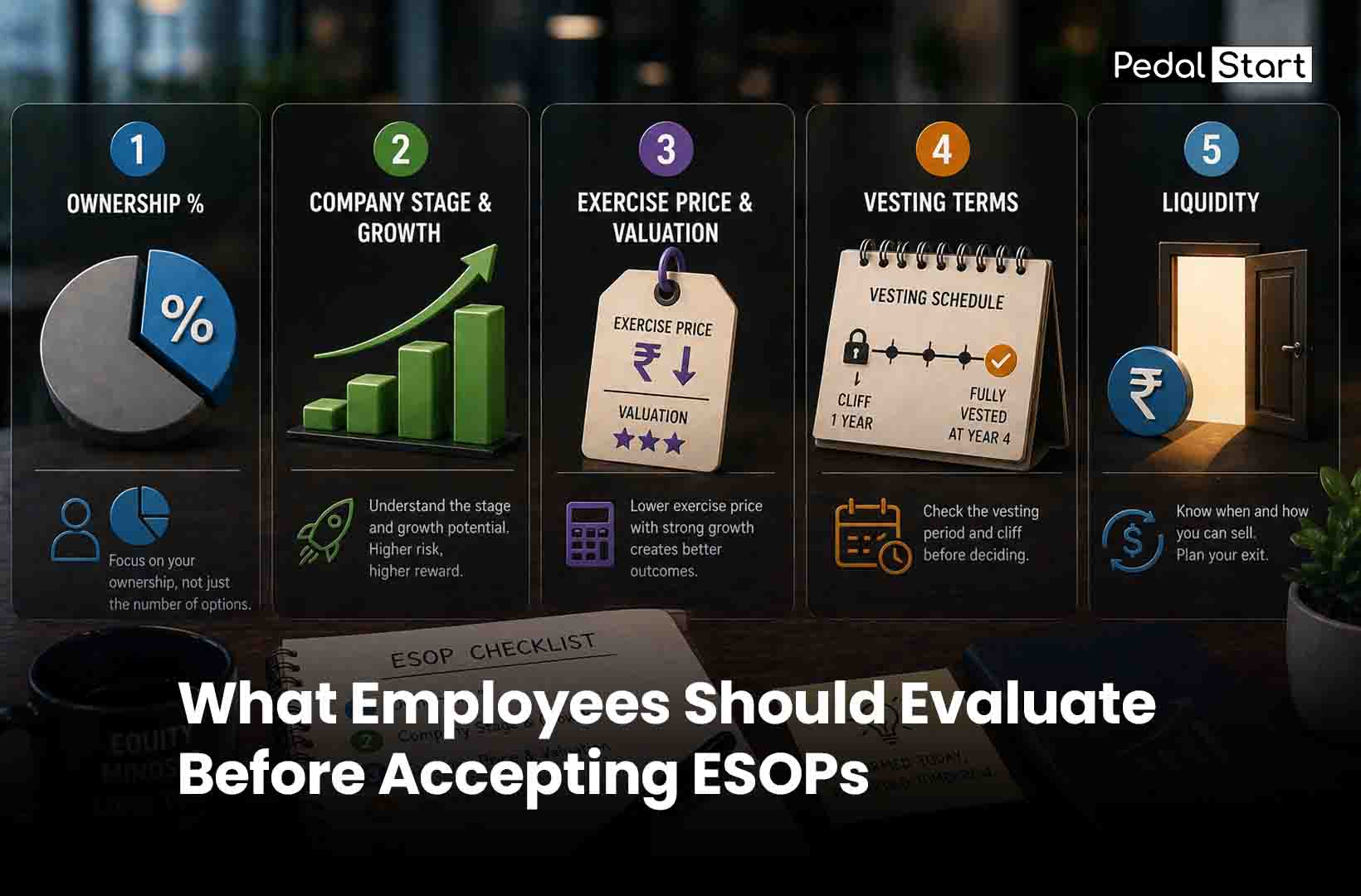
From an employee’s perspective, ESOPs should be evaluated beyond the headline number.
The first factor is ownership percentage, not just the number of options.
The second is the company’s stage and growth trajectory. Early-stage ESOPs carry higher uncertainty but also higher upside.
The third is exercise price and esop valuation. A lower exercise price with strong growth potential creates better outcomes.
The fourth is vesting terms. Understanding the vesting period in esop and cliff structure is essential before making a decision.
The fifth is liquidity. Employees should ask when and how they might be able to sell shares.
Closing Perspective
ESOPs sit at the intersection of ownership, incentives, and long-term thinking.
For founders, they are one of the most effective tools to build a committed team without immediate cash burn.
For employees, they represent a chance to participate in value creation beyond salary.
But ESOPs only work when they are structured thoughtfully, communicated clearly, and aligned with the company’s growth path.
Done right, they create shared upside. Done poorly, they become misunderstood numbers on paper.