
"Patent pending" is a line founders like to put on a pitch deck. It suggests the technology is protected, that a competitor cannot simply copy it, and that there is something defensible underneath the product.
From the investor side, it rarely carries that much weight at pre-seed. What investors check about intellectual property at this stage is something more basic, and founders who spend money on a patent before sorting it out have their priorities in the wrong order.
This covers what Indian law actually allows for software patents, what investors look for instead, and when filing is genuinely worth it.
Can software be patented in India?
Yes, provided it produces a technical effect.
Section 3(k) of the Patents Act, 1970 excludes a "computer programme per se" from patent protection, and for years founders read that as a blanket ban on software patents. It is not. The words "per se" matter: they exclude code on its own, not an invention that happens to be implemented in software.
The Delhi High Court settled this in Ferid Allani v. Union of India in 2019, holding that an invention demonstrating a technical effect or technical contribution can be patented even when it runs on a computer program. The Patent Office's Guidelines for Computer-Related Inventions, finalised in July 2025, now build that test into how examiners assess software applications.
What is Section 3(k) of the Patents Act?
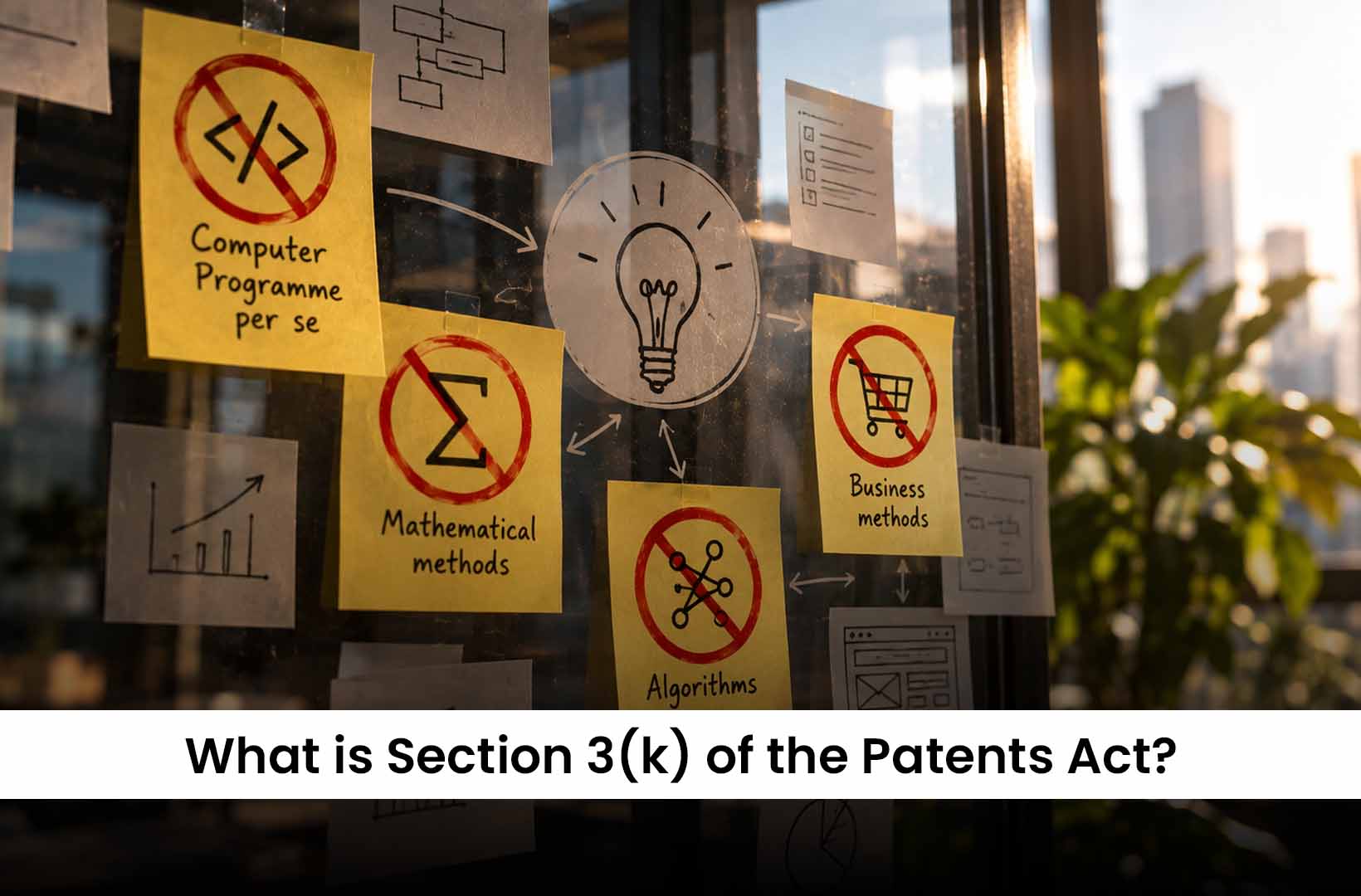
The provision that lists four things excluded from patent protection, and they are not treated equally.
Excluded | How strictly |
Computer programme per se | Qualified by "per se": software with a technical effect can be patented |
Mathematical methods | Excluded |
Algorithms | Excluded as abstract logic |
Business methods | Excluded outright, however they are implemented |
The last row is the one that affects startups most. The Delhi High Court held in OpenTV v. Controller of Patents in 2023 that the business-method exclusion is absolute and not softened by the words "per se".
That has a direct consequence. The thing many SaaS founders consider their innovation, a better workflow, a pricing model, a matching or marketplace logic, is frequently a business method. It cannot be patented in India, however clever the code behind it is.
What is technical effect in a software patent?
A concrete, measurable improvement to how a technical system works.
Faster processing, lower memory use, stronger security, better network performance, or more efficient use of computing resources are the kinds of effects examiners look for. The improvement has to go beyond the ordinary result of running code on a computer.
One clarification helps software founders in particular. In Raytheon v. Controller General of Patents in 2023, the Delhi High Court held that there is no legal basis for requiring novel hardware. A technical effect achieved by software running on ordinary computers is enough, and the 2025 guidelines now reflect that.
For AI companies, the guidelines also expect full disclosure. An application needs to describe the architecture and the results clearly enough that a skilled person could reproduce them, not simply claim that a model produces a better outcome.
Do startups need a patent to raise funding?
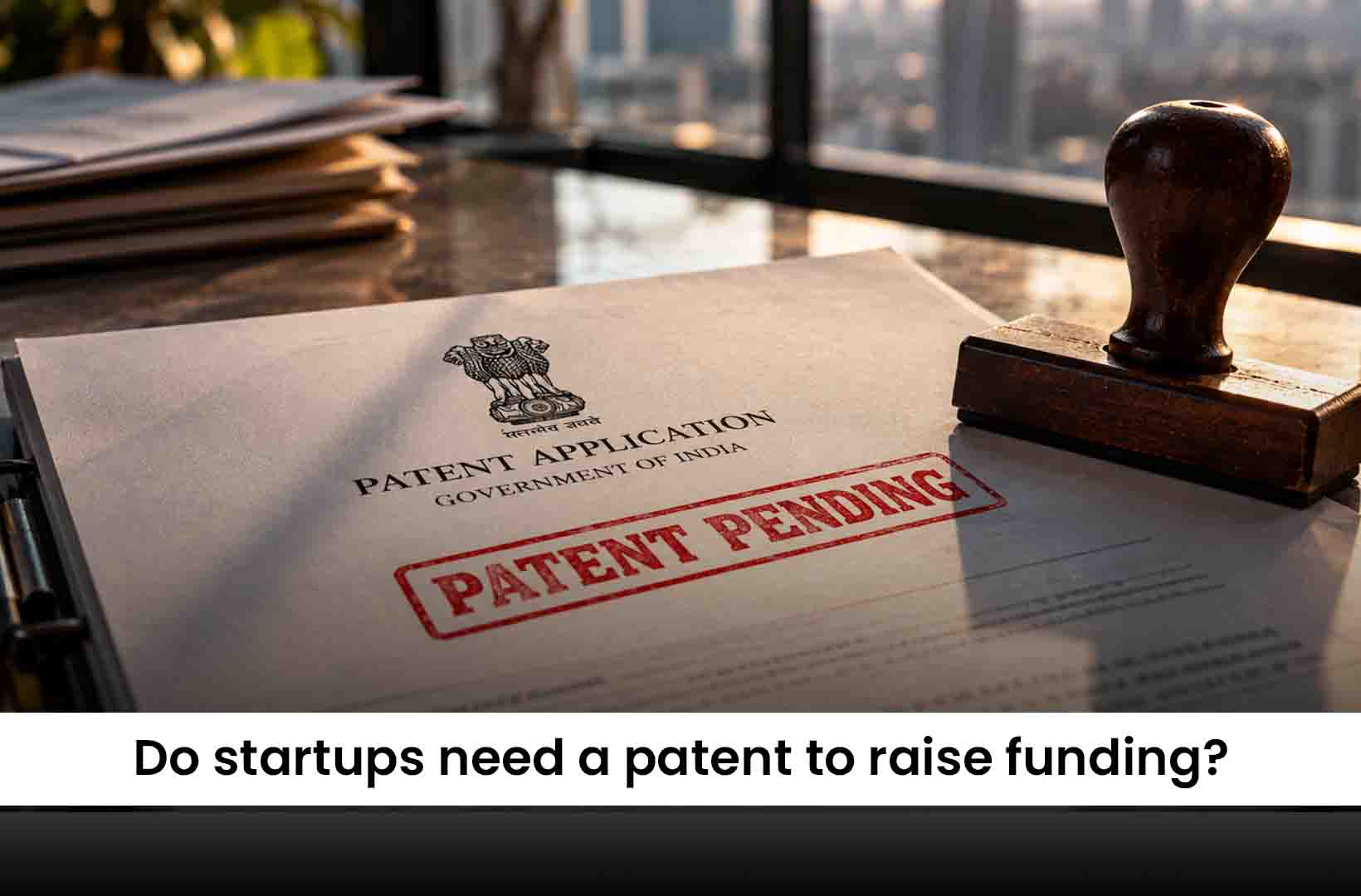
Rarely, at least at pre-seed.
At this stage, investors are backing a team, a problem, and early evidence that customers want the product. A pending patent application does not change much of that, particularly when the application may take years to examine and may never be granted.
What investors do check is whether the company actually owns what it has built. That means signed IP assignments from every founder, employee, and contractor who wrote code, designed the product, or created the brand. A missing assignment is one of the most common reasons early-stage diligence stalls, and it matters far more than a patent filing. Our guide on what goes in a startup data room covers what else gets examined.
The exception is deeptech and AI infrastructure. Where the technology itself is the moat, a system-level improvement that a competitor would struggle to reproduce, protecting it early can matter to both the business and the investors backing it.
Should a startup file a software patent?
The innovation is a genuine technical improvement rather than a business process, so it has a realistic chance of clearing Section 3(k).
The technology is where the company's defensibility lies. If a competitor could build a similar product another way without infringing, a patent protects very little.
You have not disclosed it publicly yet. Launching the product, publishing a paper or demonstrating it widely before filing can count against the application, so the timing matters.
If any of the three is missing, the money is better spent elsewhere at this stage.
How can a startup protect its software in India?
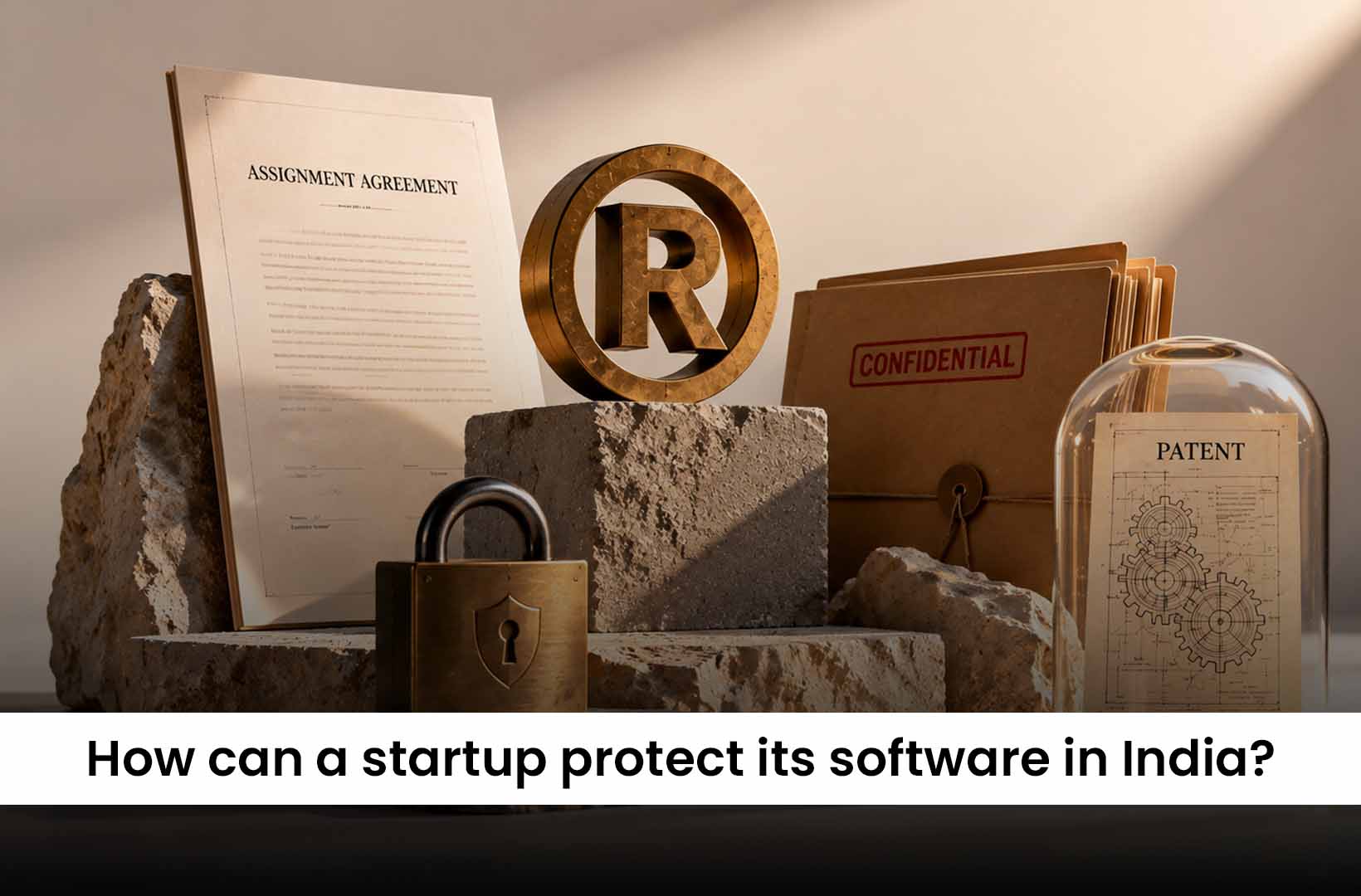
In order of what actually matters early on:
IP assignment. Every founder, employee, and contractor signs an agreement assigning what they create to the company. Without it, the company may not own its own product. The founders agreement is where this starts for the founding team.
Trademark. Your name and brand, which are cheap to protect and expensive to lose. Our guide on the trademark registration process covers how.
Confidentiality. Non-disclosure agreements and internal access controls, which protect what you choose to keep secret rather than disclose in a patent.
Patents. Where the technology justifies it, once the first three are in place.
At PedalStart, the IP question we ask first is who owns the code, long before we ask whether any of it is patented
What is the patent filing fee for startups in India?
DPIIT-recognised startups get two statutory benefits, and one widely advertised benefit has lapsed.
Lower fees. A recognised startup pays the same filing fees as an individual inventor, roughly 80% less than a large company. The basic application fee is ₹1,600 rather than ₹8,000.
Expedited examination. Startups can request faster examination under Rule 24C of the Patents Rules by filing Form 18A, at ₹8,000 rather than ₹60,000 for a large entity. Normal examination can take five to seven years; expedited examination has brought grant timelines down to around 12 to 18 months in many cases.
The facilitator scheme has expired. The SIPP scheme, under which the government paid the professional fees of empanelled patent facilitators, ran until 31 March 2026. As of mid-2026, no extension had been announced, although many guides still describe it as available. Check the current position with DPIIT or IP India before budgeting on it.
These benefits require DPIIT recognition, which also unlocks the Section 80-IAC tax exemption. Our guide on DPIIT recognition covers how to get it.
Where this leaves a pre-seed founder
Software can be patented in India, but only where it improves how a technical system works, and never where the innovation is really a business method.
For most founders at the earliest stage, a patent is not what investors are looking for. Clean ownership of the code and the brand is. Put the assignments, the trademark and the confidentiality in place first, and file a patent when the technology is genuinely the moat and you have not yet shown it to the world.
Key takeaways
Section 3(k) excludes a computer programme "per se", not all software. Inventions that produce a technical effect can be patented in India.
Business methods are excluded outright, which rules out much of what SaaS startups consider their innovation.
No novel hardware is required. A technical effect from software on ordinary computers is enough, following Raytheon (2023) and the 2025 CRI Guidelines.
At pre-seed, investors care far more about signed IP assignments than about patent filings.
DPIIT-recognised startups pay about 80% less in filing fees and can request expedited examination. The SIPP facilitator scheme expired on 31 March 2026.
Frequently asked questions
Is software patentable under Indian law?
Yes, if the invention produces a technical effect or technical contribution. Section 3(k) excludes a computer program “per se,” meaning code on its own. It does not exclude every invention that uses software.
What does Section 3(k) exclude?
Mathematical methods, business methods, computer programmes per se, and algorithms. Only the computer programme exclusion is qualified by "per se".
Can a SaaS product be patented in India?
Only the parts that improve how a technical system works. Workflows, pricing models and marketplace logic are generally business methods, which Indian law excludes outright.
Do I need new hardware to patent software in India?
No. The Delhi High Court held in Raytheon (2023) that novel hardware is not required, and the 2025 CRI Guidelines reflect this. Software on ordinary computers can qualify if it produces a technical effect.
Do investors expect a pre-seed startup to have patents?
Rarely. Investors check that the company owns its IP through signed assignments from founders, employees, and contractors. Patents matter more for deeptech and AI infrastructure companies where the technology is the main defensibility.
How much does a startup pay to file a patent in India?
DPIIT-recognised startups pay the individual fee rate, with the basic application fee at ₹1,600 against ₹8,000 for a large company. Expedited examination costs ₹8,000 against ₹60,000.
Is the SIPP scheme still available?
The notified SIPP scheme expired on 31 March 2026, and no extension had been announced as of mid-2026. The statutory fee concession and expedited examination remain available.