
Two numbers explain the Section 80-IAC tax exemption better than anything else about it.
Around 3,700 startups hold the exemption, out of more than 2.07 lakh DPIIT-recognised startups in India. That works out at roughly 1.8%, and it gets quoted constantly as proof that the bar is impossibly high.
The Inter-Ministerial Board's own published minutes say something different. Of 2,102 cases heard, 1,061 were granted. That is close to a 50% approval rate for startups that actually apply.
So 1.8% is not a rejection rate. It is an application rate. Almost nobody applies for a three-year tax holiday, and about half of those who do receive it.
What is Section 80-IAC and what does it give you?
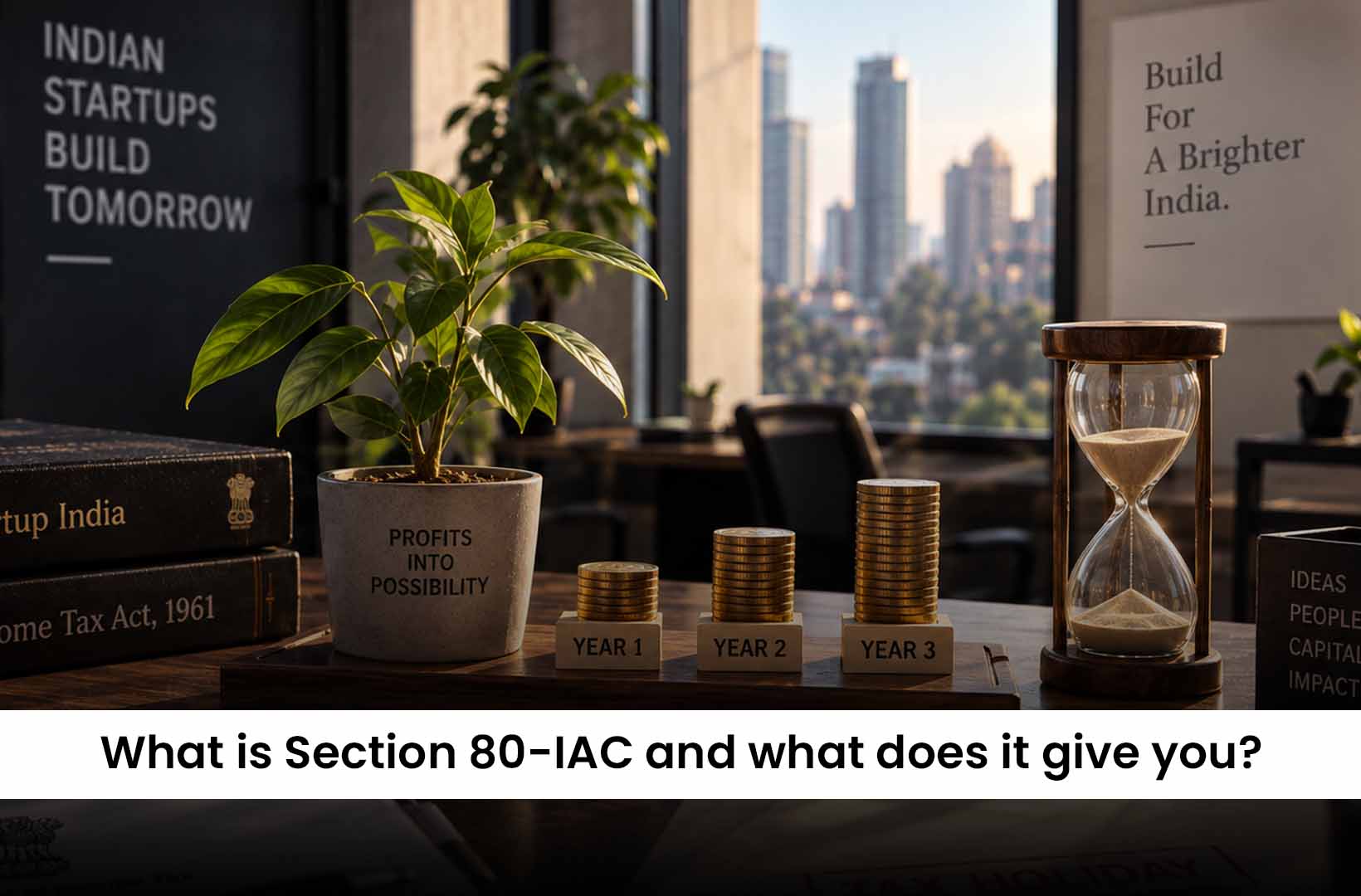
A 100% deduction on profits and gains from your business, for any three consecutive assessment years within your first ten years from incorporation.
Effectively, a three-year income tax holiday, and you choose which three years to take it in. For a startup earning ₹50 lakh in annual profit, that is a substantial amount of cash retained rather than paid out.
The provision was introduced on 1 April 2017 under the Startup India initiative and sits in Section 80-IAC of the Income Tax Act, 1961.
The word "consecutive" matters. You cannot take the deduction in year three, skip year four, and resume in year five. Once you start the clock, it runs.
Is DPIIT recognition enough for 80-IAC tax exemption?
No, and this is where most founders stop without realising there is a second step.
DPIIT recognition is mandatory. It is also not sufficient. The exemption requires separate certification from the Inter-Ministerial Board, a body constituted by DPIIT that evaluates innovation quality, scalability, employment potential, and economic contribution.
You apply for it through the Startup India portal, in the tax exemption section, after recognition is already in hand.
A founder who holds a DPIIT certificate and assumes the tax benefit comes with it has the exemption in name only. Nothing is claimable until the IMB approves.
That gap between recognition and certification is, I suspect, most of the reason the application rate is so low. Our guide on DPIIT recognition covers the first step.
What is the eligibility for Section 80-IAC?

Five conditions, and every one of them is a hard filter. Meeting four is the same as meeting none.
Entity type. Private Limited Company or LLP only. Partnerships and sole proprietorships cannot claim it.
Incorporation date. On or after 1 April 2016, and before 31 March 2030 following the extension.
Age. Within the first ten years from incorporation.
Turnover. Under ₹100 crore in the financial year preceding the assessment year for which the deduction is claimed.
Not formed by splitting or reconstruction. A business created by splitting up or reconstructing an existing entity is rejected outright.
If turnover crosses ₹100 crore in any year after you begin claiming, eligibility ends from that year forward.
Why do Section 80-IAC applications get rejected?
The published breakdown is more useful than the generic advice most guides offer.
Incorporation before 1 April 2016 accounts for 51.2% of historical rejections. That is more than half of all failures, and it is a disqualification rather than a judgment about the business. Those applicants were never eligible.
Strip that out, and the picture for currently eligible startups is considerably better than the raw approval figures suggest.
For everyone else, the main risk is failing to demonstrate innovation and scalability convincingly. The IMB wants to understand what is genuinely new, and a pitch deck that describes a business without making the innovation legible will not clear it.
Practical failures also account for a share of rejections. Missing or incomplete documents. Unclear explanation of the idea. Not responding promptly when the IMB asks for more information.
And applications from startups that never checked the basic criteria, particularly turnover limits and incorporation dates, before submitting.
What documents are required for Section 80-IAC?
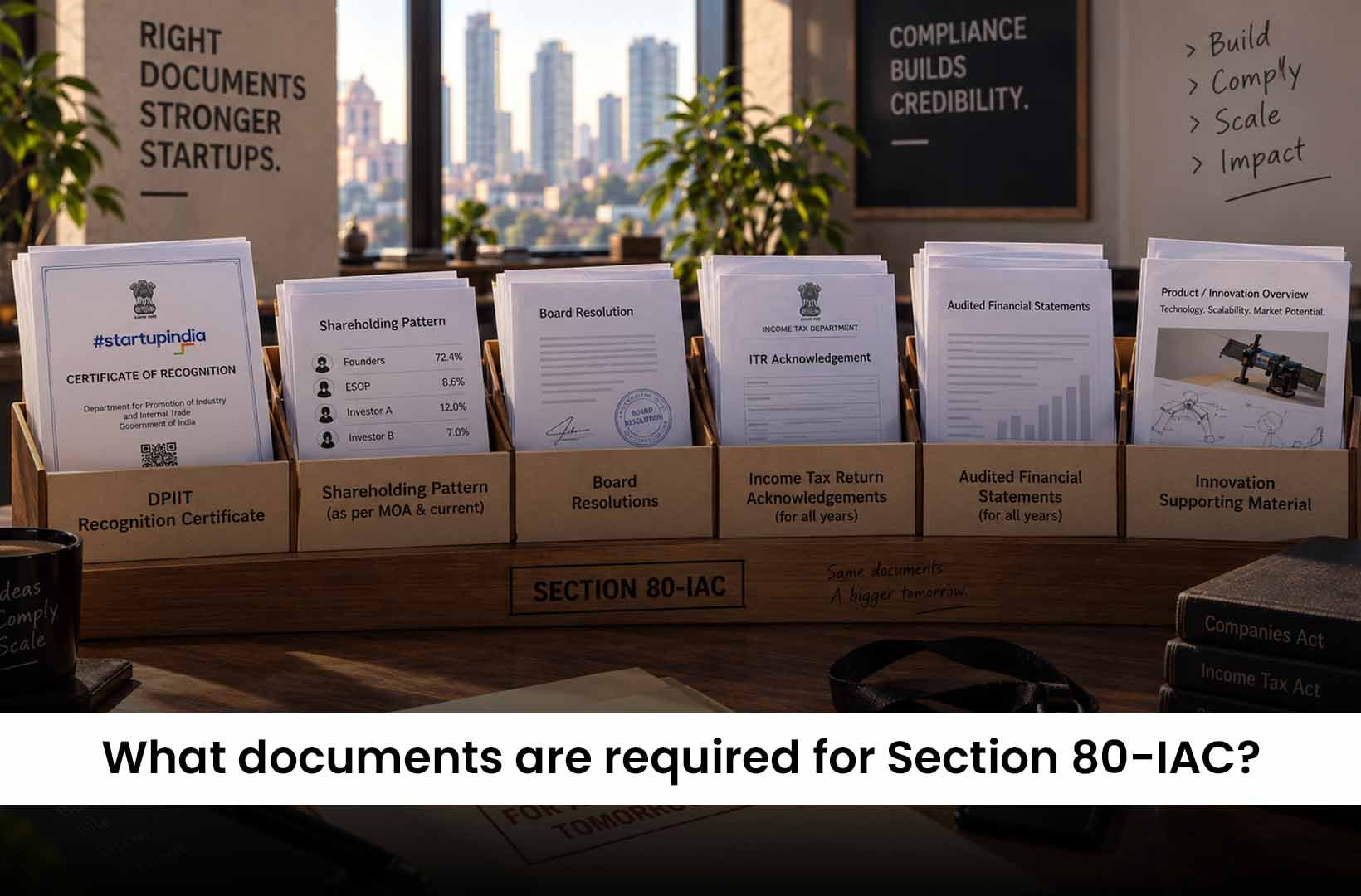
The document set is specific, and most of it you already have.
Your DPIIT recognition certificate, shareholding pattern per the MOA and current structure, relevant board resolutions, income tax return acknowledgements for every year since incorporation, and audited financial statements for every year since incorporation.
Alongside that, something that makes the innovation clear. The IMB assesses technological innovation, scalability, and market potential, so the material needs to demonstrate those rather than describe the business generally.
Under the revised framework introduced after the 80th IMB meeting in April 2025, complete applications are reviewed within 120 days.
One thing worth knowing before you apply: there is no statutory appeal. If the IMB rejects you, the options are to reapply with a stronger case or approach the High Court by writ petition. Most founders take the first route, and reapplication with better documentation does succeed.
The exemption can also be revoked. If DPIIT finds that incorrect details were provided or material facts suppressed, all benefits granted under the notification are withdrawn.
Should you apply for the 80-IAC tax exemption?
The gap between 1.8% and 50% is the whole point.
If you hold DPIIT recognition, were incorporated after April 2016, are under ten years old, and have under ₹100 crore in turnover, you are in the eligible pool. What separates the startups holding this exemption from the ones that are not is largely whether they filled in the second form.
For a company approaching profitability, three years of zero tax on profits is worth considerably more than the effort of applying. For a company nowhere near profit, it is worth applying anyway, because the deduction has to be taken within the first ten years and you get to choose which three.
At PedalStart, this comes up with the companies we back often enough that we treat it as a founding-year task rather than a later one.
Key takeaways
Section 80-IAC gives a 100% deduction on profits for three consecutive assessment years within your first ten years from incorporation.
Around 3,700 startups hold it out of 2.07 lakh recognised, roughly 1.8%. But of applications actually heard by the IMB, close to 50% were granted.
DPIIT recognition is mandatory and not sufficient. Separate Inter-Ministerial Board approval is required before anything can be claimed.
Eligibility requires a Pvt Ltd or LLP, incorporation on or after 1 April 2016, age under ten years, and turnover under ₹100 crore.
Over half of historical rejections were because the startup was incorporated before April 2016, a disqualification rather than a judgment on the business.
Frequently asked questions
What is Section 80-IAC?
A provision of the Income Tax Act, 1961 that allows eligible startups to claim a 100% deduction on profits and gains for any three consecutive assessment years within their first ten years from incorporation.
Is DPIIT recognition enough to claim the 80-IAC exemption?
No. DPIIT recognition is mandatory but not sufficient. Separate approval from the Inter-Ministerial Board is required, applied for through the Startup India portal after recognition is granted.
Who is eligible for Section 80-IAC?
A Private Limited Company or LLP, incorporated on or after 1 April 2016 and before 31 March 2030, within its first ten years, with turnover under ₹100 crore in the preceding financial year, and not formed by splitting or reconstructing an existing business.
Can the deduction be claimed in non-consecutive years?
No. The three assessment years must be consecutive, though you can choose which three within the first ten years from incorporation.
How long does IMB approval take?
Complete applications are reviewed within 120 days under the revised framework introduced after the 80th IMB meeting in April 2025.
What happens if my application is rejected?
There is no statutory appellate mechanism. You can reapply with stronger documentation, or approach the High Court by writ petition. Reapplication with clearer evidence of innovation does succeed in practice.
What if turnover crosses ₹100 crore after I start claiming?
Eligibility ends from that financial year onwards. The deduction cannot be claimed for years in which turnover exceeds the threshold