
Miss one 30-day deadline and your trademark application is dead.
Not delayed. Not flagged for review. Automatically marked abandoned by the system, even if the notification never reached your inbox. The petition to revive it exists, and it is routinely rejected unless you can prove the Registry never served the report at all.
That is the part of the process nobody mentions when they quote you a filing fee.
India processed over five lakh trademark applications in FY 2025-26. A large share of them never reach registration, and it is rarely because the mark was unregistrable. It is because somebody missed a step.
Here is how the process actually runs, what it costs, and where founders lose their applications.
What does the process involve?
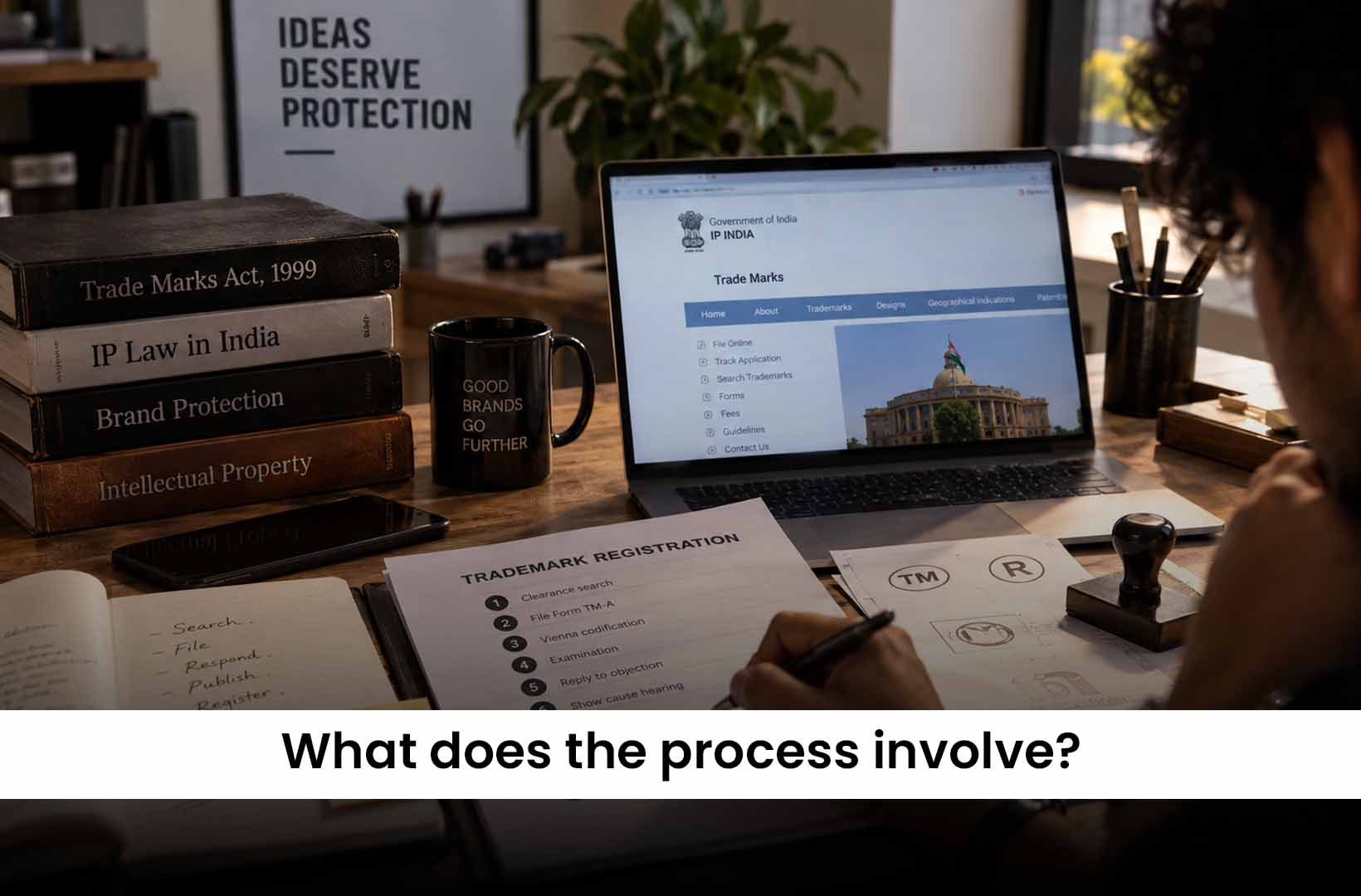
Nine stages, from search to certificate.
Clearance search. Check the IP India database for existing or pending marks that conflict with yours.
File Form TM-A. Submitted through the IP India online portal, with your class or classes selected.
Vienna codification. Applies to logos, where the Registry classifies the visual elements.
Examination. The Registry reviews the application and issues a report.
Reply to objection. If objections are raised, you have 30 days.
Show cause hearing where the reply does not resolve it.
Publication. Accepted marks are published in the Trade Marks Journal.
Opposition window. Four months in which any third party can oppose.
Registration certificate. Issued if nothing blocks it.
You can use the ™ symbol from the moment you file. The ® symbol only after the certificate arrives, and using it before that is an offence carrying a fine of up to ₹50,000.
How long does it take?
Eight to eighteen months for an application that runs clean.
Examination has become considerably faster. What once took eight to twelve months now happens in roughly 30 to 60 days, after the Registry added examiners and brought in automated processing.
The slow parts sit elsewhere. The four-month opposition window is fixed and cannot be shortened. An objection adds six to twelve months depending on how it is resolved. A contested opposition can stretch the whole thing to 18 to 36 months.
So the timeline is less about the Registry being slow and more about how many people get in the way.
What does it cost?
Less for a startup than for a company, and the difference is significant.
Applicant | E-filing, per class | Physical filing, per class |
Individuals, startups, MSMEs | ₹4,500 | ₹5,000 |
Companies and LLPs | ₹9,000 | ₹10,000 |
Two things to note about that table.
The lower tier is not automatic. You qualify by being a DPIIT-recognised startup or Udyam-registered MSME, and you have to attach the certificate.
Founders who hold recognition and do not claim it pay double. Our guide on DPIIT recognition covers how to get it.
And the fee is per class, per mark, and non-refundable. If your application fails, the money is gone.
There is also a subsidy worth knowing about. Under the Startup India IP scheme, recognised startups get 50% off IP facilitation charges through empanelled facilitators, which reduces the professional fee rather than the government one.
Renewal comes up after ten years, filed on Form TM-R six months before expiry, at ₹9,000 per class for startups.
Where do applications go wrong?
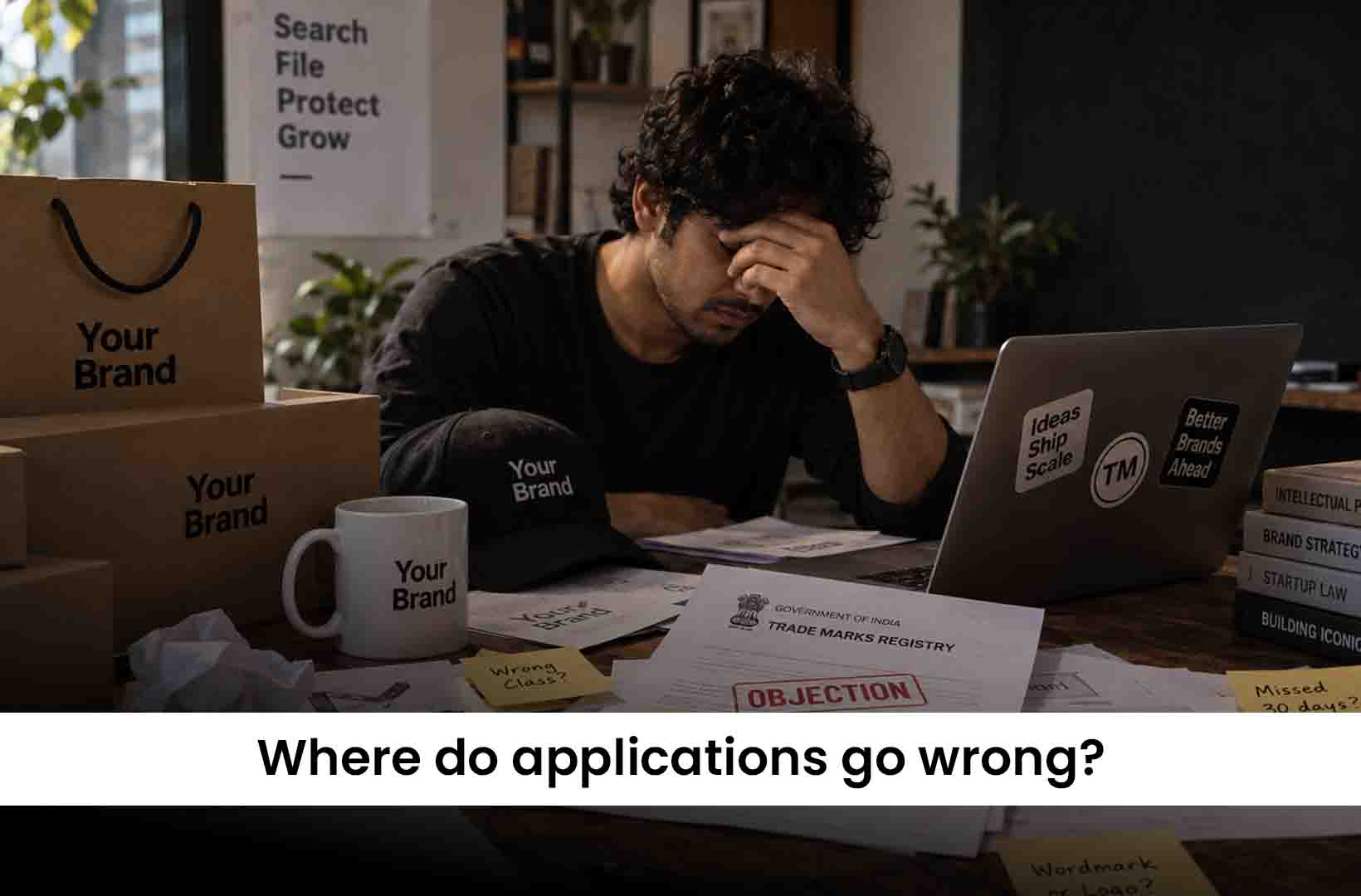
Six places, and most of them are avoidable.
Missing the 30-day reply window
The single most costly error. An examination report triggers a strict 30-day clock, and the system abandons the application automatically when it expires. Whoever files needs to be someone who will actually see the notification.
Building the brand before searching
Founders design the logo, print the packaging, buy the domain, and then discover a similar mark already exists. The search costs nothing and takes an afternoon.
Choosing the wrong class
Classes describe what you sell, not what you call yourself. Register in the wrong one and your protection does not cover your actual business.
Assuming incorporation protects the name
Registering a company reserves that name at the MCA. It does not give you trademark rights, and somebody else can register the same mark. The same applies whichever structure you choose, whether that is a private limited company or an LLP.
Filing only the wordmark, or only the logo
These are separate marks. If both matter to your brand, both need filing, at separate fees.
Descriptive names
A mark that describes what you do attracts a Section 9 objection. The more literally your name explains your product, the harder it is to register.
Should a startup do this early?
Earlier than most do.
The cost of filing at ₹4,500 a class is small against the cost of rebranding in year three because somebody else registered your name first.
There is also a fundraising dimension. An unregistered brand shows up in diligence alongside missing IP assignments as a gap investors flag, and it is far cheaper to fix before the process starts than during it.
Our guide on what goes in a startup data room covers what else gets checked.
At PedalStart, this comes up often enough with the companies we work with that we treat it as a founding-stage task rather than a later one.
The practical sequence: search before you commit to the name, file once you have decided, and get the DPIIT recognition that halves your fee before you file rather than after.
The short version
The trademark registration process in India is not complicated. It is unforgiving.
Nine stages, eight to eighteen months, ₹4,500 a class if you qualify for the startup rate. None of that is hard to navigate.
What catches people is the strictness. A 30-day window that abandons your application without warning. Classes that must match your actual business. A name you cannot change once the brand is built.
Search early, file once the name is settled, claim the rate you are entitled to, and make sure somebody is watching for that examination report.
Key takeaways
The trademark registration process runs through nine stages and takes eight to eighteen months when unopposed.
Government fees are ₹4,500 per class for individuals, startups and MSMEs, and ₹9,000 for companies and LLPs. Fees are per class, per mark and non-refundable.
DPIIT-recognised startups and Udyam-registered MSMEs qualify for the lower rate, but must attach the certificate to claim it.
An examination objection carries a strict 30-day reply window. Missing it means the application is automatically abandoned.
Company registration does not protect your brand name. Trademark registration is a separate process.
Frequently asked questions
What is the trademark registration process in India?
Nine stages: clearance search, filing Form TM-A, Vienna codification for logos, examination, reply to objection, hearing if needed, publication in the Trade Marks Journal, a four-month opposition window, and the registration certificate.
How much does trademark registration cost for a startup?
₹4,500 per class for e-filing by individuals, startups and MSMEs, against ₹9,000 for companies and LLPs. Physical filing adds ₹500. The fee applies per class and per mark.
How long does trademark registration take?
Eight to eighteen months if unopposed. Examination now takes around 30 to 60 days, but the four-month opposition window is fixed, and objections or oppositions extend it considerably.
Can I use the ® symbol before registration?
No. You can use ™ from the moment you file, but ® only after receiving the certificate. Using it earlier is an offence carrying a fine of up to ₹50,000.
Does registering my company protect the name?
No. Company registration reserves the name with the MCA but gives no trademark rights. Somebody else can register the same mark unless you file for it.
What happens if I miss the 30-day reply deadline?
The application is automatically marked abandoned. A review petition can be filed, but it is routinely rejected unless you can prove the Registry never served the examination report.
Do I need separate applications for my name and my logo?
Yes, if you want both protected. A wordmark and a device mark are separate filings, each attracting its own fee per class.