

India’s startup story is changing shape. The early years were about building fast and scaling faster. Today, the focus has shifted to building right. Founders are no longer chasing technology for attention. They are using it to fix systems that break daily in plain sight: delayed payments, inefficient hospitals, unstable farm incomes, wasteful logistics, and rising energy costs.
This is why AI-native and climate-tech startups are growing together. Both are rooted in the same idea. Solve what hurts most. Reduce waste. Improve decisions. Make existing systems work better before inventing new ones. These founders are not trying to impress. They are trying to survive real markets with real customers.
Solving Real Problems Across India’s Core Sectors
India does not hide its problems. They appear in queues, bills, delays, and losses.
In finance, delayed repayments and weak recovery systems cost lenders both money and trust. AI-native platforms now help institutions manage collections more responsibly by studying borrower’s repayment behaviour, choosing the right communication timing, and reducing friction between borrower and lender. The value is clear. Fewer defaults. Better recovery. Lower operational stress.
In healthcare, hospitals struggle with long insurance settlement cycles. Money gets stuck for weeks or months. New-age platforms now track, process, and verify claims faster so hospitals can focus on treatment instead of paperwork. This is not innovation for show. It directly affects how many patients a hospital can afford to treat.
In agriculture, farmers still lose income because they sell without knowing real market demand. Tech-enabled platforms are now connecting growers directly with buyers, cutting layers of middlemen and making pricing transparent. When farmers see fair prices and faster payments, trust grows and usage follows.
In environmental systems, data is now being used to track pollution, waste, and carbon output in real time. AI tools analyse patterns from factories, cities, and supply chains, showing where damage is happening and what changes reduce it. These tools help businesses comply with regulations while also cutting energy and material costs.
Across sectors, the pattern is the same. The strongest startups are not building dreams. They are repairing broken pipes.

Why Decarbonization Is Becoming a Business Opportunity
Climate work in India used to be framed as sacrifice. Today it is framed as savings.
Energy is expensive. Fuel is unpredictable. Water is scarce in many regions. Waste management costs are rising. Every one of these pressure hits profit margins.
This is why decarbonization is turning into a business case.
Factories that reduce power use save lakhs each month. Transport companies that optimise routes burn less fuel. Warehouses that use smart energy systems reduce bills. Cities that track waste better spend less on cleanup.
Climate-tech now works because it touches cost directly. When a solution reduces expenses, adoption becomes fast and practical.
Many climate-focused startups are now helping companies measure emissions, track resource use, and find ways to lower it. The benefit is not only environmental. It is financial. Lower input cost means stronger margins. Lower risk means better long-term planning.
This is why climate-tech in India is not charity-driven. It is efficiency-driven.
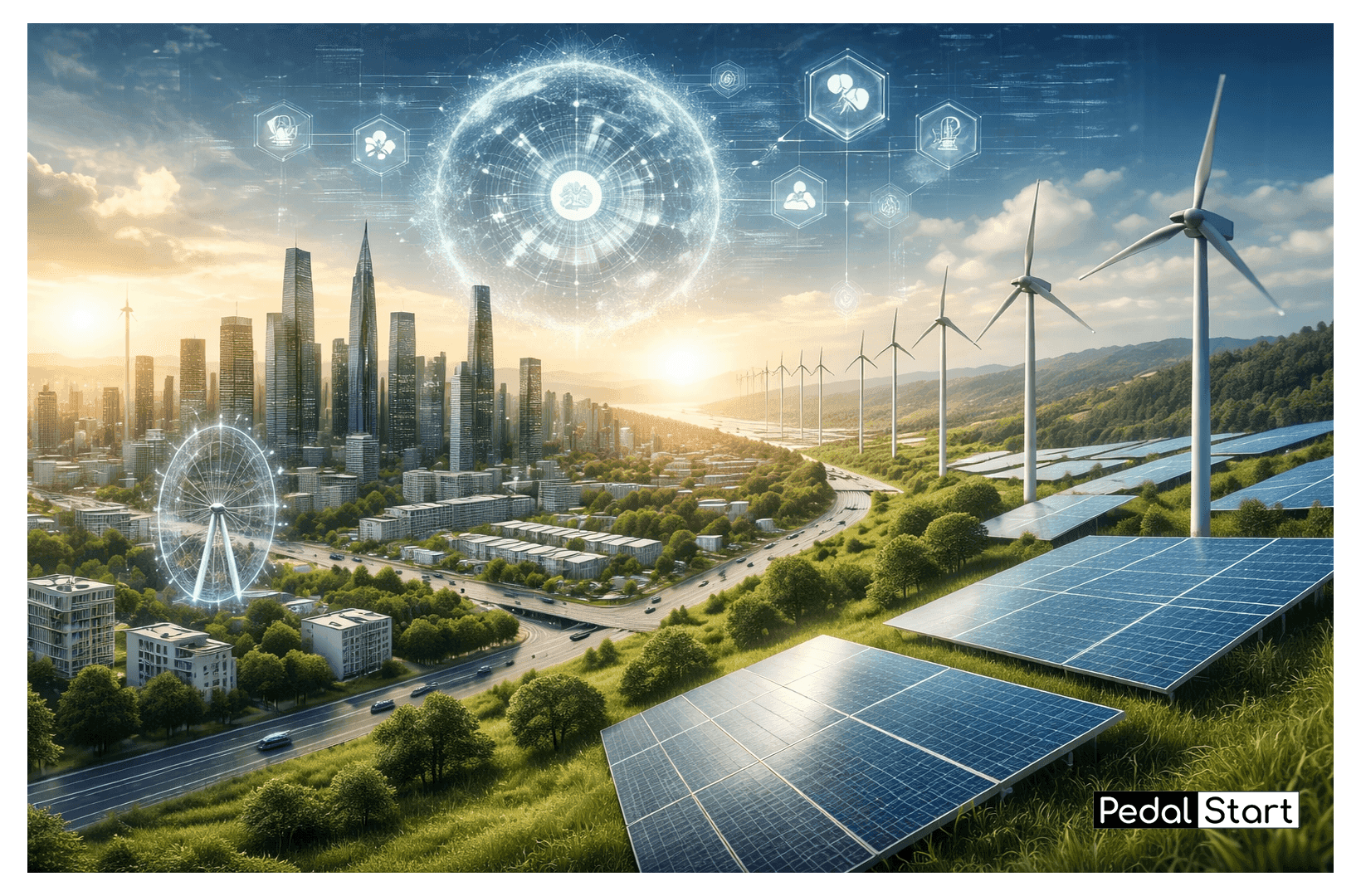
From Debt Recovery to Sustainable Logistics: Lessons from Success Stories
Looking closely at successful startups in finance, healthcare, agriculture, and climate-tech, one clear pattern emerges: they start narrow and solve one urgent problem deeply before expanding. In finance, improvements in repayment processes like understanding borrower behaviour, timing outreach better, and reducing friction led to measurable reductions in defaults and stronger trust between lenders and borrowers. Those initial wins became the foundation for broader financial solutions.
In healthcare, focusing on a single workflow, such as claims processing or patient record management, allowed hospitals to operate more efficiently and treat more patients. The impact was immediate, and once systems proved reliable, expansion into other operational areas became practical and effective.
In agriculture, platforms that connected farmers directly to buyers without overpromising broader interventions increased income and market confidence. Fair pricing, timely payments, and transparent process built trust, which then enabled further scaling into planning, logistics, and analytics.
Climate-tech founders first concentrated on measurement and visibility. By helping companies see their carbon footprint and resource usage clearly, they created actionable insight. Once businesses understood the problem, they could take meaningful steps to reduce emissions and costs, driving adoption and long-term impact.
The lesson is simple and consistent across sectors: big visions succeed only when small, critical problems are solved exceptionally well. Founders who try to fix everything at once often stall, while those who deliver clear, early results earn the credibility and confidence to tackle bigger challenges.

What Investors Are Looking for in the Next Wave of Tech Startups
Investors have become sharper. They are not impressed by buzzwords. They look for proof.
In AI-native startups, they want to see whether the system truly improves decisions. Does it reduce errors? Does it save time? Does it make work easier or cheaper? If the answer is not visible in numbers, interest fades quickly.
In climate-tech, they want to know if sustainability also means profitability. Can the solution scale? Can customers pay for it? Does it reduce cost or risk? Without a strong business case, even the best intentions struggle.
They also look closely at founders. Domain knowledge matters more than fancy decks. Founders who understand their industry deeply spot problems early, adapt faster, and build stronger trust.
Investors are now backing teams that show discipline. Clear problem. Clear user. Clear progress.
India’s next wave of strong startups will not come from trends. They will come from builders who stay close to the ground, listen to users, and fix what truly hurts. AI-native and climate-tech founders who do that will not need hype. Their work will speak for them.