Common Misconceptions About Startup Accelerators And the Truth About PedalStart


When founders evaluate a startup accelerator, the doubts and myths they come across, almost remains common.
Will this be worth my time?
Is this just structured networking?
Will I walk away with something tangible?
Will they guarantee funding?
Startup accelerators carry strong narratives. Some are deserved. Some are outdated. In the expanding Indian startup ecosystem, clarity matters more than branding.
So today, let’s address these common assumptions directly.
Do accelerators automatically lead to funding?
One of the most common assumptions is that joining an accelerator increases the probability of raising capital.
Visibility can improve. Investor access may expand. Pitch quality usually improves. But capital does not move only because a logo appears on a slide.
In 2026, Tracxn’s India Funding Review noted that early-stage investors closed fewer but more conviction driven deals compared to 2024 levels. The pattern shows that capital concentration has increased. Investors are allocating to startups with stronger retention, clearer revenue pathways, and disciplined metrics.
An accelerator can improve preparedness but it cannot manufacture fundamentals.
What accelerators can do is improve readiness. They can help founders clarify metrics, sharpen positioning, and prepare for investor conversations. Funding still depends on founder market fit, traction and market response.
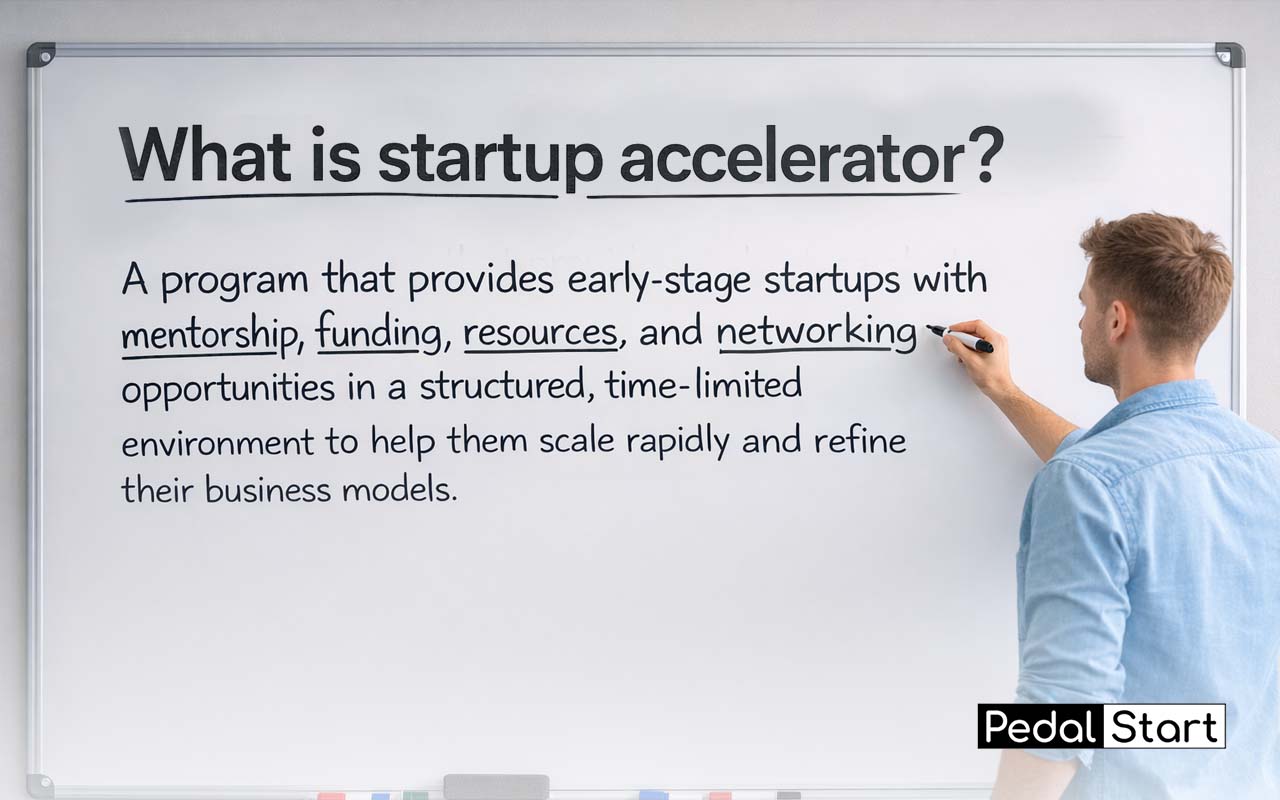
Are accelerators only for “ready” startups?
Another misconception is that startup accelerators are useful only once a startup has huge numbers to show as traction.
In reality, the earliest stage often benefits the most from structured external input.
Early-stage startup mistakes often happen in pricing, customer definition, and sales conversations. These errors unfold gradually. Six months pass before founders realise they targeted the wrong segment or priced too conservatively. Seeking structured input during this phase can prevent drift.
In NASSCOM’s 2026 Founder Insights Survey, more than half of first-time founders reported that peer feedback during early go to market decisions helped refine their customer targeting faster than internal iteration alone.
The benefit depends on how the accelerator engages. If the program focuses only on demo day preparation, early founders may not gain depth. If the engagement involves operator interaction and practical review, early-stage teams gain clarity sooner.
Do accelerators add real operating value?
Some founders worry that accelerators are heavy on inspiration and light on operating insight.
That perception often comes from cohort models centred around workshops and speaker sessions. While useful for exposure, they may not always influence day to day decision making.
Operating value appears in moments like:
When pricing tiers are debated with people who have set revenue targets before.
When sales scripts are reviewed by someone who has built a pipeline from zero.
When hiring plans are stress tested by operators who have mis hired early.
India’s startup ecosystem in 2026 is no longer information scarce. Frameworks are available everywhere. The differentiator is context.
Accelerators that create direct access to builders tend to influence how founders think about trade-offs. Those that focus only on curriculum tend to influence presentation skills.
Both have value but the distinction is important.
Is PedalStart an accelerator or an ecosystem?
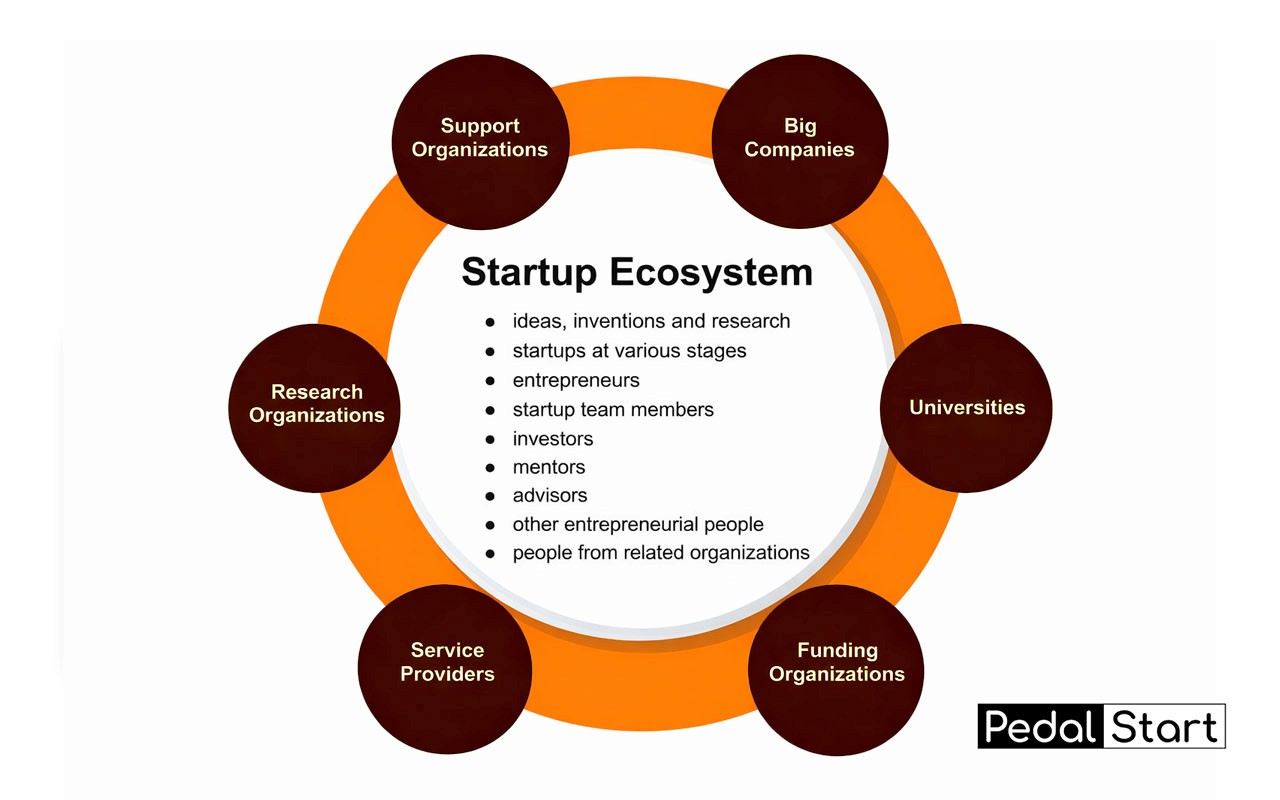
PedalStart is structured as an accelerator. It works with selected startups. It supports them in refining growth, metrics, and investor readiness. It is not an open networking forum.
At the same time, it functions with the depth of an ecosystem. Engagement extends beyond a fixed batch timeline. Founders interact with operators who remain accessible. Conversations are less about completing modules and more about addressing live challenges.
Traditional accelerators typically operate in defined cycles with a beginning and end. PedalStart’s model is closer to ongoing collaboration among founders and operators who stay connected.
One model is event driven while the other is relationship driven.
For founders who want concentrated exposure over a short window, classic accelerators may align well. For founders who want sustained operator input across growth stages, a model that behaves like an ecosystem offers a different kind of leverage.
Final Reflection
Startup accelerators are not shortcuts. They are amplifiers.
They amplify readiness if fundamentals exist. They amplify confusion if direction is unclear. They amplify networks if founders engage actively.
The question is not whether accelerators work. It is whether the model aligns with the founder’s stage and intent.
PedalStart positions itself as an accelerator built around ongoing operator engagement rather than episodic programming. For founders who value applied insight and sustained peer interaction, that distinction matters.
In a startup ecosystem that continues to expand, the real advantage lies in better decisions made earlier.
That is what founders should evaluate before joining any accelerator.