
Before applying to any accelerator, founders want clarity. How structured is the process? What kind of involvement is expected? Is there real operating depth behind the promise?
If you are evaluating accelerators, this guide explains how PedalStart works, how the mentorship model operates, what the investment structure looks like, and whether it is the right fit for your stage.
1. How Does PedalStart Work?
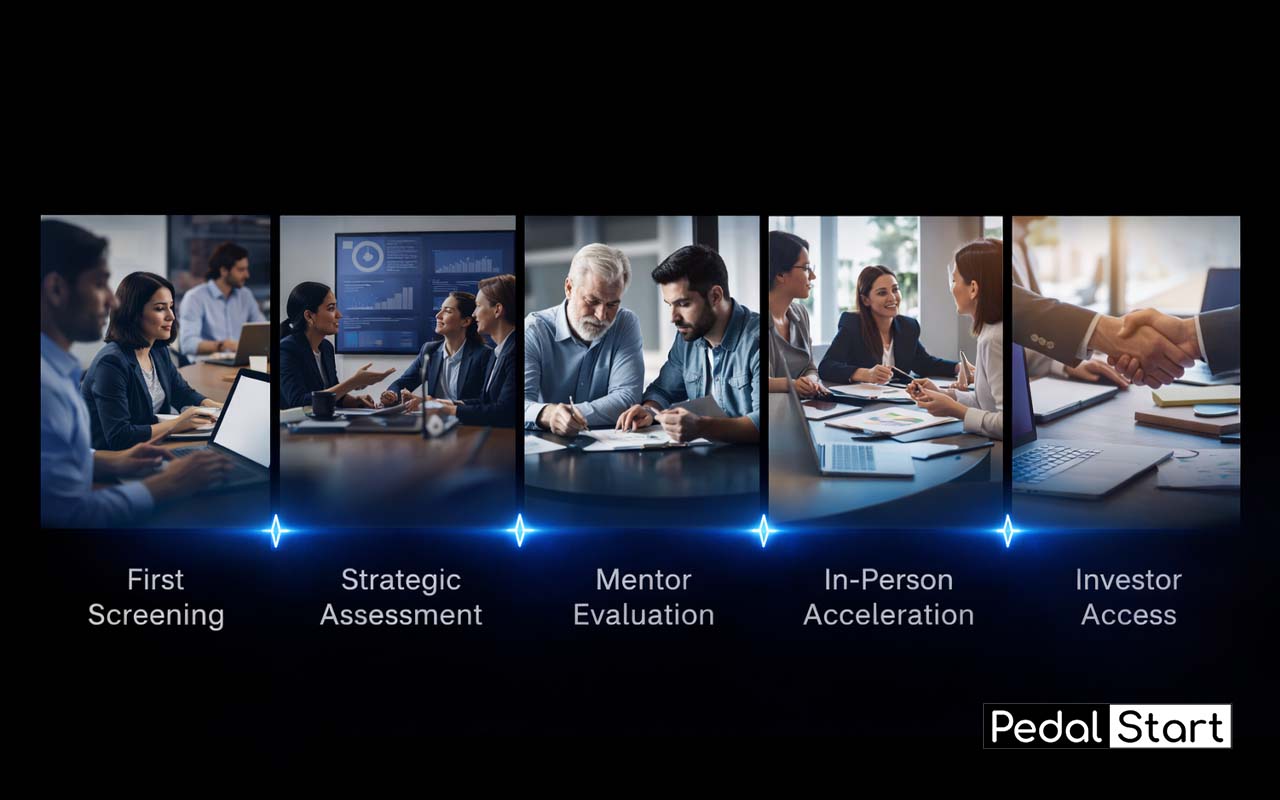
Understanding how does PedalStart work begins with its selection model. PedalStart is not an open access founder network. Startups typically enter through considered applications which get evaluated and selected startups are then called to our structured programs such as Sprint, where stage, clarity of problem, and founder commitment are evaluated.
Once selected, engagement goes beyond introductory sessions. The focus shifts to live business areas such as refining ICP definition, tightening value propositions, building repeatable sales motion, correcting pricing assumptions, and strengthening go-to-market clarity. The expectation is transparency. Founders are expected to share real metrics and ongoing challenges. The process demands active participation, not passive attendance.
Peer interaction plays an important role. Founders learn from reviewing each other’s business positioning, fundraising narratives, and sales strategies. Progress is tracked through business outcomes rather than program completion.
The structure is designed to strengthen commercial discipline before scaling exposure.
2. Mentorship and Investor Access in PedalStart
PedalStart’s mentorship model is operator led. Founders interact with individuals who have built and scaled Mentorship typically covers:
Building a repeatable sales engine
Identifying the right early customer profile
Positioning against competitors
Structuring fundraising conversations
Avoiding premature scaling decisions
Beyond one-on-one guidance, founders gain access to curated introductions across operators, investors, and experienced founders within the network. These are warm connections, not mass broadcast introductions.
Investor access follows readiness. When traction, clarity, and narrative alignment are visible, introductions are facilitated. Founders may also get opportunities to present in curated pitch sessions or ecosystem gatherings where investors actively evaluate early-stage startups.
Historically, a meaningful portion of startups that demonstrate strong progress during engagement move on to raise external rounds. While outcomes depend on founder execution and market conditions, structured preparation significantly improves investor conversations compared to cold outreach.
The approach balances preparation and presentation. Rather than positioning funding as automatic, the model improves capital readiness so that investor conversations are grounded in stronger business fundamentals.

3. How does the investment structure work in PedalStart?
PedalStart’s investment structure combines early-stage capital with ongoing engagement. Investment typically aligns with pre seed stage startups and is structured in exchange for equity.
Exact terms vary based on stage and traction. What remains consistent is alignment. Capital is paired with continued involvement. Founders are expected to stay engaged in reviews, ecosystem discussions, and milestone tracking.
This structure signals long term participation rather than one time program support. Investment is not separated from strategic input. It reflects a shared interest in sustained growth.
For founders assessing alignment, transparency around equity participation and engagement expectations is central to decision making.

4. Who PedalStart Is Not For?
Clarity about fit builds trust.
PedalStart may not be suitable for founders seeking symbolic association or minimal involvement. The engagement model assumes openness to scrutiny and consistent participation.
It may also not align with startups expecting immediate funding without operational refinement. Preparation often precedes investor introductions. Founders who prefer building entirely independently without peer review may find the ecosystem model intensive.
For teams prepared to refine their sales structure, strengthen capital readiness, and engage actively within a founder network, the accelerator offers structured support.