Startup Due Diligence Checklist: What Every Investor Will Ask Before Writing a Cheque

Ever heard “Let’s begin diligence” and felt both excited and nervous at the same time?
That's a common founder tendency!
It's where many rounds slow down, because of preparation being incomplete and understanding the startup due diligence process becomes a must before even getting asked about it.
What is Startup Due Diligence Process
At its core, the startup due diligence process is an investor’s way of validating what has been presented.
Everything shared during discussions, product claims, traction numbers, financial assumptions, team capabilities is examined more closely.
For founders, this stage often feels intensive because it moves from narrative to detail. Documents are requested, numbers are cross-checked, and decisions are revisited with more scrutiny.
Knowing how to do due diligence on a startup from the founder’s side helps reduce friction. It turns the process into a structured review rather than a reactive scramble.
Why Investors Perform Due Diligence

Before capital is deployed, investors need clarity on risk.
Due diligence exists to answer a few fundamental questions. Is the business legally sound? Are the numbers reliable? Is the product defensible? Can the founders execute?
In early-stage investing, there is always uncertainty. Due diligence does not remove it completely, but it reduces avoidable risk.
For founders, this stage is also an opportunity. Well-prepared diligence builds trust. It shows discipline, attention to detail, and respect for the investor’s decision process.
This is why due diligence in a startup preparation directly influences how quickly and confidently a round moves forward.
Complete Due Diligence Checklist for Startup
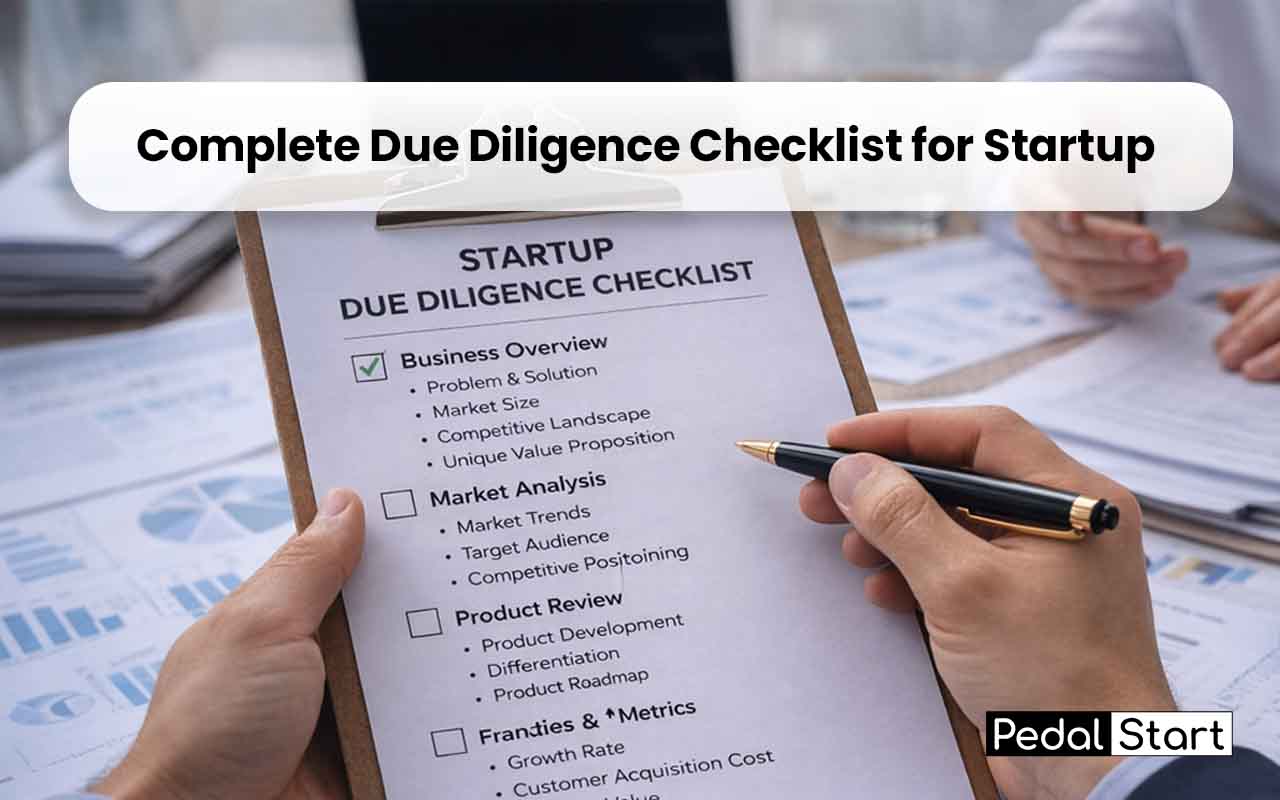
A practical due diligence checklist for startup preparation typically covers multiple areas.
On the business side, investors look at the problem being solved, market size, competitive landscape, and positioning. They want to understand why this company exists and why it can win.
On the product side, they evaluate functionality, differentiation, and user adoption. If the product is early, the focus shifts to roadmap clarity and speed of iteration.
On the traction side, metrics matter. Revenue, growth rate, customer acquisition, retention, and unit economics all come into focus. Even at early stages, consistency in numbers builds credibility.
Team evaluation is another critical layer. Backgrounds, past experience, role clarity, and commitment levels are assessed carefully.
This checklist is not meant to overwhelm. It reflects how investors connect different parts of the business into a single decision.
Financial, Legal, and Technical Documents Required
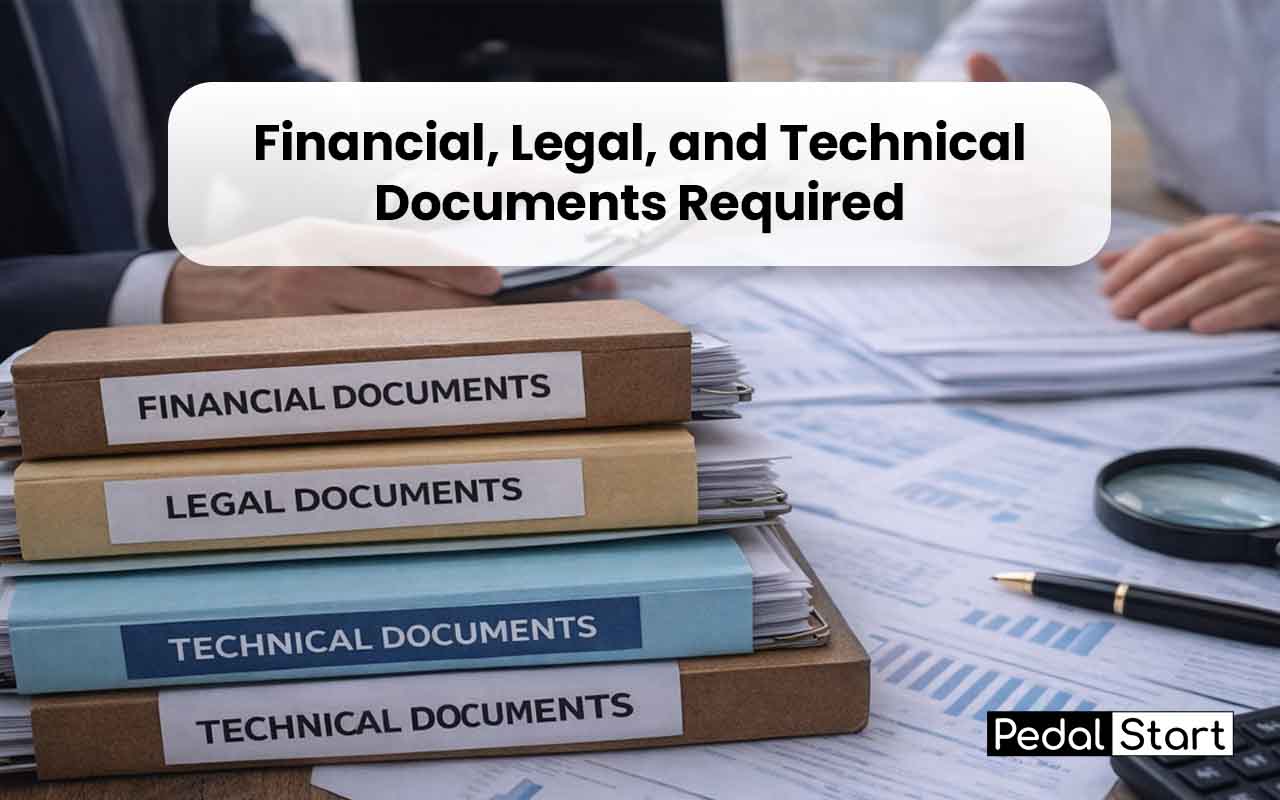
Preparation becomes practical when documentation is ready.
Financial records usually include revenue statements, expense breakdowns, projections, and cap table details. Investors want to see how money flows through the business and how it is expected to evolve.
Legal documentation covers incorporation papers, shareholder agreements, intellectual property ownership, contracts, and compliance records. Any gaps here tend to slow down the process significantly.
On the technical side, a technical due diligence checklist may include product architecture, code quality (if applicable), scalability considerations, and data security practices.
Even for non-technical products, clarity on how the system works builds confidence.
Well-organized documentation does not just answer questions. It signals operational discipline.
Common Red Flags Investors Look For

Certain patterns tend to raise concern during diligence.
Inconsistent numbers are one of the most common issues. If metrics shared earlier do not match supporting data, trust erodes quickly.
Lack of clarity on customer behaviour is another concern. If founders cannot explain who their users are and why they stay, it creates doubt around product-market alignment.
Legal gaps, such as unclear ownership structures or missing agreements, also delay decisions.
Overstated projections without supporting logic often stand out. Investors understand optimism, but they expect reasoning behind assumptions.
Recognizing these red flags early helps founders address them before they become obstacles.
How to Pass Investor Due Diligence
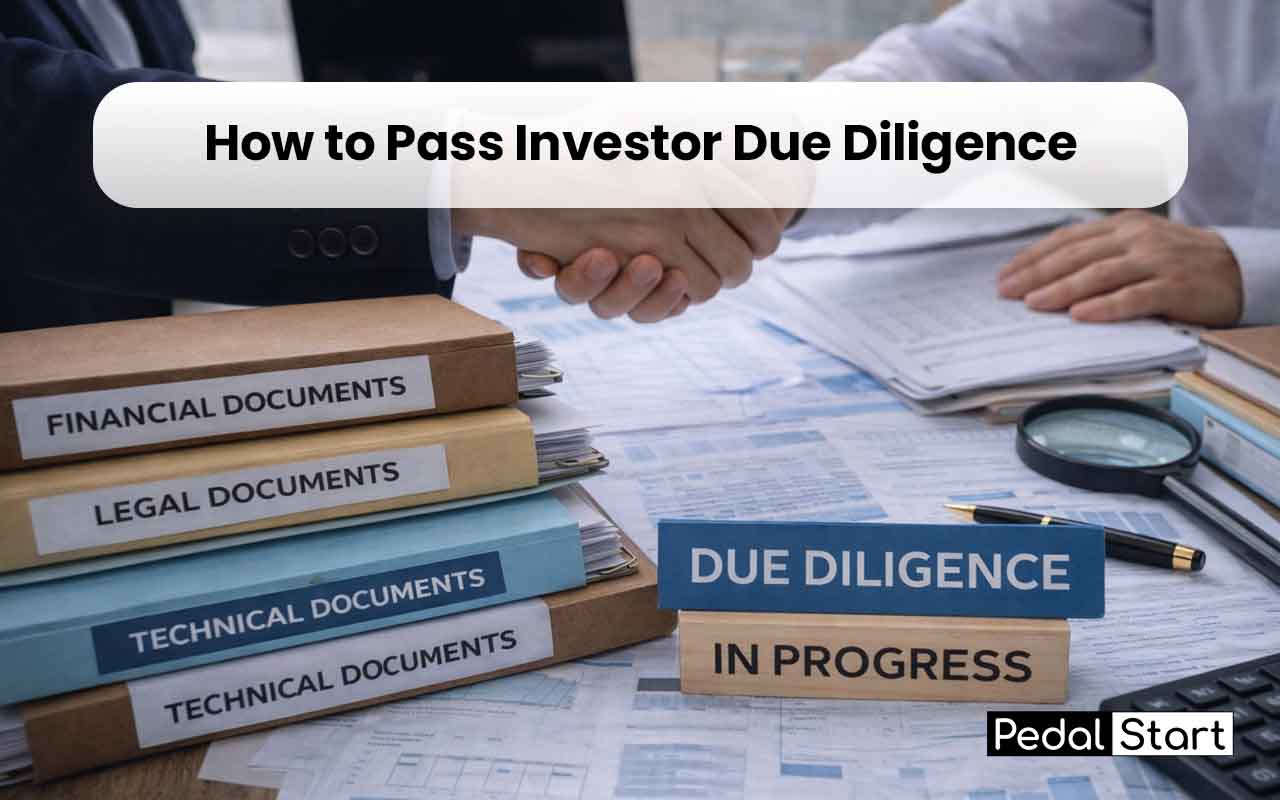
Learning how to pass investor due diligence is less about perfection and more about preparation and transparency.
The first step is organizing information in advance. A structured data room with all key documents reduces back-and-forth and keeps the process efficient.
The second step is consistency. Numbers, narratives, and documents should align across all interactions.
The third step is clarity in communication. If there are gaps or challenges, addressing them directly builds more trust than trying to present an ideal picture.
Another important aspect is responsiveness. Timely and thoughtful responses to investor queries reflect how the team operates under pressure.
Founders who approach diligence as a continuation of the conversation rather than a separate hurdle tend to navigate it more effectively.
Conclusion
The startup due diligence process is not just an investor exercise. It is a reflection of how a company is built.
For founders, preparation at this stage influences more than just the outcome of a single round. It sets the tone for future interactions, partnerships, and growth.
A well-prepared due diligence checklist for startup readiness does not guarantee funding, but it significantly improves the quality of conversations that lead to it.