
Why India is both a great and hard place to build a startup
India offers one of the strongest startup opportunities globally today.
The market is massive, internet adoption continues to rise, digital payments are mainstream. Consumers are becoming more comfortable buying products and services online. Government initiatives like Startup India have also encouraged more people to start businesses.
At the same time, startup India challenges are very real.
Indian consumers are price-sensitive, competition is intense across almost every category. Customer loyalty takes time to build, and many startups are expected to scale quickly even before achieving stability. This creates pressure, especially for early-stage founders who are still trying to figure things out.
Challenge 1: Access to early-stage funding

Funding is one of the biggest startup ecosystem India challenges, especially during the early stages.
Most founders believe fundraising will become easier. In reality, investors usually want proof that the market actually needs the product. They look for traction, customer interest, revenue signals, or retention metrics before writing a cheque.
The difficult part is that startups often need capital to reach those milestones in the first place, this is why many founders spend months pitching without meaningful outcomes.
How to overcome it
In the beginning, focus less on building a perfect business and more on proving demand. A lean MVP, early customer feedback, and even small revenue numbers can strengthen investor confidence significantly.
Founders should also avoid depending entirely on venture capital, today there are multiple ways to support early growth:
Founder communities
Grants and incubation programs
Revenue-based financing
More importantly, investors usually back founders who show clarity and execution rather than just big ideas.
Real example: Zerodha
Zerodha is one of the best examples of disciplined growth. Instead of chasing aggressive funding early, the company focused on profitability, customer trust, and product experience. That long-term approach helped them scale sustainably.
Challenge 2: Hiring and retaining talent on a startup budget

Early-stage startups often compete with large companies that can offer better salaries, stronger brand value, and more stability. Convincing talented people to join a small startup can be difficult, especially in the beginning has become one of the major issues. Retention becomes another challenge once the pressure of startup life kicks in.
How to Overcome it
Startups usually cannot win on salary alone. What they can offer is ownership, learning, and faster growth opportunities and also founders should focus on building a culture where people feel involved and valued.
Simple things make a difference:
Transparent communication
Clear ownership
Fast learning opportunities
Flexible work culture
ESOPs where possible
People stay longer when they feel connected to the mission, not just the paycheck.
Real example: Zoho
Zoho built a strong reputation for investing in employee development and long-term culture. Instead of relying only on expensive external hiring, the company focused heavily on internal training and skill-building.
Challenge 3: Regulatory and compliance burden for early stage startups

Compliance is one of the most frustrating early stage startup problems for founders.
Many entrepreneurs underestimate how much time goes into registrations, taxation, legal agreements, filings, and operational compliance.The process has improved over time, but there is still a learning curve.
How to overcome it
Startups should invest early in proper legal and financial guidance, even if it is through external consultants instead of full-time hires. Maintaining clean documentation from the start saves time, reduces risk, and helps during fundraising conversations as well.
Real example: Razorpay
Razorpay operates in a highly regulated sector. The company focused heavily on compliance, banking partnerships, and operational systems early on, which helped build credibility and trust at scale.
Challenge 4: Finding product-market fit
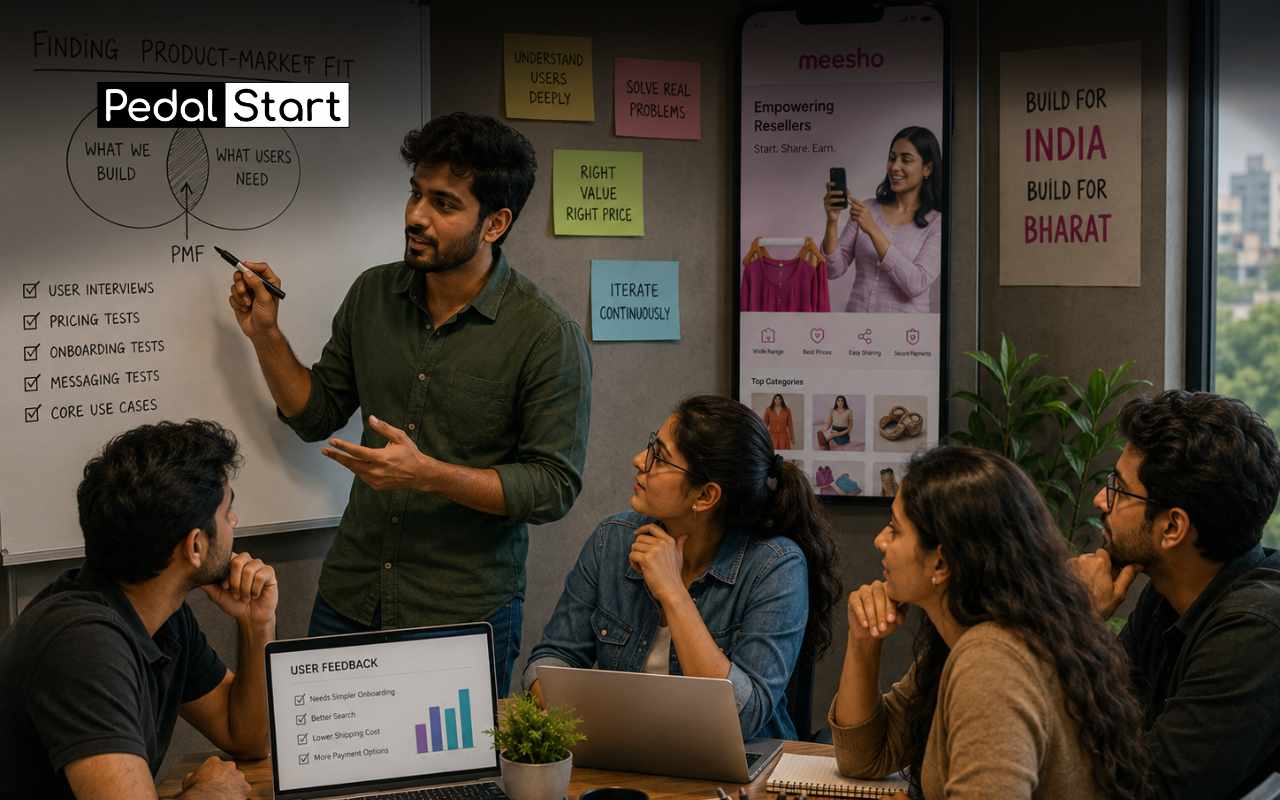
Many startups build products people find interesting but not valuable enough to pay for, this is one of the most common problems faced by startups in India.
Indian consumers care deeply about value. A product may work well technically, but if the pricing, positioning, or use case does not connect with the market, growth becomes difficult.
How to overcome it
Founders need to spend more time understanding users than building features. The best insights usually come directly from customer conversations.
Startups should continuously test:
Pricing models
Customer onboarding
User experience
Messaging
Core use cases
Product-market fit rarely happens instantly which comes through repeated iterations.
Real Example: Meesho
Meesho understood how small sellers and resellers operated in India and built a social commerce model around those behaviors that strong understanding of the market played a huge role in their growth.
Challenge 5: Building trust without a huge marketing budget
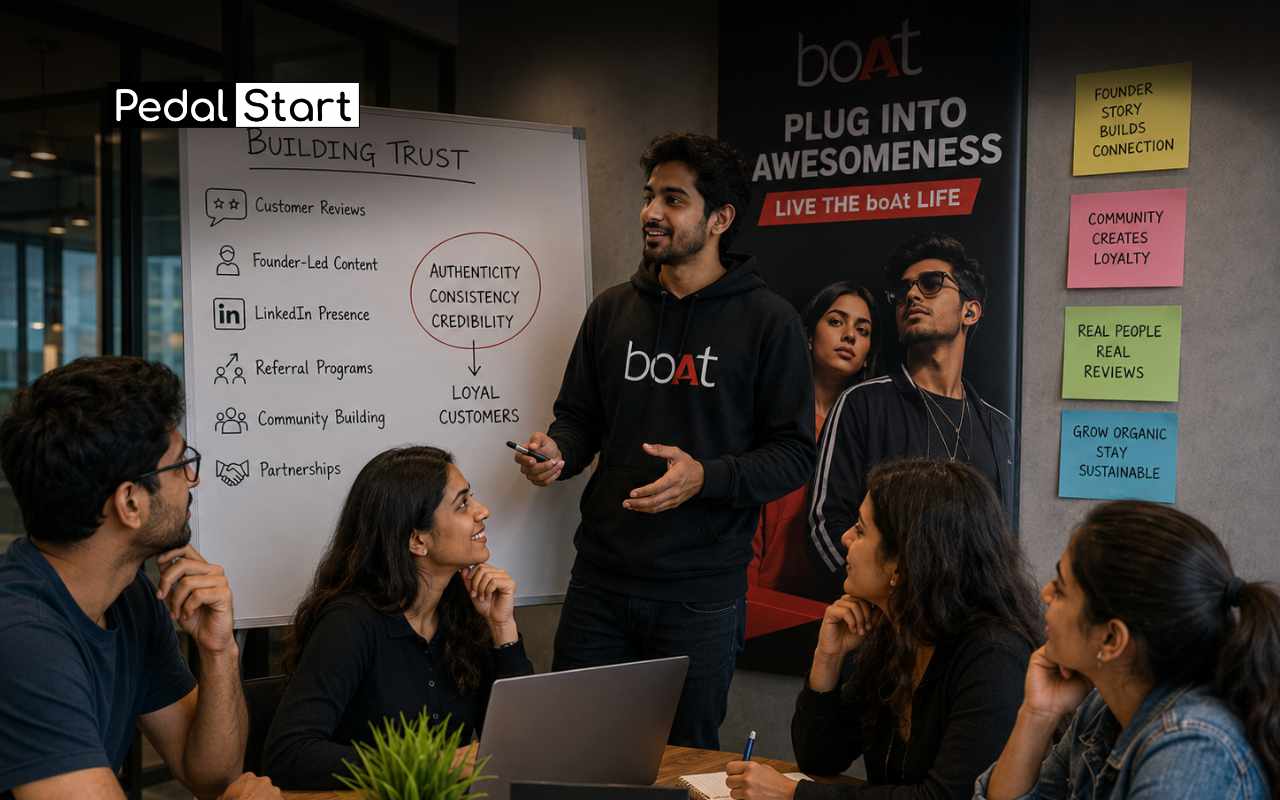
For new startups, trust is difficult to earn.
Customers are naturally cautious about trying unknown brands, especially when larger competitors already exist in the market. At the same time, digital advertising costs continue to increase, making customer acquisition expensive for startups operating with limited budgets.
How to overcome it
Instead of trying to scale marketing aggressively. Focus first on credibility and consistency.
Organic trust-building channels often work better during the early stages:
Customer reviews
Founder-led content
LinkedIn presence
Referral programs
Community building
Partnerships
People trust brands that feel authentic and consistent over time.
Real Example: boAt
boAt built strong brand awareness through influencer collaborations, youth-focused branding, and community-driven marketing rather than depending only on traditional advertising.
Challenge 6: Scaling too early

One mistake many founders make is preparing for massive scale before validating the basics by overbuilding teams, systems, or infrastructure far too early. This usually increases burn without solving the core business problem.
How to overcome it
In the beginning, simplicity matters more than scale, founders should focus on:
Solving one problem well
Keeping operations lean
Building flexible systems
Iterating quickly based on feedback
Scale should follow validation, not assumptions.
Real Example: Dunzo
Dunzo initially focused on solving hyperlocal delivery challenges within smaller markets before expanding further. That phased approach helped the company refine operations gradually.
Challenge 7: Co-Founder conflicts and team breakdowns
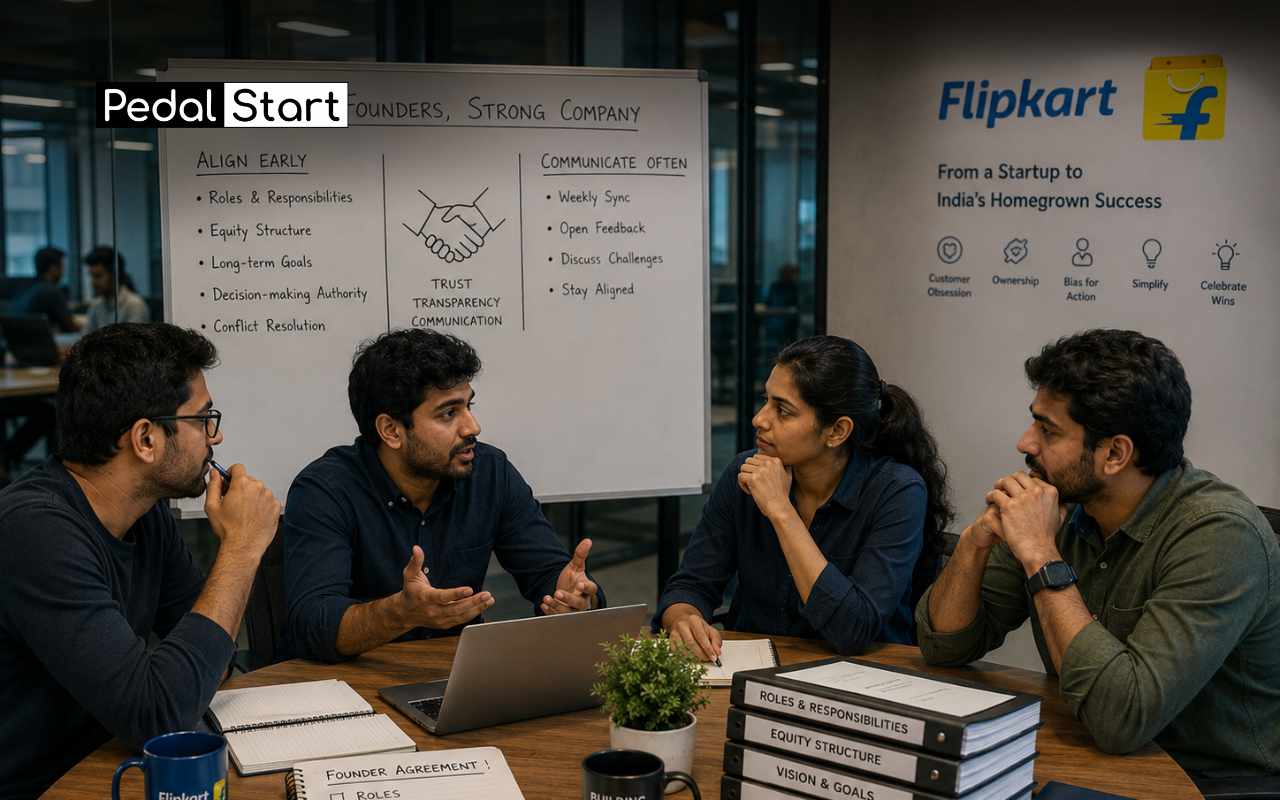
Not all startup failures happen because of market conditions many happen internally. Co-founder conflicts, communication gaps, and unclear responsibilities can create serious operational problems. This is one of the less-discussed startup challenges and solutions topics, but it affects many early-stage teams.
How to overcome it
Founders should align early on important decisions like:
Roles and responsibilities
Equity structure
Long-term goals
Decision-making authority
Conflict resolution processes
Regular communication becomes critical as the company grows.
Real Example: Flipkart
Flipkart scaled through multiple high-pressure growth stages by building strong operational leadership and maintaining alignment across teams.
Practical ways founders can handle startup challenges better
Every startup journey is different, but some patterns remain consistent across successful businesses.
Stay Lean Longer
Controlling burn during the early stages gives startups more room to experiment and survive.
Build Distribution Early
A great product alone is rarely enough. Start building audience and visibility from the beginning.
Focus on Customer Retention
Retained customers create stronger long-term businesses than vanity growth metrics.
Learn Quickly
Startups that adapt faster usually outperform startups that simply move faster.
Seek the Right Support System
Founders often grow faster when they are part of strong startup communities, accelerator programs, or founder networks that provide mentorship and practical guidance.