

Some of the strongest startup ideas today are spending months as side projects before becoming full-time companies.
A founder starts working on something after office hours. A designer begins testing an idea with a few users during weekends. Two friends keep discussing a problem they have personally faced for years and slowly start building around it.
That early stage looks slow from the outside, but it teaches founders things that no podcast, course, or startup thread can.
You learn how people react when nobody knows your name yet. You learn whether users actually return after trying the product once. You learn how difficult distribution is when there is no brand attached to what you are building.
For many founders, this phase also removes the pressure of needing everything figured out immediately. Instead of chasing scale too early, they get time to understand the market, improve the product, and build conviction gradually.
The journey from a side project to startup usually becomes real much before funding enters the picture. It starts when users begin taking the product seriously.
Month 1: Validate the Idea Properly

The first month should be spent understanding the problem deeply before building anything substantial.
This is where many early founders move too fast. An idea feels exciting, so they jump straight into product development without spending enough time speaking to potential users.
Good validation changes the quality of decisions later.
Talk to people who experience the problem regularly. Ask how they currently solve it, what frustrates them, and where existing products fall short. Detailed answers matter far more than polite encouragement.
The clearer the problem becomes, the easier product decisions get later.
Month 2: Build an MVP Around One Clear Use Case

Once the problem feels validated, founders should focus on building the simplest version of the product that users can interact with.
A lot of teams lose time trying to make the MVP feel complete. Early users do not expect perfection. They expect usefulness.
This stage usually happens during nights, weekends, and small pockets of free time between regular work schedules. Progress feels slower than expected, but founders also become sharper about prioritization because time is limited.
For anyone following an idea to fund a startup, the goal here is simple: build enough for users to react honestly.
That reaction matters more than polished design or a long feature list.
Month 3: Find Your First Active Users

The startup starts feeling different once people begin using the product consistently.
Real users create a level of clarity that brainstorming never can.
Some features immediately make sense to users. Others create confusion. Sometimes people use the product differently from how the founders imagined.
This stage is important because user behavior starts replacing assumptions.
For a first time founder in India, getting the first few active users often changes the emotional journey completely. The startup stops feeling like an idea sitting inside documents and begins feeling like something people genuinely want to engage with.
The founders who learn fastest during this phase are usually the ones spending the most time speaking directly with users.
Month 4: Understand Traction Before Going Full-Time

By the fourth month, patterns around usage and engagement usually become clearer.
Users either continue returning or slowly disappear. Referrals either begin happening naturally or require constant pushing from the founders.
This is where founders need to step back and evaluate traction honestly.
Are users coming back consistently?
Are they recommending the product to others?
Is there early willingness to pay?
Does the opportunity feel strong enough to pursue full-time?
This stage often leads founders into serious conversations around the quit job start startup guide decision.
Leaving a stable income behind becomes easier when there is visible proof that the product is creating value for users.
Month 5: Build Visibility Around the Startup
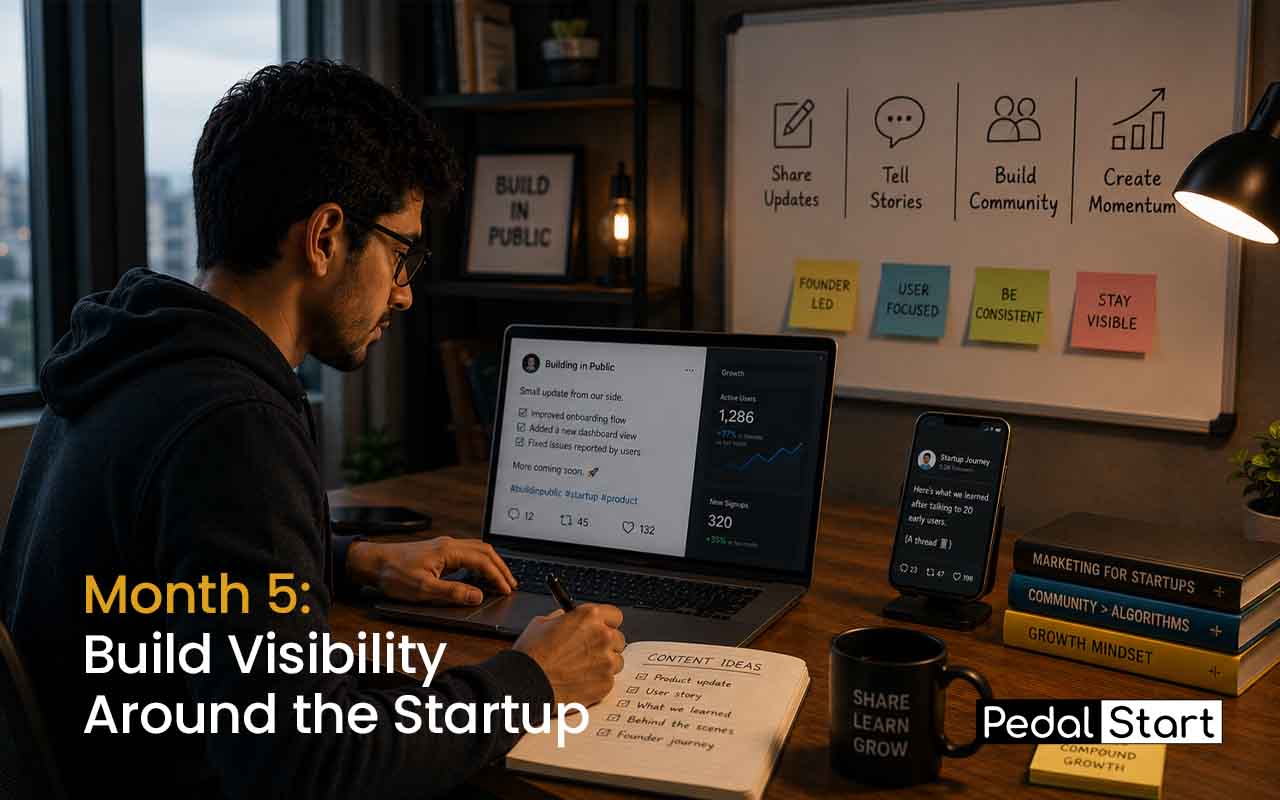
A lot of strong products struggle because very few people hear about them consistently.
By month five, founders should start building visibility around what they are creating.
This can happen through founder-led content, product updates, user stories, startup communities, or even simple reflections around what the team is learning while building.
Over time, this visibility creates momentum around the startup.
People begin recognizing the product. Early supporters start referring users. Other founders and operators enter the conversation.
For early-stage startups, visibility often creates opportunities much earlier than expected.
Month 6: Start Investor Conversations With Proof

By this stage, founders usually have enough signals to begin speaking with investors and accelerator programs.
At the early stage, investors are not expecting massive revenue. They are looking for signs that users genuinely care about the product.
That proof can come through:
Consistent engagement
User retention
Organic referrals
Early revenue
Fast product improvement based on feedback
This is where conversations with angels and a startup acceleration program become much stronger because founders are speaking from actual user experience instead of assumptions.
When Should You Quit Your Job?

There is no universal timeline for this decision.
Some founders move full-time after early traction appears. Others wait until revenue becomes more stable.
Before taking that step, founders should evaluate:
Personal runway
Monthly expenses
Product traction
Co-founder alignment
Mental readiness for uncertainty
The pressure of building changes significantly once the salary stops coming in. Planning for that transition gives founders more room to think clearly.
What Makes Investors Take Early Founders Seriously
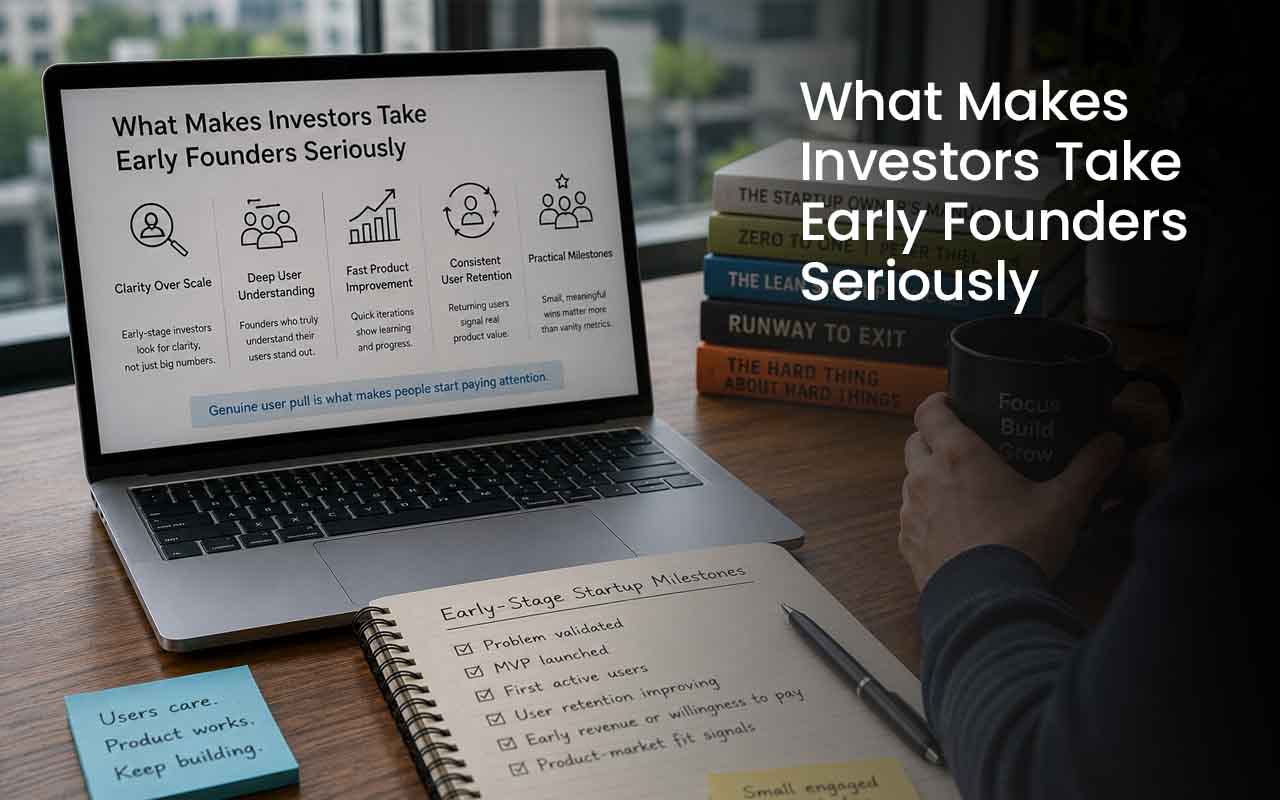
Early-stage investors usually look for clarity more than scale.
They want to understand whether founders know their users deeply, whether the product is improving quickly, and whether early users are returning consistently.
Strong early-stage startup milestones are often smaller and more practical than people expect.
A small group of deeply engaged users usually matters more than inflated vanity metrics.
Because at the early stage, genuine user pull is what makes people start paying attention.