

A pitch deck is usually built too late and shown too early.
Founders spend weeks perfecting slides, then rush through them in fifteen minutes hoping the story lands. Investors, meanwhile, are not reacting to the polish. They are listening for clarity, trying to understand whether this founder sees the business the way reality will force them to see it six months from now.
An effective pitch deck is not a performance. It is a compressed version of how you think about the company. The strongest decks feel calm, precise, and grounded because the thinking behind them is already done.
This guide focuses on what actually helps at the early stage, using practical startup pitch deck tips that reflect how investors evaluate risk, progress, and founder judgment.
What investors really look for in a pitch deck
Early-stage investors are not hunting for Predictability. They are assessing decision quality.
They want to know what problem you chose, why it matters enough to build a company around it, and how clearly you understand the people living with that problem today. If the problem is vague, the rest of the deck becomes harder to believe.
They also pay attention to focus. A pitch that tries to cover multiple markets, user types, or use cases signals confusion, even if the opportunity sounds large. Investors trust founders who can explain their business simply because it usually means the product decisions are simpler too.
According to analysis of investor behavior, early-stage investors spend an average of just over 3 minutes on a pitch deck before deciding whether to engage further. That time is not spent admiring design. It is spent scanning for clarity, traction, and logic.
This is why investor pitching best practices always come back to one idea. Make the business easy to understand and easier to believe.

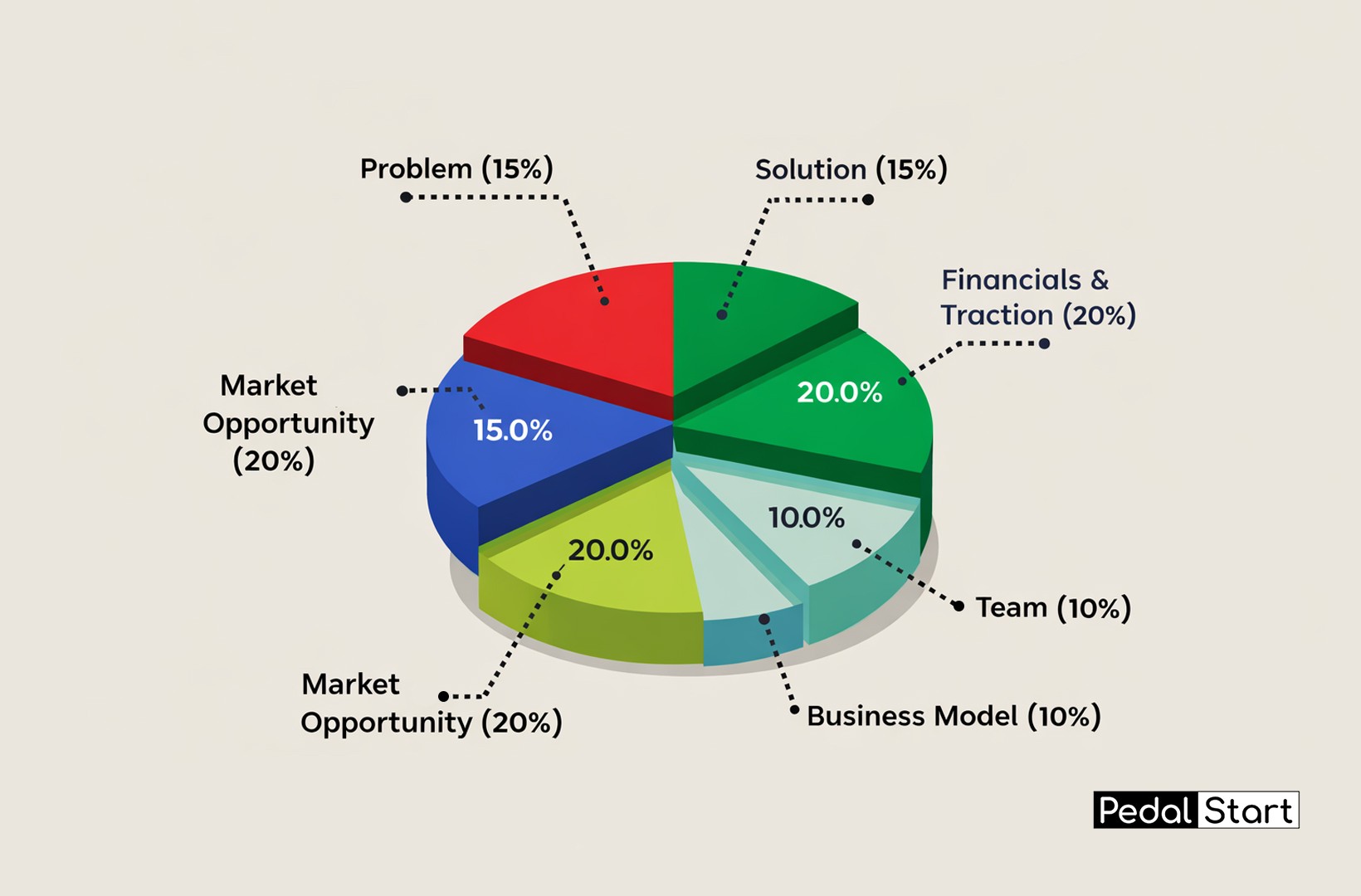
Must-have slides: from problem to traction
A solid pitch deck template follows a thinking sequence, not a design checklist.
The problem slide should describe a situation, investors can picture. Who faces this problem, how often it occurs, what breaks because of it, and what people do today to cope. One clear problem is enough.
The solution slide should explain what happens differently once your product exists. Avoid explaining how it works internally. Focus on what changes for the user.
Differentiation belongs in behavior, not adjectives. Show what you do that others do not, whether that is speed, cost, access, workflow, or outcomes. Comparisons work best when they are concrete.
Traction is where belief starts forming. Early traction can be small but meaningful. Active users, pilots converting to paid contracts, repeat usage, early revenue, strong engagement. The numbers matter less than the direction and consistency.
Your business model should answer simple questions. Who pays, when they pay, how much they pay, and why that pricing fits the problem.
The market slide should show that you understand where you are starting, not just where you hope to end up. Investors value founders who know their first market deeply.
The team slide works when it explains relevance. Experience, exposure, or lived understanding that connects directly to the problem you are solving.
These elements form the foundation of winning investor pitch strategies at the seed stage.
Narrative and design tips for maximum impact
A good deck reads like a conversation that flows naturally.
Each slide should answer one question and create curiosity for the next. If a slide needs verbal rescue, it is doing too much.
Design choices should support comprehension. Large text, simple visuals, charts that show trends over time rather than snapshots. Investors often read decks alone before or after meetings, so slides need to stand on their own.
Avoid exaggeration. Investors notice it immediately. Replace claims with evidence and ambition with reasoning.One useful test is this. Can someone retell your story to a partner later without opening the deck again? If yes, the narrative is working.
These seed funding pitch tips matter because investors back clarity before they back founder confidence.

Pitching virtually vs in-person: best practices
In-person pitches usually result better because one can benefit from presence and pacing. You can slow down, read reactions, and let discussion guide the flow. Slides act as anchors rather than scripts.
Virtual pitches demand tighter structure. Attention shifts faster on screens, so clarity becomes even more important. Speak with intention, pause between ideas, and assume the deck is being read while you talk.
Sharing the deck before the meeting helps. Many investors prefer reviewing first and using the call to test thinking rather than hear a full walkthrough.
Regardless of format, respect time. Ending with space for questions signals confidence and preparation.
Strong investor pitching best practices stay consistent across formats because they rely on preparation, not performance.
Real examples: what worked and why
One pitch deck that stayed with me wasn’t the one which was graph heavy, full of trendy designs and colours but, It opened with a single situation the founder had personally lived through, a process that broke repeatedly, cost time every week, and forced people to rely on workarounds they hated. The deck did not jump into vision or market size. It stayed with that moment long enough for everyone to understand the pain.
When the solution appeared, it addressed only that use case. No expansion stories, no future features. The traction slide did not show hockey stick charts. It showed usage patterns, how often users returned, what they stopped doing after adopting the product, and where the system still failed. One slide even listed what was not working yet and why.
What made the deck effective was restraint. The founder spoke with certainty about what they knew and honesty about what they were still learning. Questions were answered with examples from real users, not assumptions or slides hidden later in the deck.
That level of closeness to the problem changed the tone of the room. Investors among us were no longer evaluating slides, but judgment. And that is usually the moment when a pitch turns into a conversation about building something meaningful together.
That credibility carries into follow-up meetings, diligence, and long-term partnerships.