
Starting a company is often described as lonely, but loneliness is only part of the problem. The bigger issue is isolation. When founders build in isolation, every decision feels heavier than it needs to be. Every mistake costs more time. Every doubt lasts longer.
Startup communities exist because no founder should have to learn everything the hard way. Growth speeds up when learning is shared. Progress improves when problems are spoken out loud. Communities do not replace execution, but they reduce wasted effort around it.
A strong startup community does not just connect people. It compresses learning cycles, shortens feedback loops, and turns individual struggle into collective knowledge. That is where real leverage comes from.
Learning from Others’ Mistakes So You Don’t Make Them
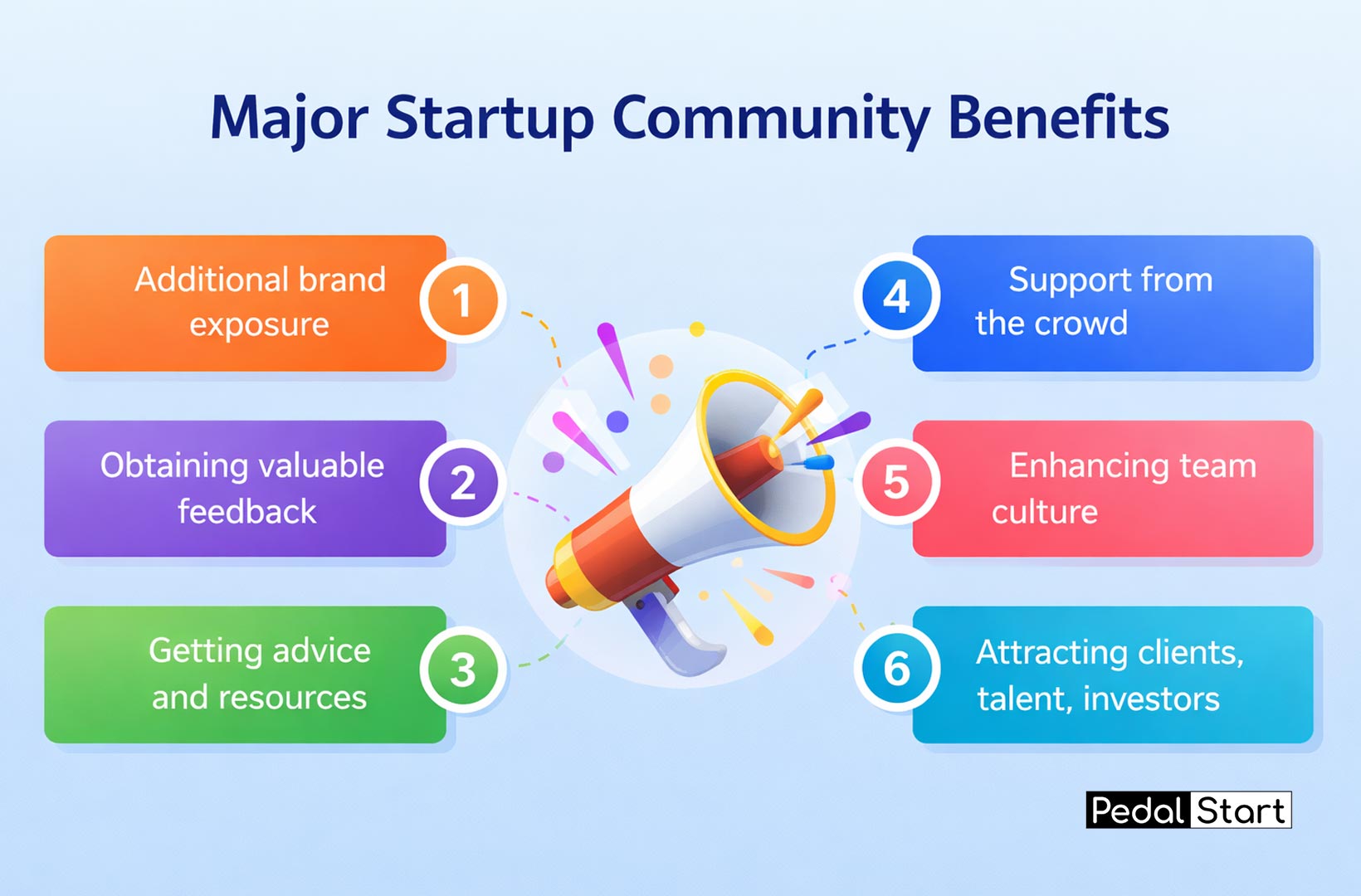
Every early-stage founder makes mistakes. The difference between slow growth and fast growth is whether those mistakes are first-hand or second-hand.
In a startup community, founders talk openly about what went wrong. A failed hire, a pricing model that collapsed, a customer segment that looked promising but never converted. These are lessons that usually cost months to discover alone.
When founders listen to peers who are a few steps ahead or behind, patterns emerge. Certain errors repeat across industries, poor customer validation, rushing fundraising, overbuilding features, weak founder alignment etc. Hearing these stories early changes behaviour before damage is done.
This is where a startup community becomes a risk-reduction system. You still make mistakes, but fewer of them are fatal. You recognise warning signs earlier. You adjust faster. Learning accelerates because you are not starting from zero every time.
Founders who stay disconnected often realise problems only when consequences hit. Founders inside communities recognise problems when they are still fixable.
Getting Early Feedback on Your Product
Early feedback is uncomfortable, but delayed feedback is dangerous.
Most founders build products based on assumptions. Communities help break those assumptions early. When founders share product ideas, prototypes, or early launches within a trusted group, the response is honest and fast.
This feedback is different from social media validation or polite encouragement. Peers inside startup communities ask practical questions. Who is paying for this? Why now? What happens if this feature fails? Where does retention come from?
This kind of feedback exposes weak logic before customers do. It helps founders refine positioning, pricing, and use cases while changes are still cheap. It also prevents founders from falling in love with features that users do not care about.
The benefits of incubators are often discussed in structured programs , but startup communities offer something equally valuable in a less formal way. Continuous feedback without waiting for scheduled reviews. Real reactions from people who understand the struggle of building from zero.
Products improve faster when feedback arrives earlier and communities shorten that exact distance.

Easier Access to Mentors and Industry Experts
Mentorship is not about one-off advice. It is about access over time.
In startup communities, mentors are not distant figures on a stage. They are part of the environment. Conversations happen naturally. Context builds over repeated interactions. Advice becomes more relevant because mentors understand the founder’s journey, not just the pitch.
Founder networking inside communities lowers barriers. Instead of cold outreach, introductions happen through shared trust. Instead of generic advice, guidance becomes specific to the stage, sector, and constraints the founder is dealing with.
Industry experts often engage more openly in communities because discussions are grounded in reality. They see founders who are building, not just talking. This creates a two-way exchange where experience meets execution.
Over time, these relationships compound. A mentor becomes a sounding board. An expert becomes an advisor. Access grows not because of asking, but because of participation.
This is how founder networking actually works when done right. Not transactional. Not rushed. Built through presence and consistency.
The Emotional Support of Fellow hustlers
This part is rarely discussed openly, but building a startup brings long stretches of uncertainty. Progress feels slow. Decisions feel heavy. Wins are quiet. Losses feel personal and without right support, this emotional weight often affects judgment.
Startup communities provide emotional grounding. Founders see others struggling with similar doubts. They realise setbacks are normal, not personal failures. This perspective keeps people moving when momentum dips.
Peer support does not mean constant positivity. It means honest conversations. Sharing fears without losing credibility. Hearing that someone else also questioned their decision last week and kept going anyway.
Startup mentorship inside communities often happens naturally at such moments. A simple conversation at the right time prevents burnout. A shared experience restores clarity.
Founders who feel supported make better decisions. They take fewer panic-driven actions. They recover faster from setbacks, as emotional stability directly impacts execution quality.
Joining a community does not guarantee success. What it guarantees is speed of learning. Founders who grow fastest are not the ones with the best ideas. They are the ones who learn the fastest from others while building relentlessly themselves.
No founder builds alone in reality. The question is whether the learning happens intentionally or by accident. Communities make that learning deliberate. And in the early stage, that difference compounds faster than most founders expect.