
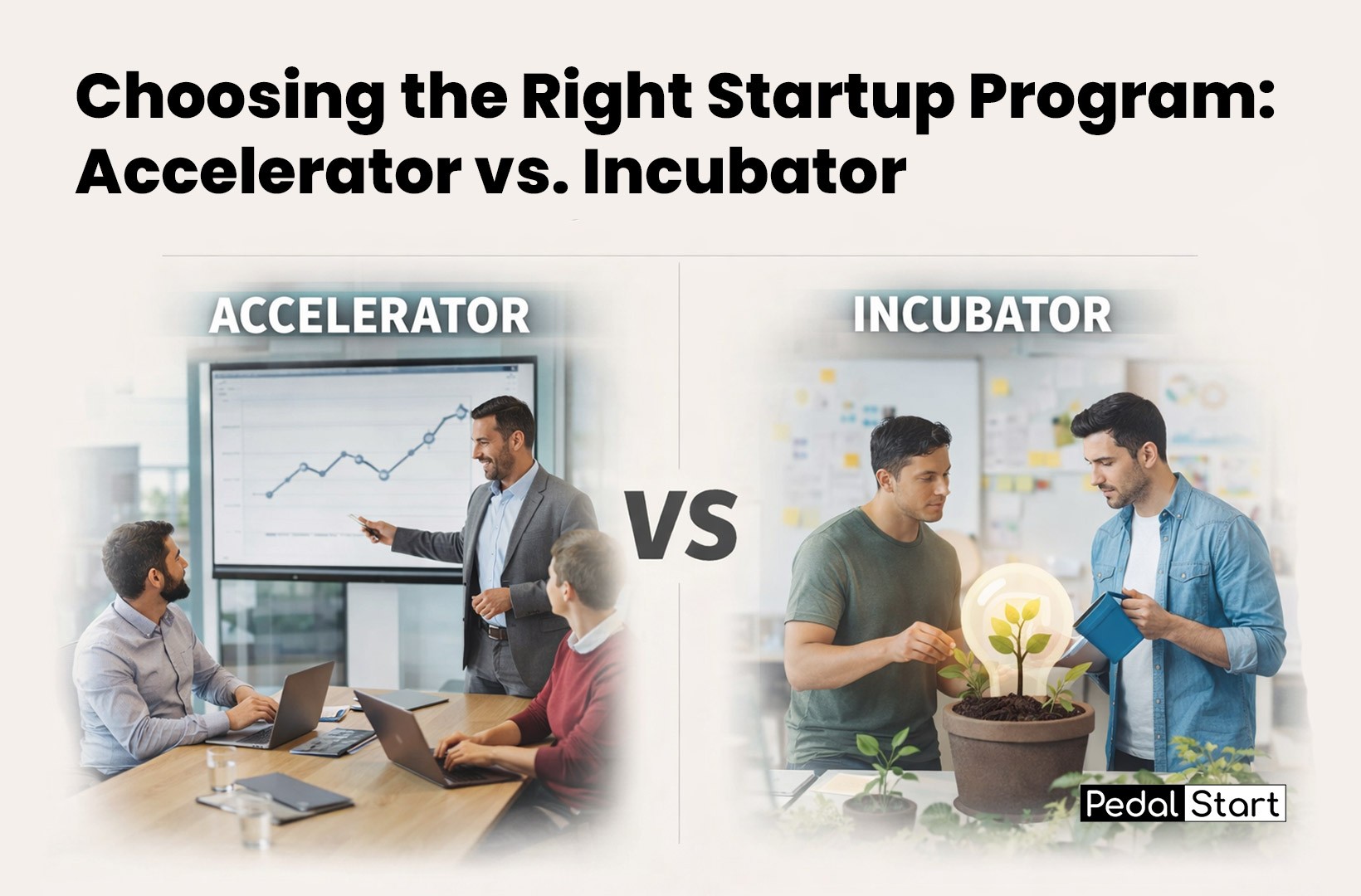
What Is an Accelerator?
Founders often hear the words accelerator and incubator used interchangeably, which is why the accelerator vs incubator debate becomes confusing for early-stage startups.
An accelerator is a focused, timebound programme designed to help startups achieve specific milestones. It brings founders together into a cohort, sets expectations for growth or fundraising progress in a fixed period, and typically includes structured mentoring and investor exposure. Many accelerators also offer seed investment in exchange for equity.
What Is an Incubator?
An incubator, on the other hand, is more like a supportive space where early ideas are refined over a longer period. Incubators provide mentorship, shared infrastructure, connections, and sometimes small grants or operational help, but they do not usually work on a fixed schedule or cohort basis. There is no formal “end date” with pressure to graduate.
Choosing between these two starts with understanding where your startup is right now. Are you still shaping your idea and testing assumptions? Or are you ready to scale beyond early validation?
Differences in Structure, Funding, and Outcomes
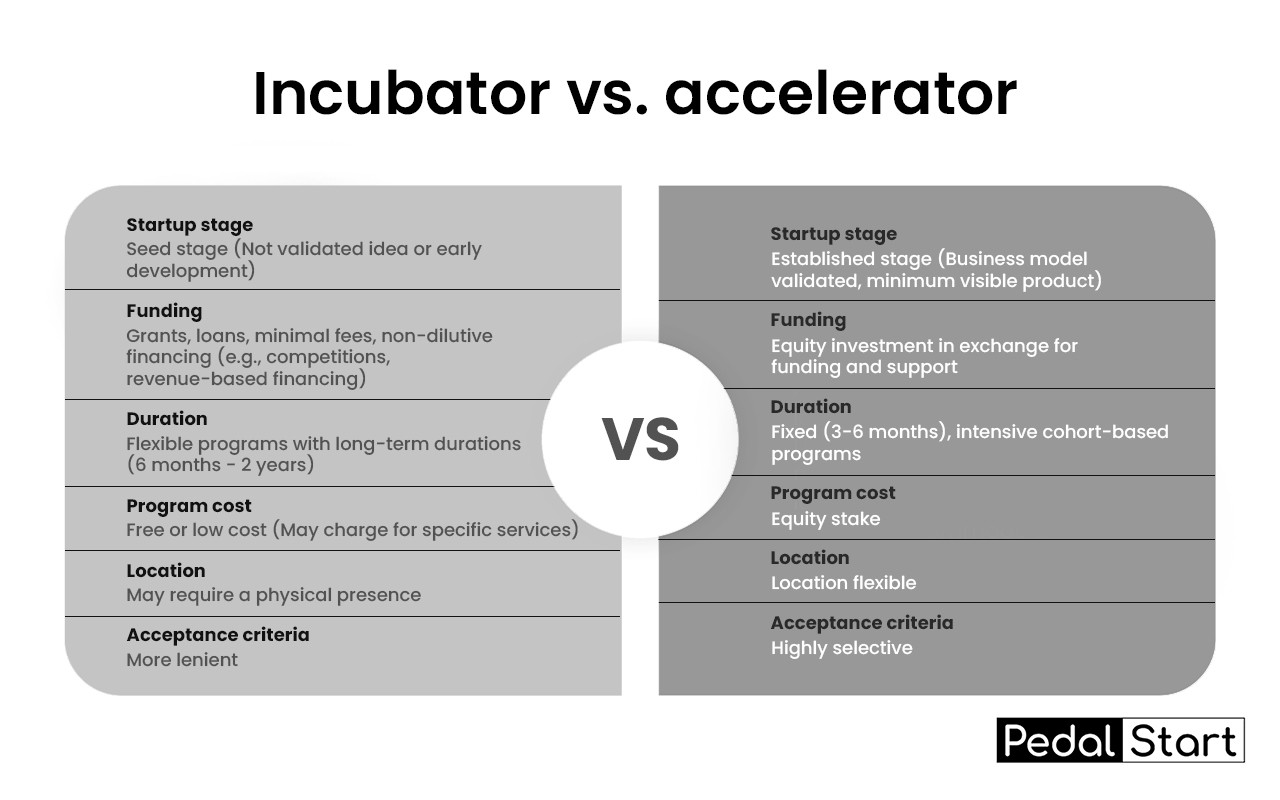
This section offers a practical startup program comparison based on how founders experience these programmes day to day.
Structure:
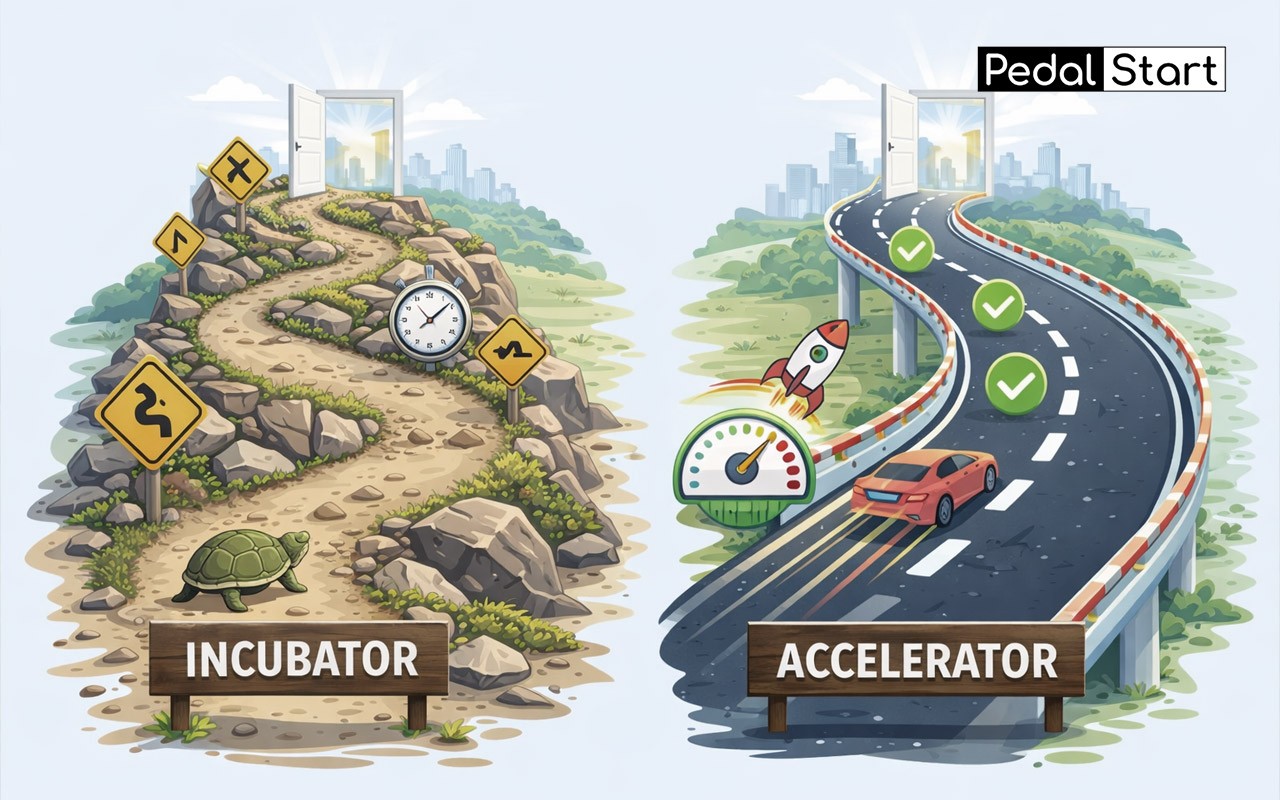
Accelerators operate on a tight rhythm of reviews, mentor sessions, and deliverables. Think of them as bootcampstyle: intense and milestonesoriented. Incubators are more like studios: ongoing conversations, flexible progress, and fewer deadlines.
Funding:
In an accelerator, it is common to receive capital tied to equity. This exchange formalizes investor involvement early. In incubators, funding is usually indirect, through grants, partnerships, or introductions without equity requirements.
Outcomes:
Accelerators aim to push startups toward traction, readiness for fundraising, and market visibility within months, which is why they are often considered among the best startup growth programs for founders with early demand signals. Incubators help founders explore value, develop prototypes, understand users, and build internal routines before scaling.
Here’s how founders can think about this: if you are still clarifying core customer problems, incubator environments give you room to iterate. If you already have early signals of demand and want to convert that into growth and investment conversations, an accelerator’s structure can be valuable.

Pros and Cons for Early-Stage Founders
No programme is perfect for every stage. Both have strengths and limitations.
Accelerator advantages for founders:
Defined timeline with clear expectations
Regular mentor access focused on execution
Exposure to investors and fundraising preparation
Peer cohort learning accelerates decision quality
Accelerator limitations:
Requires commitment to a fixed period of work
Equity may be involved, even at an early stage
Incubator advantages for founders:
Flexible timing helps early discovery work
Community support without rigid deadlines
Often open to conceptstage startups
Incubator limitations:
Less emphasis on fundraising readiness
Less structured mentorship targeting growth
Progress can drift without clear milestones
Founders sometimes join an accelerator too early because they want validation or a cheque. A more useful question is: What specific progress am I trying to make in the next three months, and does this programme help me do it?
How to Evaluate Programs That Fit Your Startup
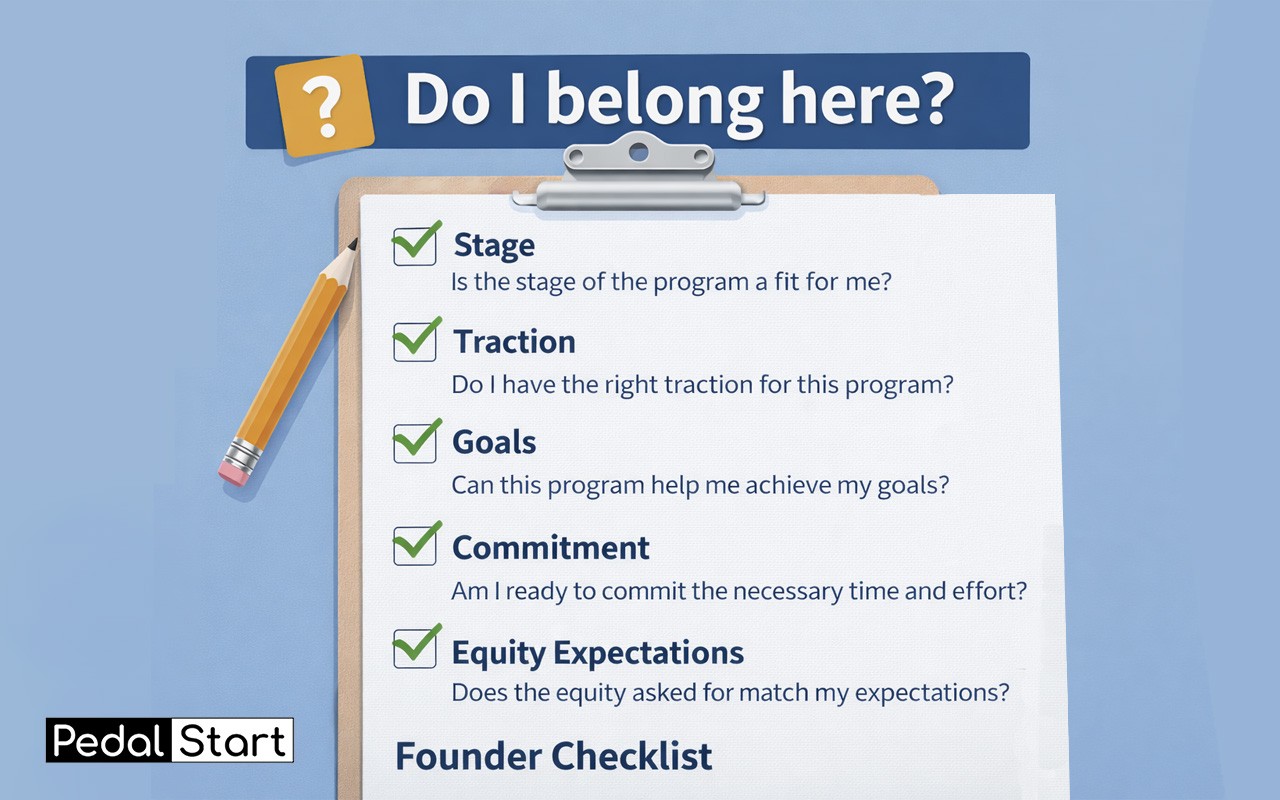
Understanding how to choose a startup accelerator starts with being honest about your current stage. Here are questions that help you assess fit, beyond prestige or names.
1. What problem are you solving right now?
If your problem is still being defined, incubators help by offering time and feedback space. If you already know the problem and are shaping a solution others use, acceleration is more suited.
2. What progress should you make by the end of the programme?
Good accelerators expect measurable growth, more users, stronger retention, early revenue, clearer pitch narrative. Incubators expect refined hypotheses and validated assumptions.
3. What is the commitment level you can sustain?
Intensive programmes require daily focus. Choose one that allows you to move work forward, not distract you from it.
4. What do you give and what do you get?
Equity in exchange for structured support can make sense if you need what the programme offers. If your gaps are still foundational, equity costs might outweigh early benefits.
A wellchosen programme aligns with your stage and fills the gaps in capability, not ego.
Case Studies: Success Stories from Each Track
Real outcomes make this distinction clearer.
In incubator environments, earlystage founders often focus on building the first meaningful version of their product and validating real user problems. These founders enter spaces that value exploration over speed, allowing them to refine their approach before pressure mounts. As a result, their product decisions are rooted in real customer learning, not assumptions.
Accelerators tend to formalize startup readiness into milestones that matter for growth. Founders in accelerated cohorts spend concentrated time on proving demand, scaling early traction, and preparing for seed rounds. The mentor intensity and network access help founders cut learning cycles that might otherwise take many more months.
For example, programmes that combine structured mentoring, regular reviews, and community accountability help founders identify blind spots faster and build investor narratives more effectively. That real, taskoriented pressure leads to better preparedness.
At PedalStart, founders benefit from this same dual understanding of stageappropriate support. We take a founder’s current progress, align it with outcomes that matter for capital readiness, and provide mentorship that connects thinking with results. The emphasis is on building real traction and recording real learning, not just completing a checklist.
This is the difference between support for feeling good and support that moves the needle.

Choosing the right programme is not about labels. It is about stage, substance, and readiness.
If your focus is understanding the problem deeply and building user validation, incubators offer breathing room. If your focus is getting traction, honing investor messaging, and preparing for your next funding round, accelerators help you compress learning into action.
Start with where your startup actually is, not where you want it to be portrayed. The right choice does more than moving you forward. It keeps you focused on the work that matters.