
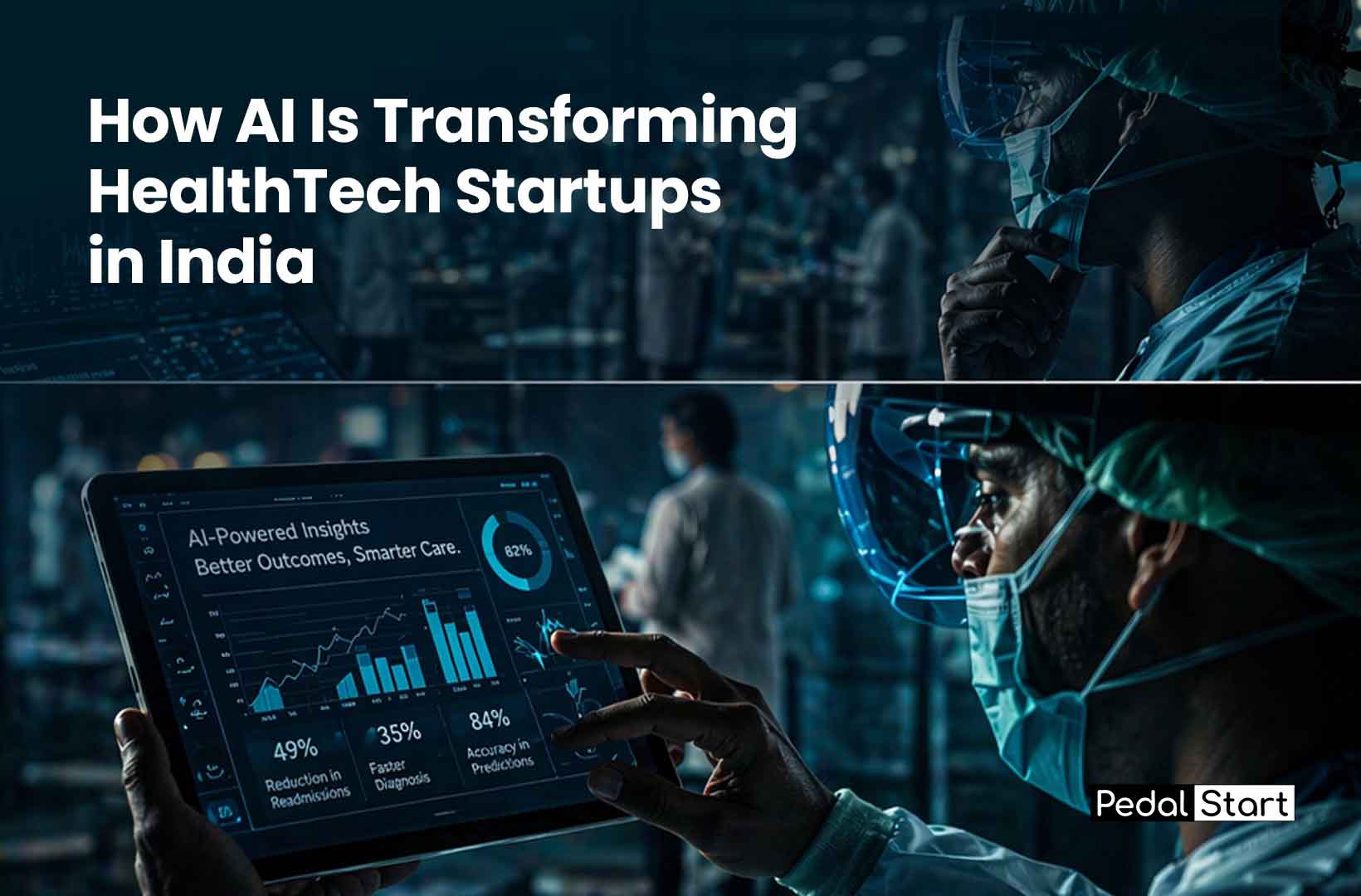
A doctor in a tier two city looks at a scan and takes a call based on years of experience. Now imagine that same decision supported by a system that has already analysed thousands of similar cases in seconds.
This is the shift artificial intelligence in healthcare is beginning to create across India. It is not replacing doctors or systems. It is adding a layer of intelligence that improves speed, accuracy, and consistency.
For founders building in this space, the opportunity is real, but so are the expectations.
Growth of Healthcare Startups in India

India’s healthcare system has always operated under pressure. Large population, uneven access, and limited doctor to patient ratios create constant demand for better solutions.
This is where healthcare startups have started to play a more active role. Over the last few years, the number of startups building across diagnostics, telemedicine, pharmacy, and chronic care has grown steadily.
What is different now is the type of problems being addressed. Earlier, the focus was on access. Today, the focus is shifting towards quality, continuity, and outcomes.
This is also where AI in healthcare India is gaining ground. Founders are not just building platforms. They are building systems that learn and improve over time.
Role of AI in Healthcare Industry

To understand the role of AI in the healthcare industry, it helps to look at how decisions are made in healthcare.
Every diagnosis, treatment plan, or follow-up depends on data. Patient history, symptoms, test results. The challenge has always been processing this information fast enough and accurately enough.
This is where AI medical technology comes in. It helps process large volumes of data and identify patterns that may not be immediately visible.
For startups, this creates an opportunity to build tools that assist doctors, improve diagnostics, and streamline operations.
The important part here is not automation alone. It is better decision support.
Key Use Cases of AI in HealthTech
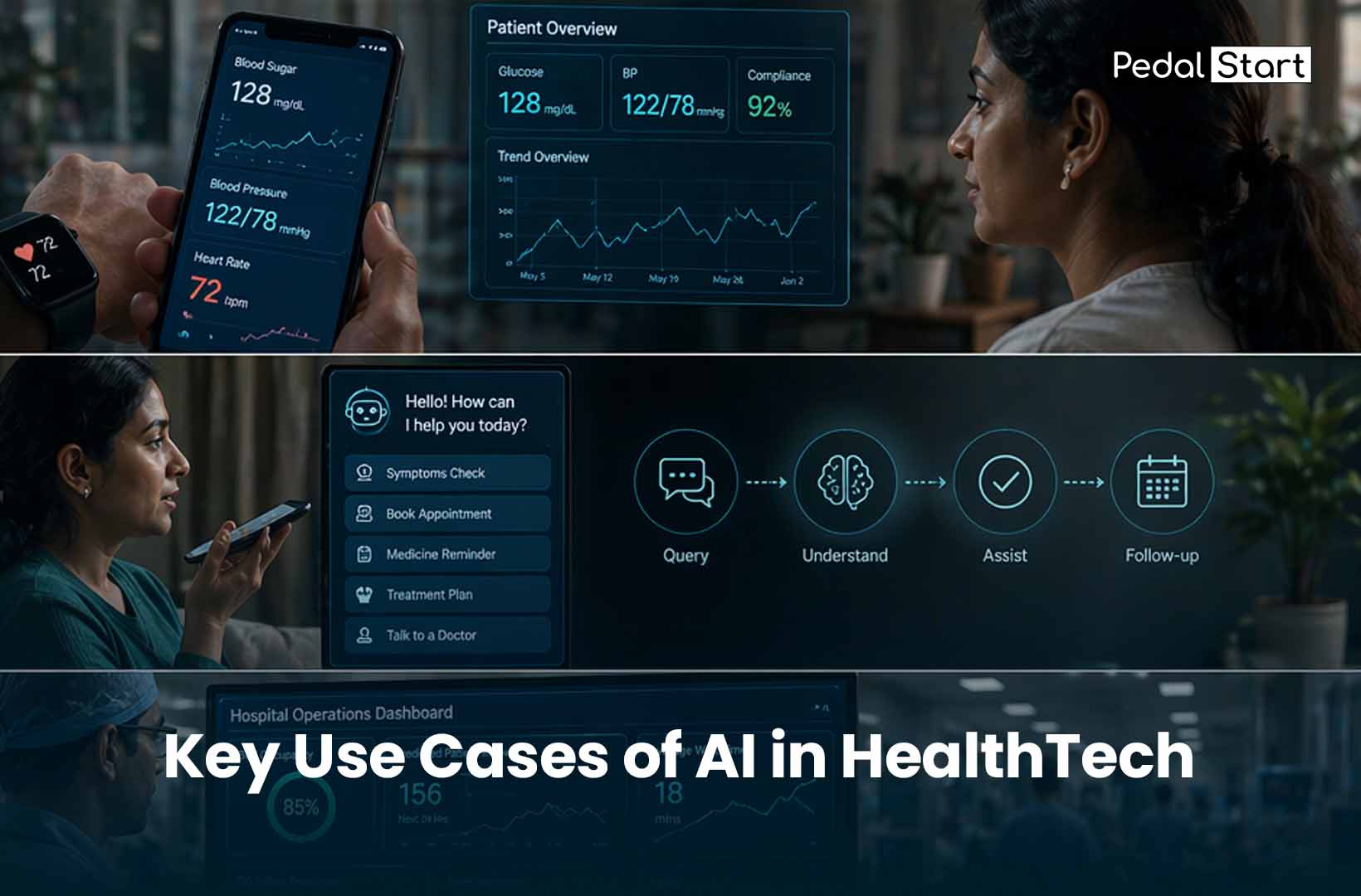
When you look at healthcare startups using AI, a few use cases stand out clearly.
Diagnostics is one of the strongest areas. AI models are being used to analyse medical images such as X-rays, MRIs, and CT scans to assist in early detection of diseases.
Another area is chronic disease management. Startups are building systems that track patient data over time and provide insights for conditions like diabetes or hypertension.
Virtual health assistants are also becoming more common. These tools handle basic queries, schedule follow-ups, and guide patients through treatment plans.
Operational efficiency is another layer. From managing hospital workflows to predicting patient inflow, AI is helping reduce inefficiencies.
Each of these reflects how AI helps healthcare startups move beyond basic service delivery into more intelligent systems.
Benefits of AI for Healthcare Startups
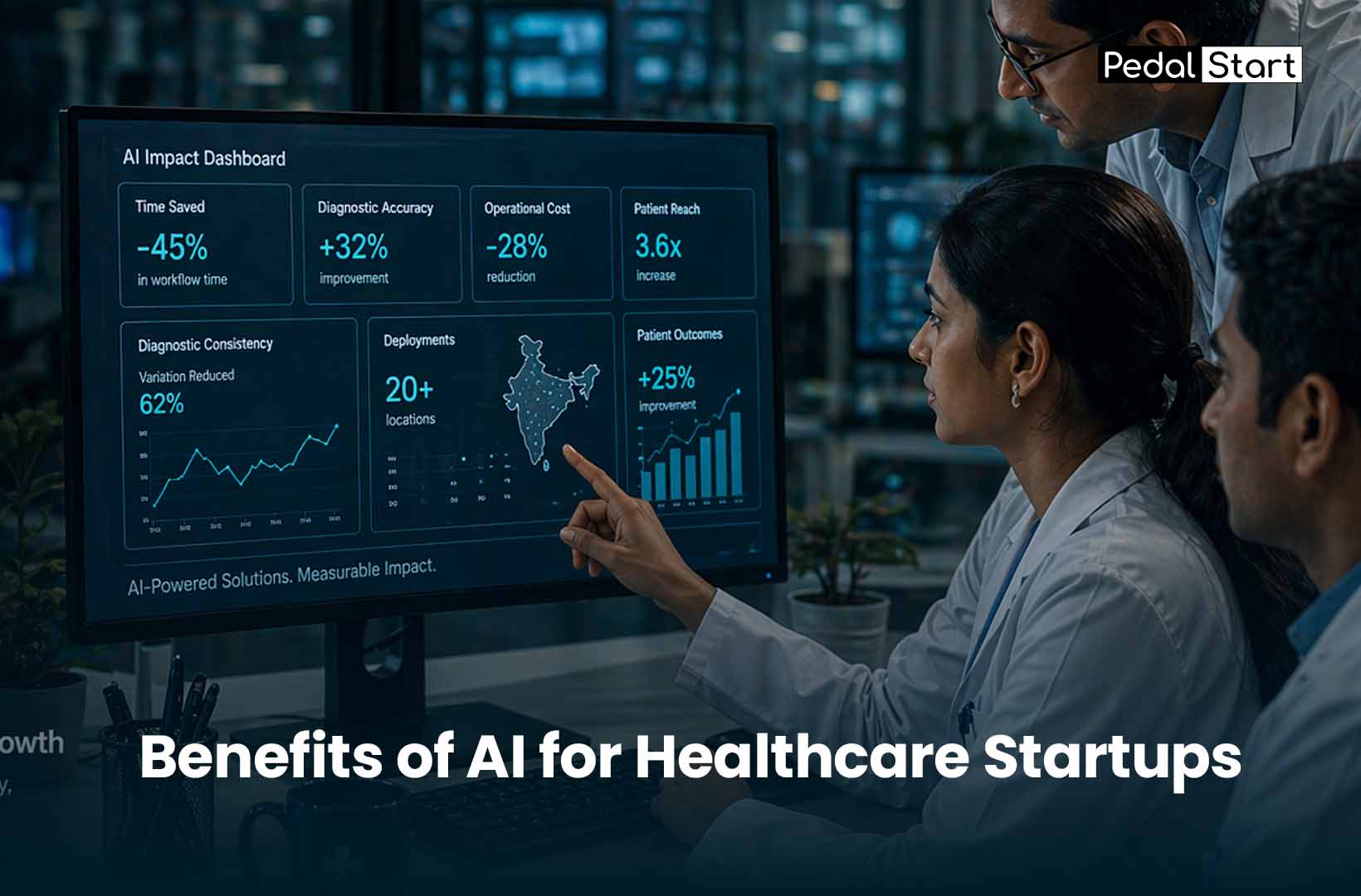
The benefits of AI in the healthcare industry are not just technical. They directly impact how startups grow and operate.
First, there is efficiency. Tasks that earlier required manual effort can now be handled faster, allowing teams to focus on more critical work.
Second, there is consistency. AI-driven systems reduce variation in processes, especially in diagnostics and monitoring.
Third, there is scalability. Once built, these systems can be deployed across locations without proportional increase in cost.
For startups, this combination of efficiency, consistency, and scalability creates a strong foundation for growth.
This is why more healthcare startups using AI are being built with a long-term approach rather than short-term solutions.
Challenges in AI Adoption
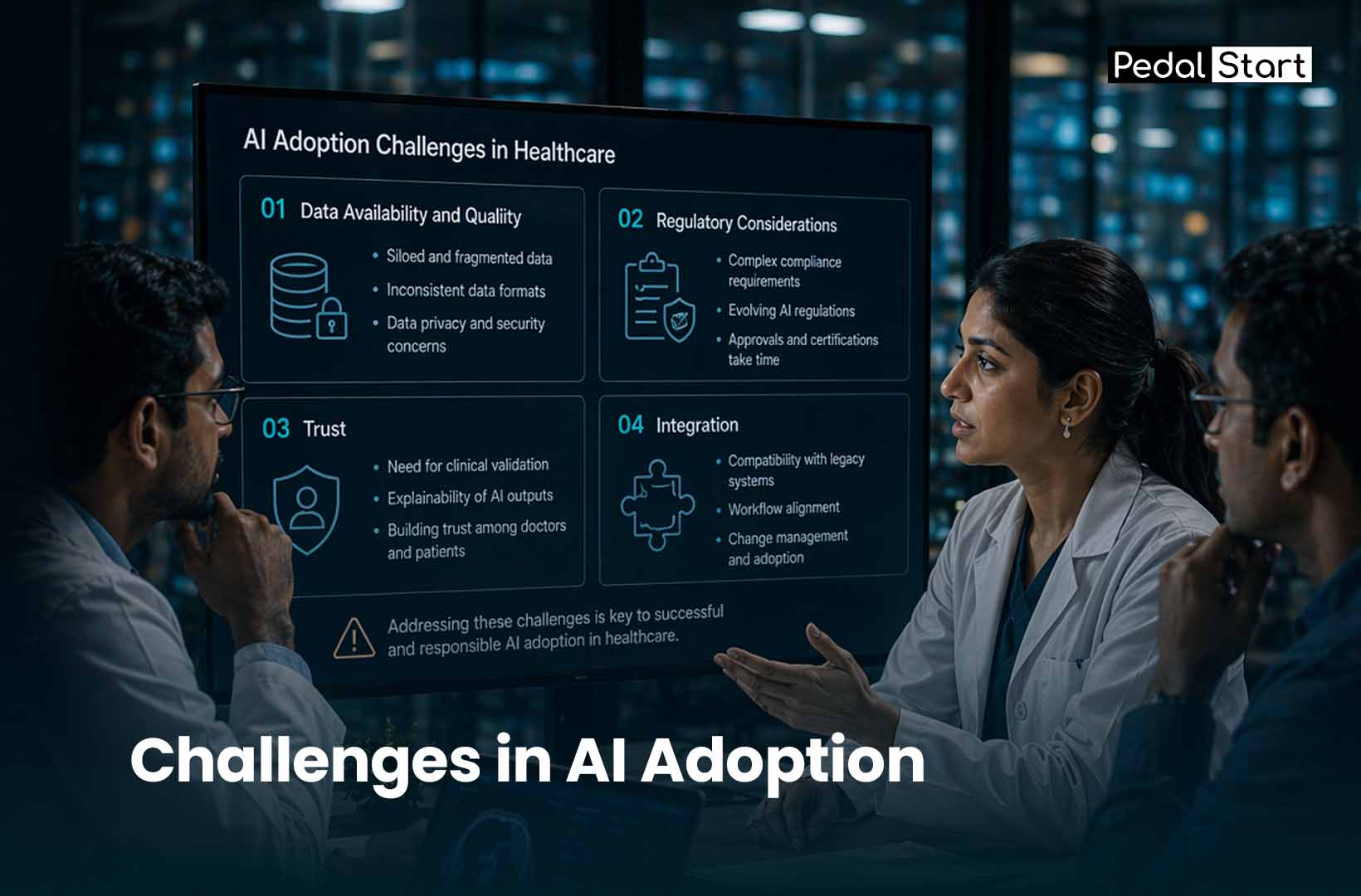
While the opportunity is clear, adoption comes with its own set of challenges.
Data availability and quality remain a major concern. Healthcare data is sensitive and often fragmented, making it difficult to build reliable systems.
Regulatory considerations also play a role. Healthcare is a highly regulated space, and integrating AI requires compliance with evolving standards.
Another challenge is trust. Doctors and patients need to feel confident in the outputs generated by AI systems. This takes time and consistent performance.
There is also the challenge of integration. AI solutions need to fit into existing healthcare workflows rather than disrupt them completely.
For founders, understanding these challenges early is critical to building sustainable solutions.
Future of AI in Healthcare
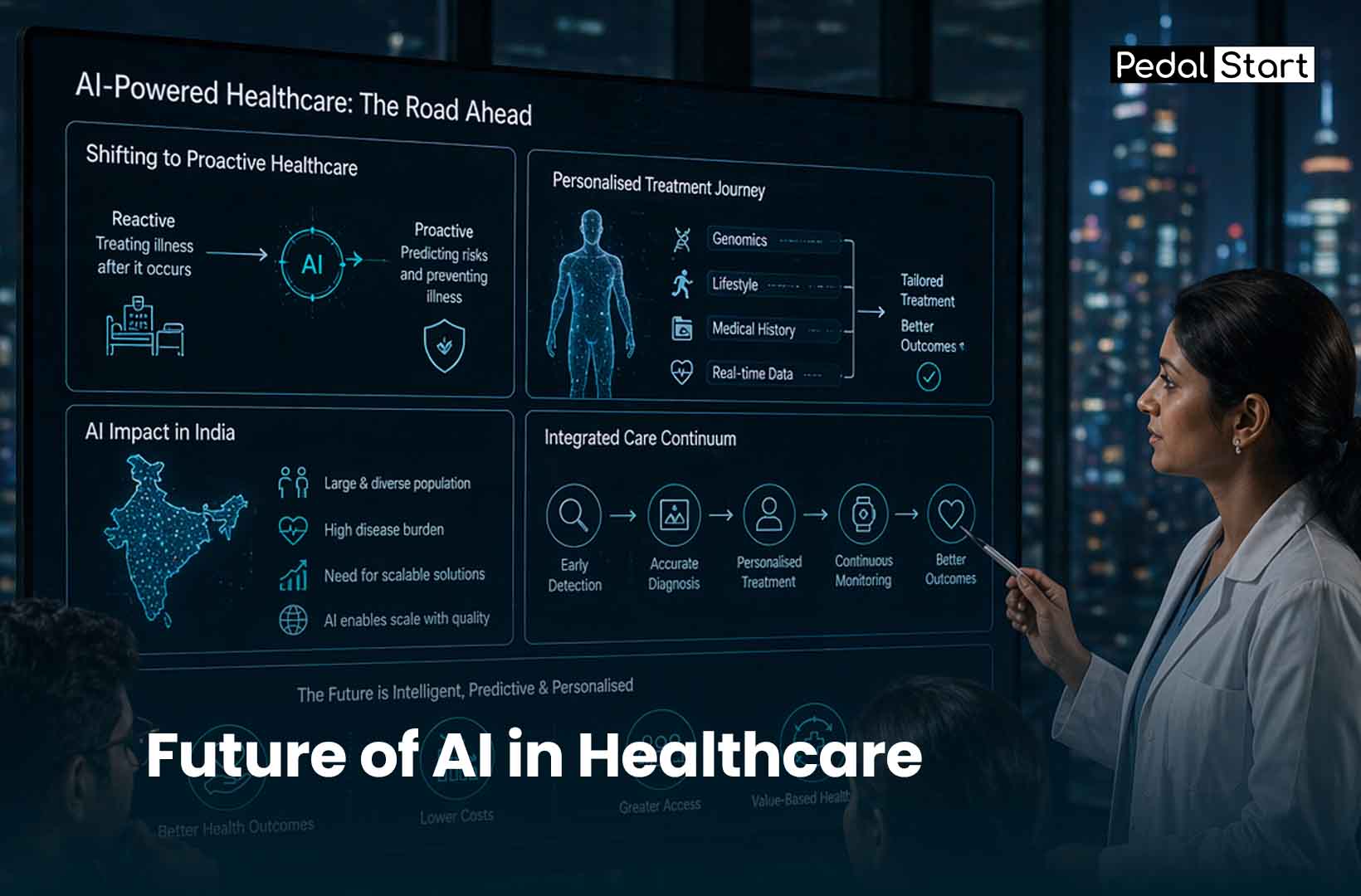
When thinking about what is the future of AI in healthcare, the direction is already becoming visible.
Healthcare is moving from reactive to proactive models. Instead of treating diseases after they occur, systems are being built to predict and prevent them.
Personalised care is another area of growth. AI makes it possible to tailor treatments based on individual patient data rather than generic protocols.
In India, this has even deeper implications. With a large and diverse population, scalable solutions are essential. AI enables that scale without compromising on quality.
The next phase will likely see tighter integration between diagnostics, treatment, and long-term care. Startups that can build across this journey will have a stronger position.
Closing Thought
The conversation around AI in healthcare India is no longer about possibility. It is about execution.
The startups that will stand out are not the ones using AI as a feature, but the ones building it into the core of how healthcare is delivered.
For founders, the question is not whether to use AI, but where it actually improves outcomes. That clarity is what separates meaningful innovation from surface-level adoption.