

A founder once described their customer to us like this: "small and mid-sized businesses that want to grow."
That is not a customer. That is the entire economy.
It is also the fastest way to stall a startup. When you build for everyone, you build for no one.
You spread a small team across ten types of users, ship features nobody asked for, and burn runway chasing deals that were never going to close.
The fix is an ideal customer profile: a sharp, honest answer to the question of who this is really for. Not who could buy, but the ones who need it most.
This guide is the founder version of how to build that profile when you have little or no data yet, how it differs from a buyer persona, and how to use it as your tightest filter for focus.
What is an ideal customer profile?
An ideal customer profile, or ICP, is a clear description of the customer your product is the best possible fit for.
Not everyone who could buy. The ones who need what you built most, get the most value from it, and are the easiest to reach and keep.
For a B2B startup, the ICP describes a type of company. For a consumer startup, it describes a type of person. Either way, it answers one question: who is this really for?
Get that answer sharp, and everything downstream gets easier: product, messaging, sales. Get it vague, and you spread yourself thin across people who will never truly convert.
ICP vs buyer persona: what is the difference?
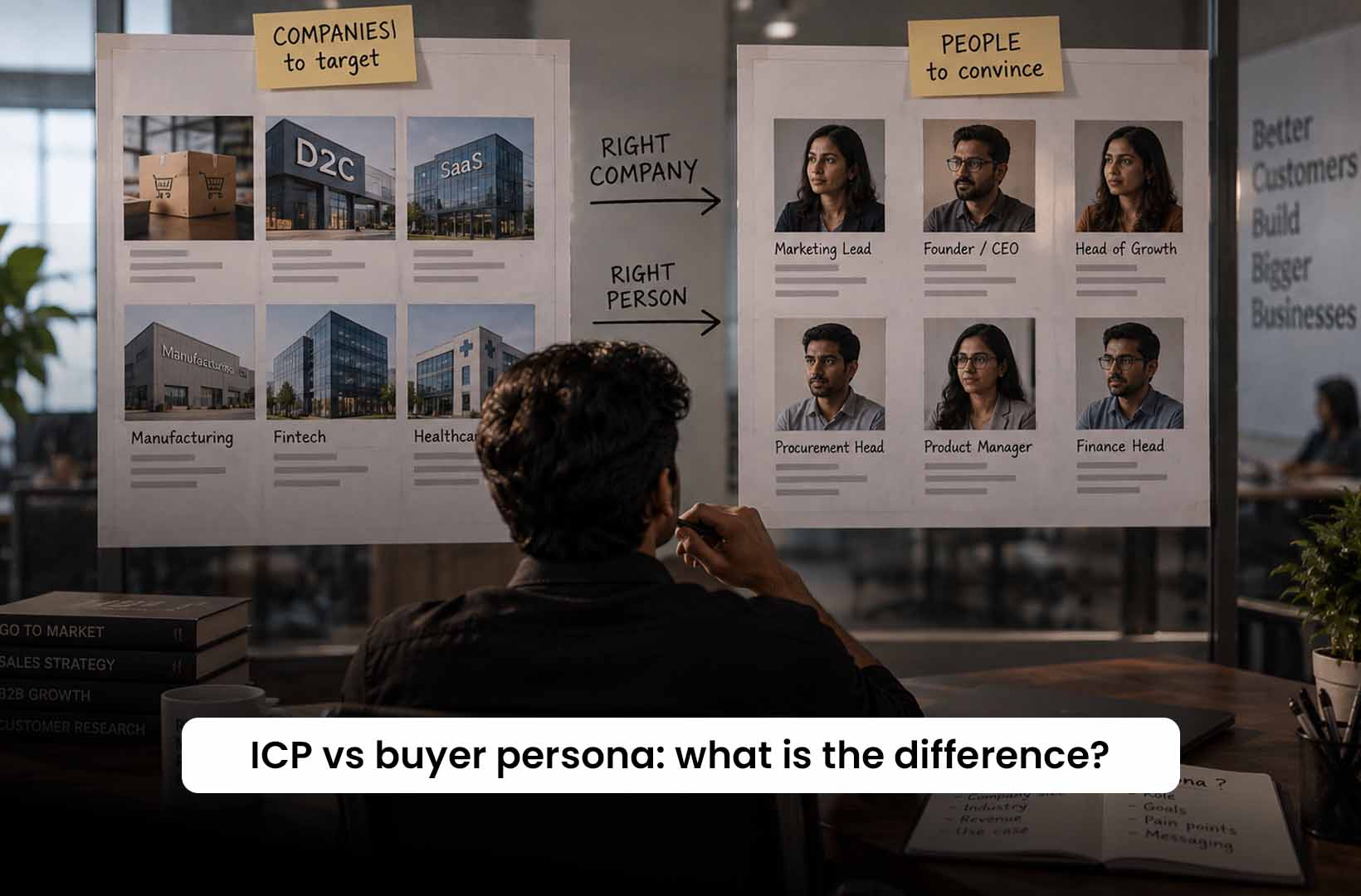
These two get mixed up constantly, and confusing them costs you.
The simplest way to see it: your profile is the company or customer type worth targeting. Your buyer persona is the specific person you have to convince inside that.
Ideal customer profile | Buyer persona | |
Describes | The company or customer type | The individual person |
Answers | Who is worth selling to | Who to convince, and how |
Example (B2B) | Mid-size D2C brands doing ₹5 to ₹50 crore | The marketing lead who signs off |
Example (B2C) | Health-conscious urban buyers, 25 to 40 | The specific person and their motivation |
You need both, but the profile comes first. It tells you which doors to knock on. The persona tells you what to say when they open.
Target the right person at the wrong company, and you still lose.
Why your ICP matters more when you are early
For a big company, a loose ICP means some wasted marketing spend. For a startup, it can mean death.
Here is why. With a vague profile, you try to serve everyone. Different customers want different things, so you end up building ten features for ten types of users, and ten sales pitches to match.
That is how small teams burn their runway building a product that is average for everyone and essential to no one.
A tight profile does the opposite. It gives you permission to say no. No to the wrong customers, the wrong features, the wrong deals.
That focus is often the difference between a startup that finds traction and one that stalls.
It is exactly why defining your profile is one of the first things we work on with founders in PedalStart's Sprint program. Before the sales motion, before the pricing, you have to know who you are building for.
How to build an ICP when you have few or no customers

Most guides say to analyse your best customers. If you have none yet, that advice is useless. Here is how to do it early.
Start with a hypothesis, not a conclusion. At the start, your profile is an educated guess, and that is fine. You will sharpen it with evidence later.
1. Start from the problem. Who feels the pain you solve most sharply? Not who could use your product, but who genuinely needs it. The sharper the pain, the better the fit.
2. Look at your earliest signals. Even pre-launch, you have some. Who signed up for the waitlist? Who leaned in during a customer conversation? Who tried a rough version and came back?
A handful of engaged early users tells you more than a survey of hundreds.
3. Study the market. Look at who competitors and similar products serve, and who complains that existing options do not fit. Gaps in the market are ICP clues.
4. Write a first draft. Describe the customer in plain terms: the type, the situation, the problem, and why you are a strong fit. Keep it to a paragraph.
5. Then validate. Take that draft into real conversations. Do these people actually have the problem, and will they pay to solve it? Every conversation either sharpens the profile or corrects it.
The goal early is not a perfect profile. It is a testable one.
What goes into a strong ICP: B2B vs B2C
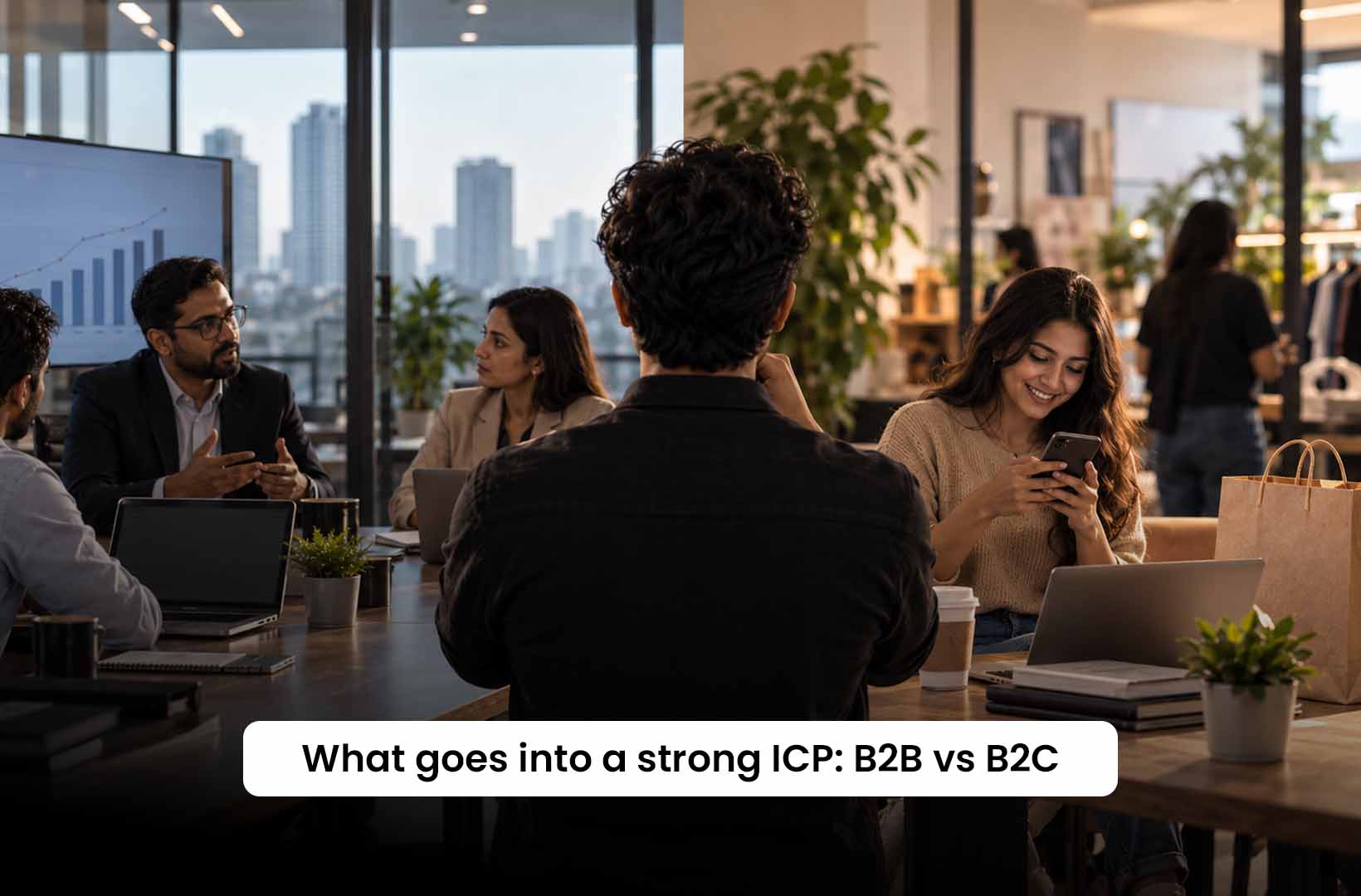
A useful profile is specific enough to exclude people. Here is what to include, depending on what you sell.
For a B2B startup, describe the company:
Industry or category
Size, by revenue, team, or customers
The specific problem they have that you solve
How they buy, and who signs off
Why they are a strong fit for you in particular
For a consumer startup, describe the person:
Who they are: age, life stage, location, income if it matters
Their behaviour and habits around the problem
The specific need or frustration you solve
What makes them likely to pay, and to stay
Notice the last point in each. A strong ICP is not just who has the problem. It is who has the problem, can act on it, and is worth keeping. That is what separates a real ICP from a description of half the market.
The mistakes that ruin an ICP

A few mistakes come up again and again, and they are worth avoiding from the start.
The aspirational profile. The most common one. Founders describe who they wish their customers were: the big logos, the dream accounts, instead of who actually needs and buys the product.
That fantasy sends you chasing companies you will never close, while ignoring the ones that would say yes.
Too broad. If your profile is "any business that wants to grow," you do not have one. You have a description of the economy. Narrow always beats broad early.
One and done. Your profile is a living hypothesis, not a stone tablet. As you learn who actually gets value, tighten the profile. The best founders revisit it constantly.
Confusing it with a persona. Nailing the individual but ignoring which company or segment they sit in. Right person, wrong market, still a miss.
The simple version
Strip it back, and an ideal customer profile is a decision about focus. Who you are for, and by extension, who you are not.
You do not need a sales team or a mountain of data to build one. You need a clear view of the problem, your sharpest early signals, and the honesty to describe who actually needs you, not who you wish did.
Start with a hypothesis. Test it in real conversations. Tighten it as you learn.
The founders who win early are rarely the ones serving everyone. They are the ones who picked a customer, understood them deeply, and built something that customer could not live without.
Key takeaways
An ideal customer profile describes the customer your product fits best: a company for B2B, a person for consumer startups.
An ideal customer profile is different from a buyer persona. The profile is which customer to target; the persona is the individual to convince.
At the early stage, a tight profile is about focus and survival, not marketing. It lets you say no.
You can build an ICP with little data by starting from the problem and your earliest signals, then validating in real conversations.
The biggest mistake is the aspirational ICP: describing who you wish bought, not who actually does.
Frequently asked questions
What is an ideal customer profile? A clear description of the customer your product fits best: the one who needs it most, gets the most value, and is easiest to reach and keep. For B2B, it is a company; for consumer startups, a person.
What is the difference between an ICP and a buyer persona? The ICP describes which customer or company to target. The buyer persona describes the specific individual you need to convince inside that. You need both, and the ICP comes first.
How do you create an ICP with no customers? Start with a hypothesis: who feels the problem most sharply, what your earliest signals like a waitlist or customer conversations suggest, and what the market shows. Write a first draft, then validate it in real conversations.
How specific should an ICP be? Specific enough to exclude people. If it describes most of the market, it is too broad. A good ICP makes it clear who you are not for.
Should a consumer startup have an ICP? Yes. It just describes a type of person, their behaviour, need, and willingness to pay, rather than a type of company.