
Overview of Seed Funding in India and Startup India Seed Fund
Raising your first institutional round is often where the startup journey begins to feel real. Until this point, progress is driven by belief, small wins, and limited resources. A seed round changes that equation. It brings in capital, but more importantly, it brings external validation and expectations.
Seed funding in India has become more structured over the past few years. Alongside angel networks and early-stage funds, government-backed initiatives like the startup india seed fund have expanded access to capital for early founders. The scheme has supported thousands of startups across sectors, with a clear focus on helping companies move from prototype to market entry.
What stands out in the current environment is that capital is available, but not without scrutiny. Investors are not just backing ideas. They are evaluating how clearly a founder understands the market, how early signals are shaping up, and whether the business can evolve into something scalable.
A seed round is not just about raising money. It is about demonstrating that the business has moved beyond assumption and is beginning to show direction.
How to Find Seed Funding Investors in India

One of the most common questions founders ask is where to start. The answer is less about platforms and more about positioning.
Access to seed funding investors in India often comes through three channels. Direct outreach, warm introductions, and ecosystem participation. While cold emails and pitch decks still exist, the highest quality conversations usually come from context. Investors prefer to engage when they have some visibility into the founder’s journey.
This is where networks begin to matter. Founders who actively engage with operator communities, attend curated events, or participate in structured programs tend to meet investors earlier in their journey. Not when they are already raising, but while they are still building.
There is also a behavioural shift among investors. Many are spending more time tracking founders before investing. They observe how decisions are made, how problems are approached, and how consistently progress is demonstrated.
For founders, this means preparation starts well before the actual raise. The narrative, the numbers, and the understanding of the market need to be in place early.
The Role of Start Up Accelerators in Leading a Seed Round
For many founders, navigating this process alone can feel fragmented. This is where start up accelerators play a significant role.
A strong startup mentorship program in India does not just prepare founders for investor meetings. It helps them understand what those conversations should be about in the first place. There is a difference between presenting a business and being ready to defend it.
Accelerators in this category bring three layers of value.
First, they help refine the fundamentals. Positioning, pricing, early traction, and clarity of problem all get sharpened through continuous feedback.
Second, they provide structured exposure. Instead of random outreach, founders get introduced to relevant investors at the right stage of readiness.
Third, they create an environment where founders are not building in isolation. Peer learning, operator inputs, and shared experiences reduce avoidable mistakes.
This combination often shortens the time it takes for founders to move from preparation to actual fundraise.
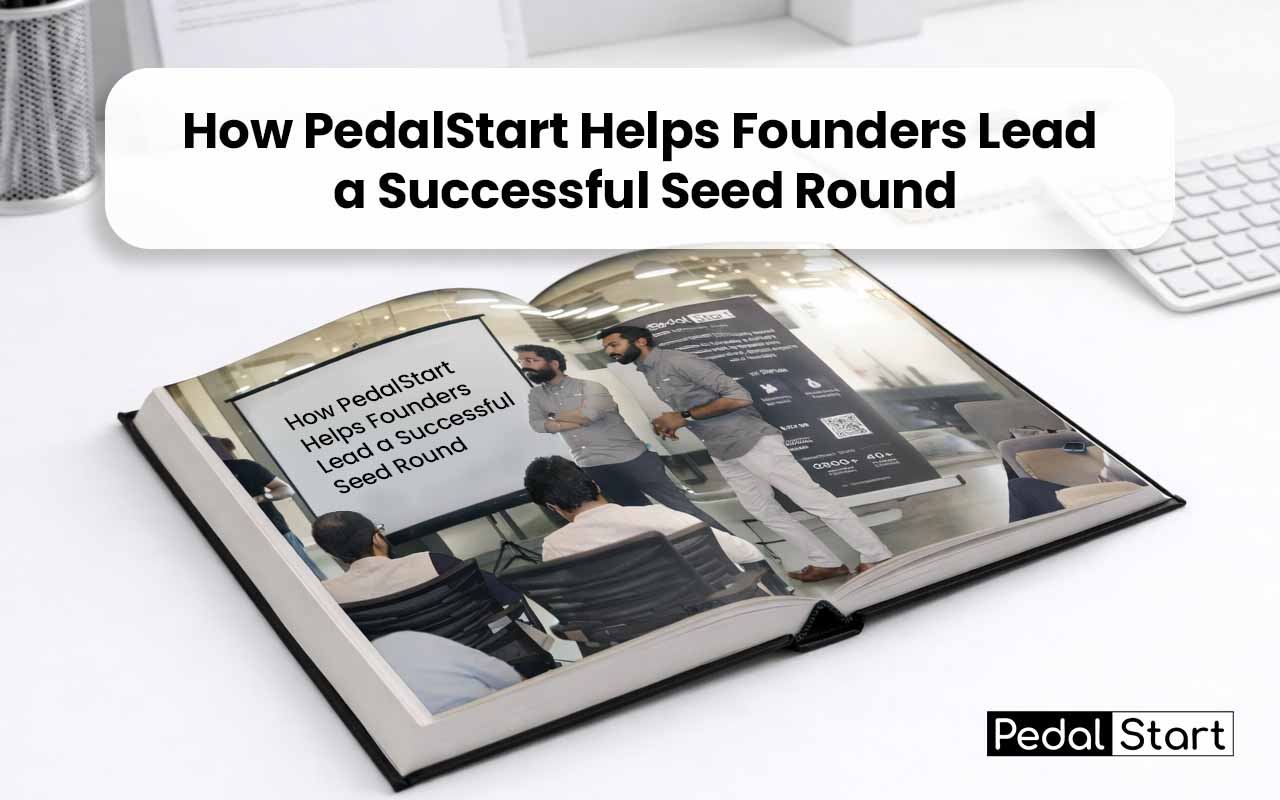
How PedalStart Helps Founders Lead a Successful Seed Round
At PedalStart, a seed round is treated as an outcome of preparation, not the starting point. The work begins by strengthening the business itself. Founders focus on refining go-to-market direction, improving early revenue signals, and building a narrative that stands up in front of seed funding investors in India.
What changes early is access. Founders get connected to a network of 2000+ investors, peer founders and operators across five countries, including leaders and domain experts, who have built at companies like Tesla, Apple, Flipkart, and different commerce models. This exposure often leads to pilot opportunities, early customers, and sharper market feedback even before funding conversations begin.
PedalStart typically invests between 150K to 200K USD, staying sector and stage agnostic with more than 50% of portfolio startups raising follow-on rounds within just 3-6 months, with over 20 funded startups actively scaling and a combined portfolio valuation crossing 40 million dollars.
The approach is simple. Build alongside founders so that when they raise, they do it from a position of strength.
Key Steps to Structure and Close Your Seed Round Successfully
Leading a seed round requires more than interest from investors. It requires structure.
The first step is clarity on how much to raise and why. This is where many founders miscalculate. The round size should be tied to specific milestones, not just a broad sense of growth.
The second step is building a strong narrative. Investors need to understand what problem is being solved, why it matters now, and how the startup is positioned to capture the opportunity. This narrative must remain consistent across conversations.
The third step is preparing for diligence. Clean financials, clear metrics, and transparent communication build confidence. Gaps in information or inconsistent numbers often slow down decisions.
The fourth step is managing timelines. A seed round tends to move better when conversations are active within a defined window. Prolonged, unstructured discussions can dilute momentum.
Finally, closing the round requires alignment. This includes agreeing on terms, setting expectations, and ensuring that both founders and investors are clear on the path ahead.
A well-led seed round does not just bring in capital. It sets the tone for how the company will engage with investors going forward.
Building a company is already complex. Fundraising adds another layer to it. The difference often comes down to preparation, context, and the ability to make informed decisions at the right time.
For founders who approach it with that mindset, a seed round becomes less of a hurdle and more of a step forward.