

Working with nearly 2000 founders till date I have personally noticed how clarity is not a problem for most startup founders but to maintain consistency, is.
Early founders are the most ambitious ones knowing what needs to be done. The priorities are visible, the next steps are not unclear, yet progress slows down, not because of lack of intent, but because there is no system holding that intent in place.
This is where startup accountability starts to matter.
Not as a motivational concept, but as a structure. Something that converts plans into actions and actions into outcomes, even when things get uncertain or uncomfortable.
In the early stage, where there is no external pressure from large teams or institutional timelines, this becomes even more important.
Why Founders Struggle With Consistency

Building a startup requires switching between multiple roles.
One day you are thinking about a product, the next day about sales, then hiring, then fundraising, then operations. Each area feels urgent in its own way.
Without structure, priorities begin to shift based on what feels immediate rather than what matters most.
There is also no fixed feedback loop in the early days.
In a job, timelines are defined, reviews happen, deliverables are visible, but in a startup, especially early on, there is no such system unless the founder builds it.
This creates a gap.
Work gets done, but not always in the right direction. Effort is high, but outcomes do not always reflect that effort.
This is not about discipline in isolation. It is about the absence of a system that reinforces execution discipline for founders on a regular basis.
The Role of Peer Accountability

One of the most effective ways to introduce accountability is through the right peer environment. Working alongside other founders who are at a similar stage creates a natural layer of visibility.
When progress is shared, when challenges are discussed openly, and when timelines are revisited in a group setting, it changes behaviour, making founder peer groups become valuable.
Not as networking spaces, but as working environments.
When founders commit to goals in front of peers, there is a different level of follow-through. Not because of pressure alone, but because of shared context. Everyone understands what it takes to move forward.
Peer groups also bring perspective.
Sometimes, what feels like a complex problem becomes clearer when someone else who has faced something similar shares how they approached it.
That exchange shortens cycles of confusion and helps founders move faster with better judgment.
Using OKRs in Early-Stage Startups
There is a perception that structured goal systems are meant for larger companies.
But wouldn’t it be more useful when things are less structured.
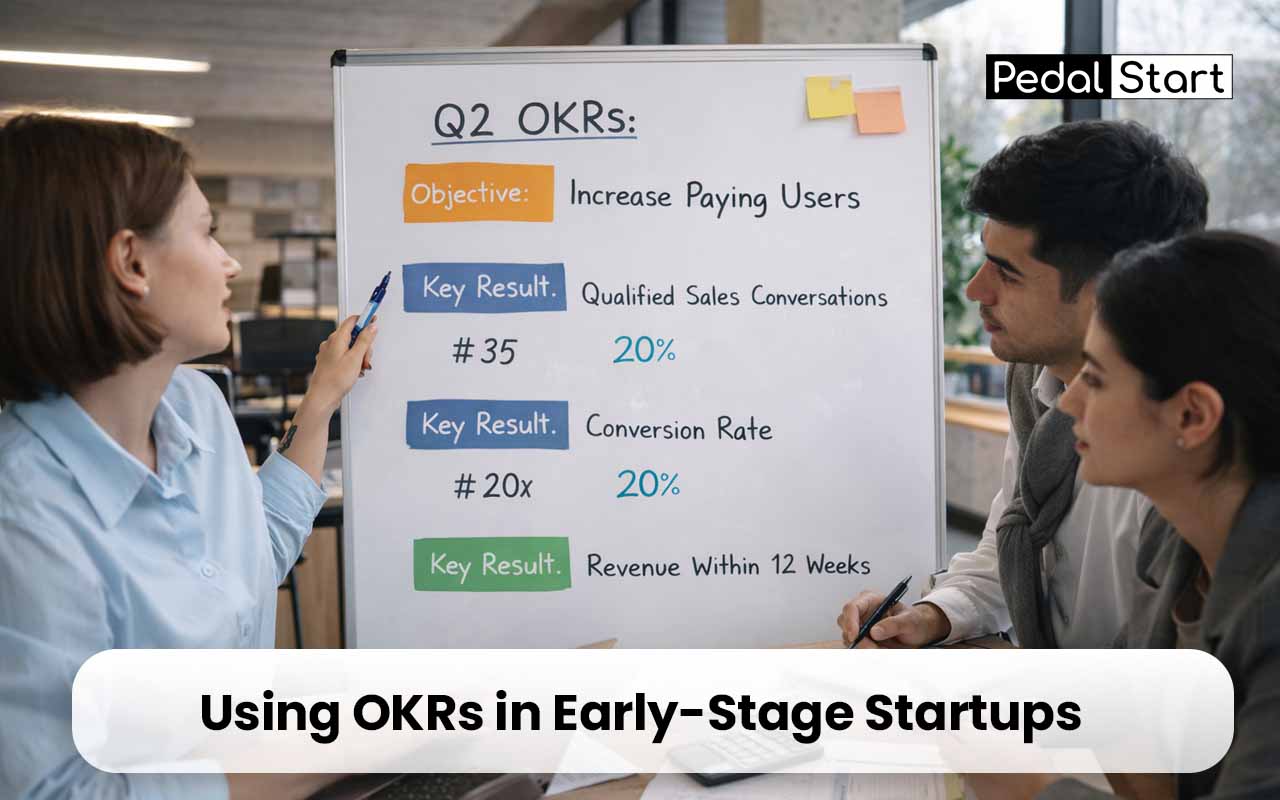
A simple startup OKR framework can bring clarity to what needs to be achieved in a given time period.
The idea is not to create detailed planning documents or micro-management. It is to define direction.
What are the two or three outcomes that matter most in the next few weeks? How will you measure progress against them?
That is often enough.
For example, instead of saying “improve sales”, the focus becomes specific.
Number of qualified conversations, conversion rate from conversation to paying user, revenue generated within a defined period, tThis level of clarity helps founders prioritise better.
It also makes review simpler. You either moved the metric or you did not. The conversation then becomes about what changed and what needs to adjust.
Because the goal should not be perfection, but alignment.
Execution Frameworks That Work
Beyond goals, there needs to be a rhythm.
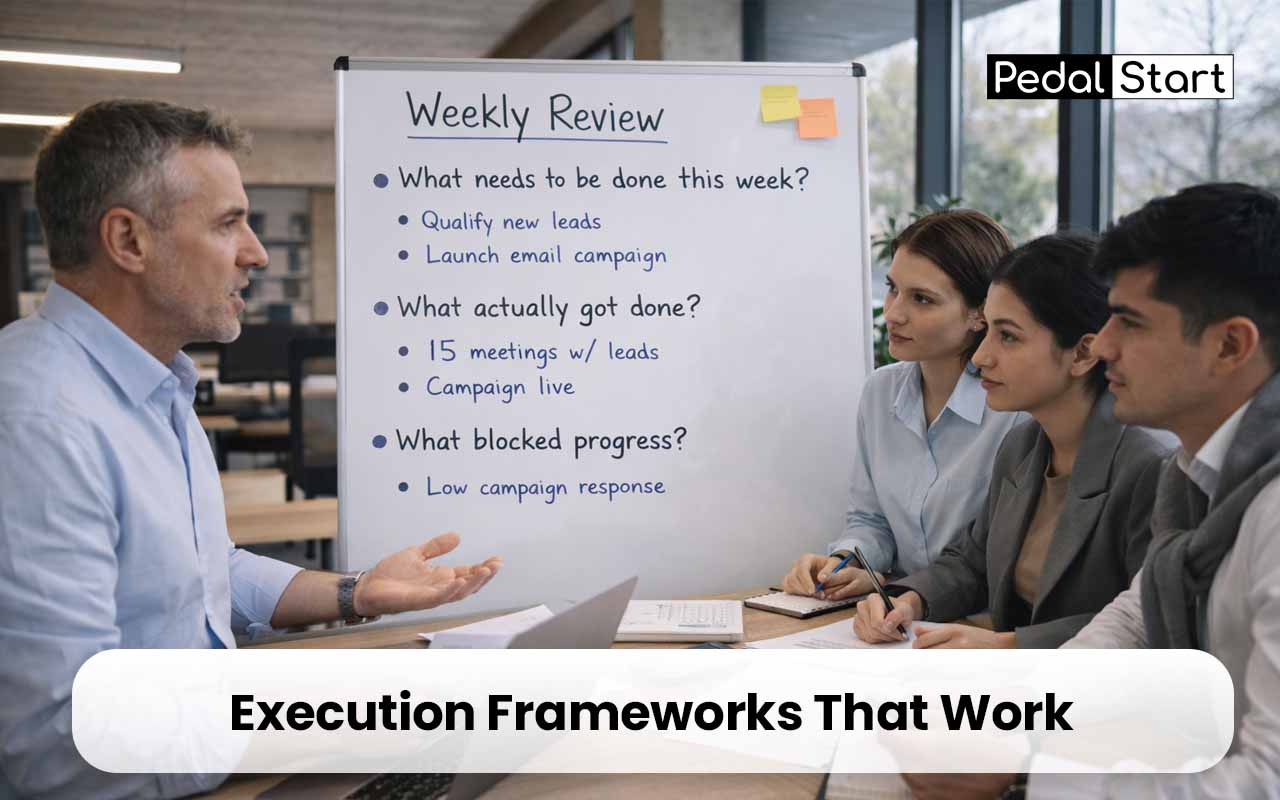
Weekly reviews, check-ins, and simple tracking systems can create that rhythm without adding complexity.
One approach that works well in early stages is breaking down goals into weekly commitments.
What needs to be done this week? What actually got done? What blocked progress
These three questions, when answered consistently, build momentum, which even I use within the PedalStart team.
Another important layer is external review.
When someone outside the founding team looks at your numbers, your progress, and your decisions, it brings objectivity.
This is where operators or experienced builders add value. They do not just give direction. They ask questions that force clarity.
Over time, this creates a system where decisions are not made in isolation.
It strengthens startup growth systems by connecting planning, action, and review into a continuous loop.
How Structured Support Drives Results
Support without structure often feels helpful but does not always translate into progress. Advice is shared, ideas are discussed, but without follow-through, the impact remains limited.
Where structured support changes that.
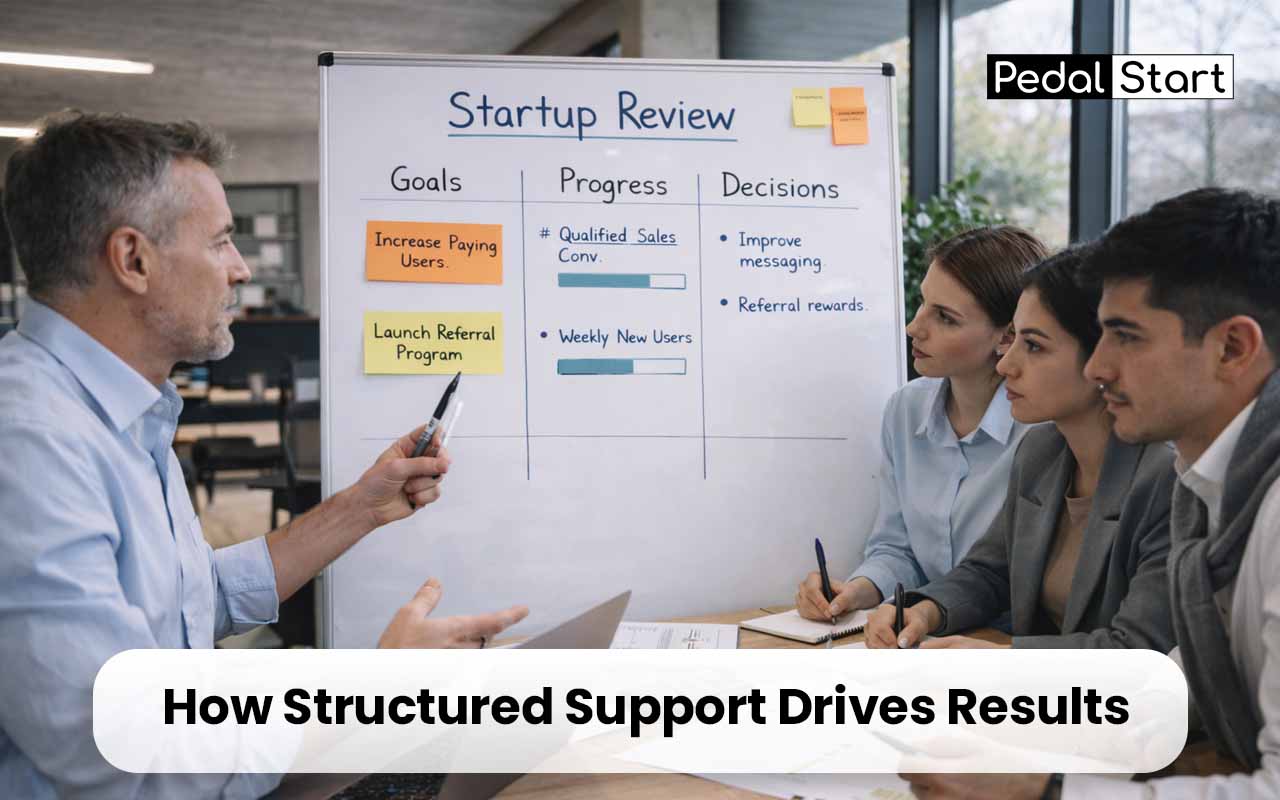
When founders create an environment where goals are tracked, progress is reviewed, and decisions are questioned, outcomes begin to look different.
There is more focus, fewer distractions, faster correction when something does not work, making startup accountability practical.
It is not about being monitored. It is about being supported in a way that keeps you moving.
From experience, founders who operate within such systems tend to move with more clarity. They do not necessarily work more hours, but the work they do is better aligned with what the business needs at that stage.
Building a startup will always involve uncertainty.
Plans will change. Assumptions will break. New challenges will come in without warning. Accountability does not remove that uncertainty. What it does is ensure that despite the uncertainty, progress continues bringing the whole difference.
Not just working hard, but working in a way that consistently moves things forward.