
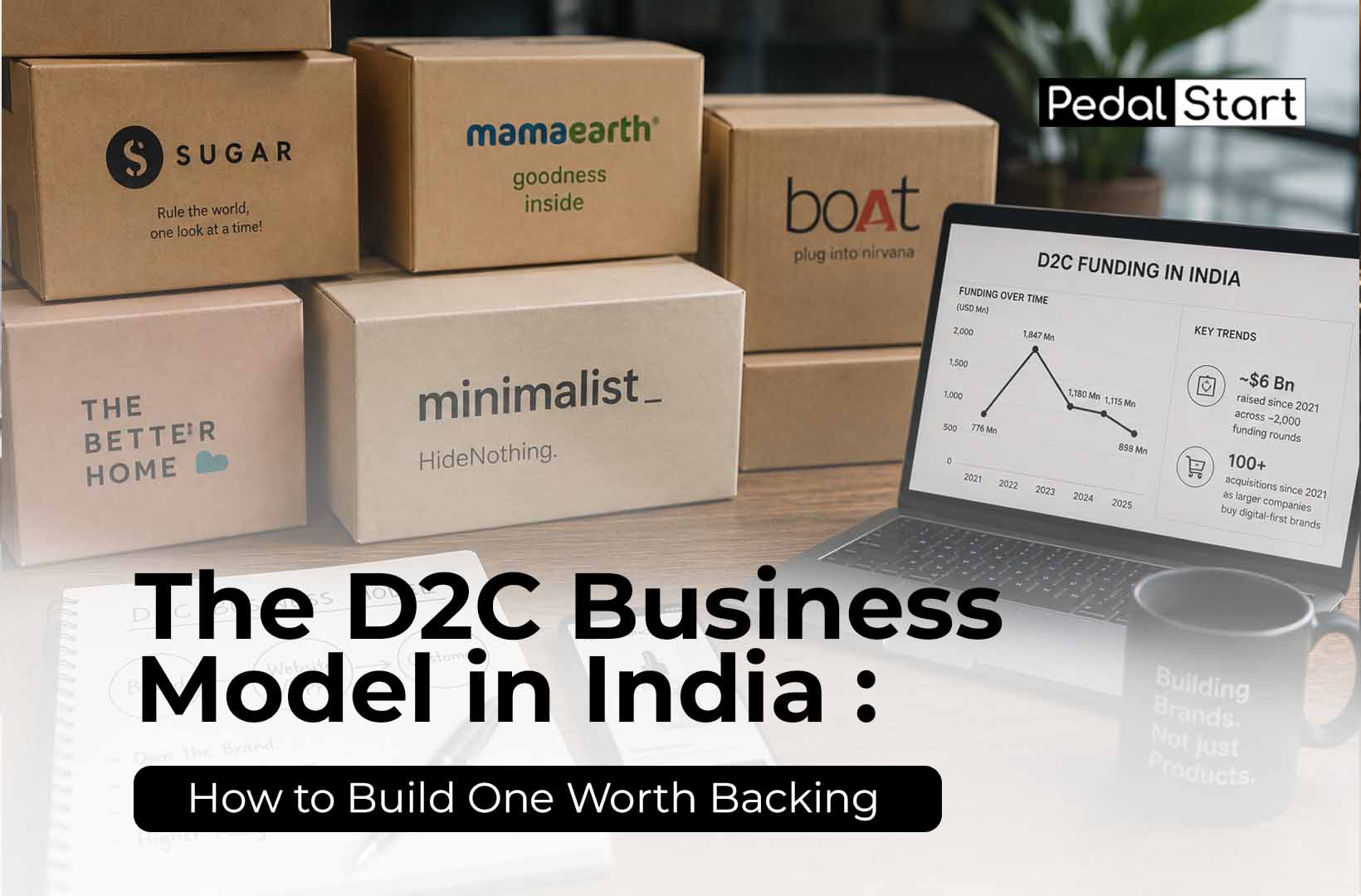
India's direct-to-consumer brands have raised close to $6 billion since 2021, across roughly 2,000 funding rounds, according to Tracxn.
But the money is behaving differently now. The boom peaked back in 2022. Funding then cooled and steadied, landing at around $898 million in 2025.
The market has also entered a new phase. It is shifting toward public listings and strategic buyouts, with more than 100 acquisitions since 2021 as larger companies buy up digital-first brands.
What is left is a harder question. Does the business actually work?
That question is really about the D2C business model. How these brands make money, what it costs them, and why most of them struggle to turn a profit.
This guide breaks down the D2C business model in India. The numbers that decide if a brand survives, and what makes one worth backing.
It is written for founders building one, and for anyone deciding if they should fund one.
What is the D2C business model?
D2C stands for direct-to-consumer. The D2C business model is simple to state: a brand sells straight to the customer, with no distributor, wholesaler, or retailer in between.
Think of a skincare or nutrition brand that sells through its own website and app, and through delivery platforms, rather than pushing stock into shops.
By cutting out the middlemen, the brand keeps more of each sale. It also owns the customer relationship. The data, the reviews, the repeat purchase, all the things a traditional FMCG brand never sees.
That ownership is the real promise of the model. It is also the source of its hardest problems.
How do D2C brands make money?
A D2C brand makes money the way any product business does. It sells a product for more than it costs to make and deliver.
The difference is where the margin goes.
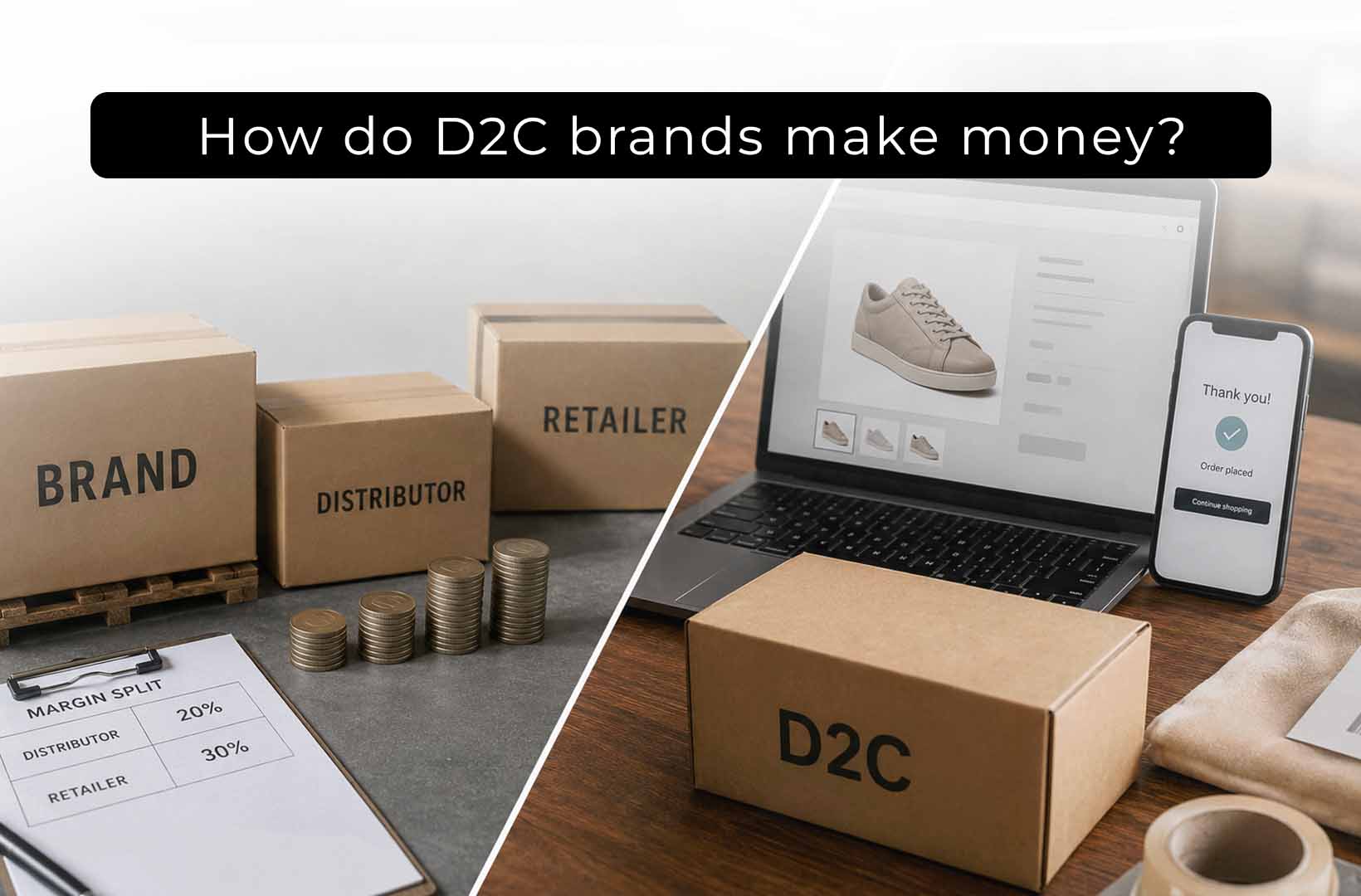
In the old model, a brand sells to a distributor at a discount. The distributor and the retailer take their cut. The brand collects its money and moves on.
In the D2C model, the brand owns the whole chain. From the first click to the final delivery.
So it keeps the distributor and retailer margin. But it also pays every cost in between. The website, the ads, the packaging, the shipping, the returns, the payment fees.
That is the trade. Higher margin per sale, but far more cost to carry. The model only works if the maths on each order holds up.
The unit economics that make or break a D2C business
This is where most D2C brands live or die. Not on revenue. On unit economics, the profit and cost of a single order.
Here are the numbers that decide it.
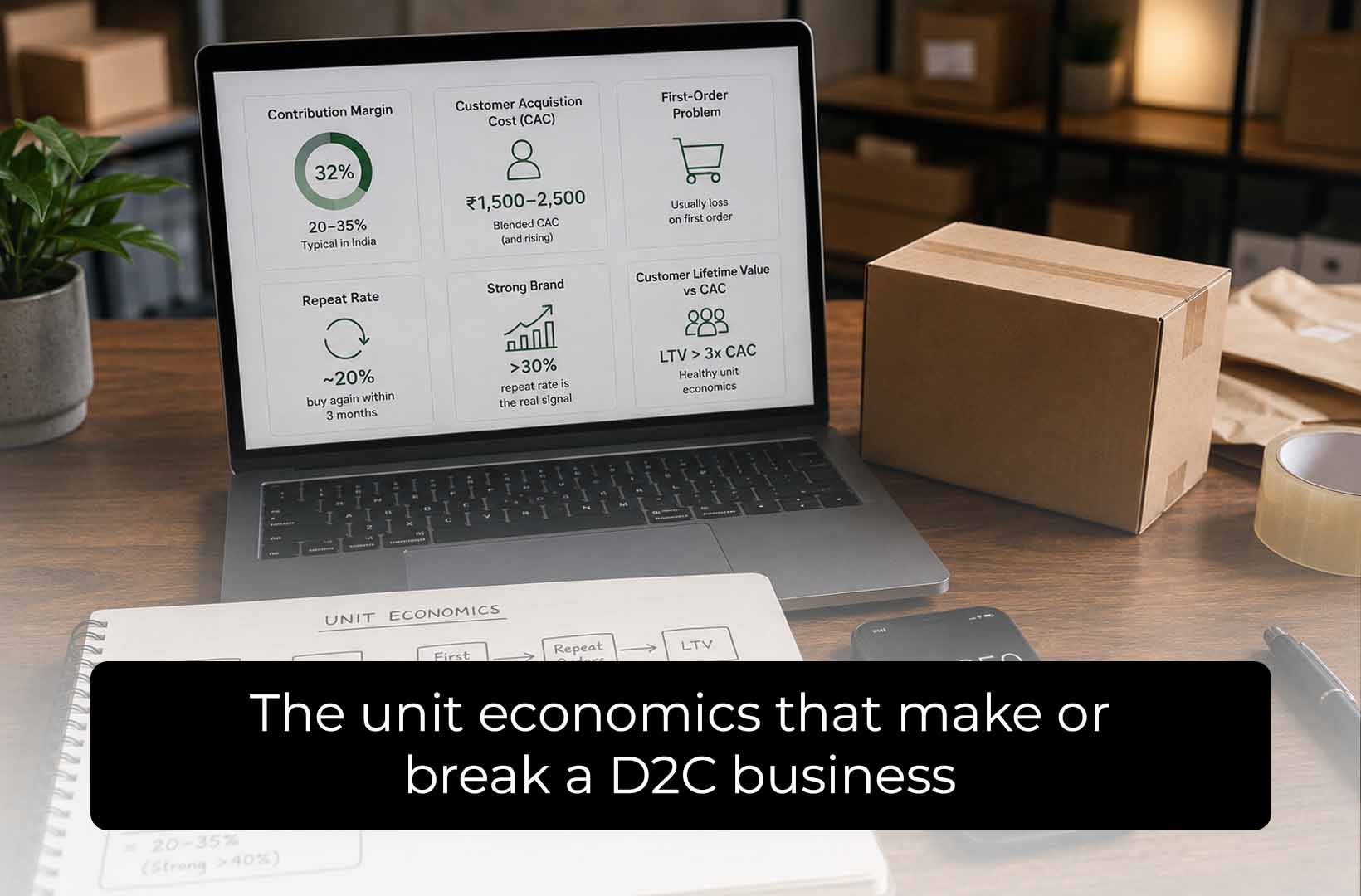
Contribution margin. What is left from an order after you subtract the product cost, shipping, returns, and platform fees. In India, it commonly sits at 20 to 35%. The strong brands push past 40%, and that is where serious investors start paying attention.
Customer acquisition cost (CAC). What you pay in ads to win one customer. For many Indian brands, the blended CAC runs ₹1,500 to ₹2,500, and it keeps climbing as ad costs rise.
The first-order problem. Most of these brands lose money on the first order by design. The cost to acquire the customer is higher than the profit on their first purchase. So the model only works if that customer comes back.
Repeat rate. This is the whole game. Only around 20% of first-time customers buy again within three months. A brand that gets a repeat rate above 30% has something real. One that does not is just renting customers from Meta and Google.
Payback and lifetime value. How long it takes to earn back the CAC, and how much a customer is worth over time. A loyal customer can be worth several times a one-time buyer, because repeat purchases cost almost nothing to win.
Put simply: a brand is a good business when customers come back cheaply and often. When they do not, more ad spend just loses money faster.
The same discipline applies to managing your runway. A brand burning cash on acquisition has less room to fix the model.
How quick commerce changed the D2C model
For years, the hardest part of building a consumer brand in India was distribution. Getting onto shelves across the country took decades and deep pockets.
Quick commerce changed that.
Ten-minute delivery apps are now a fast-growing slice of how India buys everyday products. Quick commerce is around 4% of food and grocery retail today, and Redseer projects it could reach close to a fifth of the market by 2030.
For a young brand, that is shelf access without the twenty-year build. A brand can reach millions of customers through these apps, with no distributor network at all.
The catch is that the shelf belongs to someone else. The platform sets the terms, takes a cut, and owns the customer data.
So quick commerce solves distribution. But it can squeeze the very margins the model depends on.
What makes a D2C startup fundable?
The bar has moved. A few years ago, fast revenue growth was enough to raise. Not anymore.
Today, investors and acquirers pay for a path to profit, not just a big top line.
The clearest proof is who is getting bought. India's direct-to-consumer sector has seen more than 100 acquisitions since 2021, and the pace picked up in 2026 as big consumer companies bought digital-first brands.
In early 2026, Hindustan Unilever took full ownership of the nutrition brand OZiva at a valuation of around ₹1,682 crore. USV bought a 79% stake in Wellbeing Nutrition, and Marico took 60% of Cosmix.
What did these brands share? Not just growth. OZiva had nearly tripled its revenue while cutting its losses by about 90% in a single year.
Acquirers paid for brands that were scaling and closing in on profit. Not brands simply spending to grow.
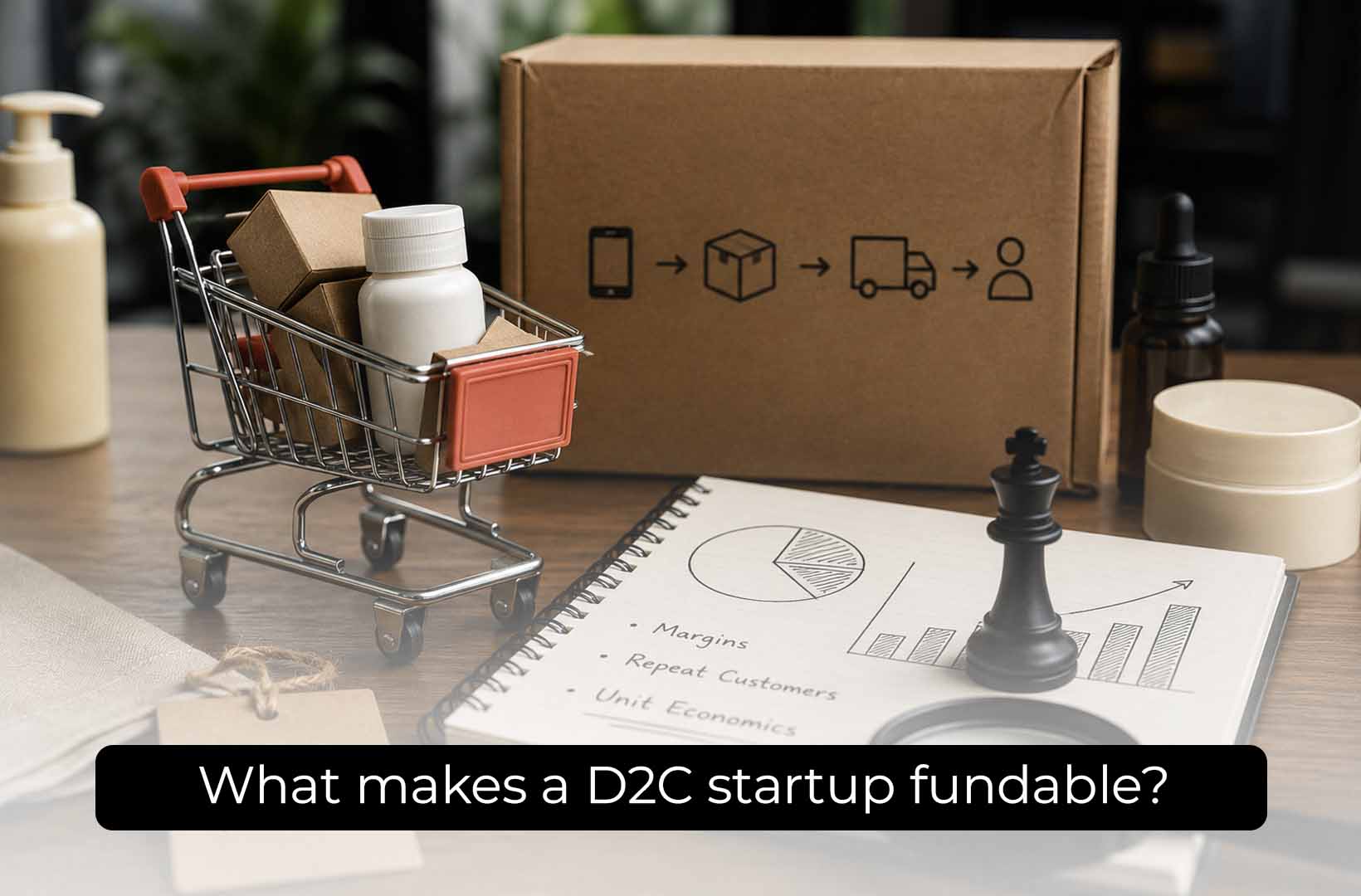
So what makes one fundable comes down to a few things:
Strong unit economics, especially contribution margin and repeat rate.
A real brand, not just performance-marketing spend.
A category with room to grow and some pricing power.
A path to profit the founder can actually explain.
This is the lens we apply at PedalInvest as well. A brand with a loyal, repeat customer base and honest margins is fundable.
One growing only on discounts and ad spend is not, however fast the top line moves. It is the same thing investors look for across most early-stage businesses.
The risks that kill D2C startups
Most of these brands do not fail from a lack of demand. They fail from the model itself.
The common killers:
Thin margins. If contribution margin is too low, scale makes the losses bigger, not smaller.
Ad dependence. A brand that only grows by spending more on Meta and Google has no real moat. When ad costs rise, the model breaks.
Discount addiction. Training customers to buy only on offer destroys margin and loyalty at the same time.
Platform dependence. Leaning on quick commerce or marketplaces means someone else owns your customer and sets your terms.
Regulation. For brands built on a health or nutrition claim, one rule change can hit hard. When India's food regulator restricted the "ORS" label in late 2025, that category shrank sharply within months.
The simple version
The D2C model gives a brand something powerful: the full margin and a direct line to the customer. But it hands back every cost in return, and that is where most brands come undone.
A D2C business works when the numbers behind a single order work. Enough margin, a customer who comes back, and acquisition that pays for itself over time.
Everything else- the funding headlines, the quick-commerce shelves, the buyout offers- follows from that.
Get the unit economics right, and the model is one of the best ways to build a consumer brand in India today. Get them wrong, and no amount of growth will save it.
That is the whole test, for anyone building one or deciding to back one.
Key takeaways
The D2C business model means selling straight to the customer, with no distributor or retailer in between.
The brand keeps more margin, but carries every cost, from ads to shipping to returns.
Unit economics decide survival: contribution margin, acquisition cost, and above all repeat rate.
Most D2C brands lose money on the first order, so they only work if customers come back cheaply.
Investors and acquirers now pay for a path to profit, not just fast growth.
Frequently asked questions
What is the D2C business model? A model where a brand sells directly to customers through its own channels, cutting out distributors and retailers, and keeping the full margin and the customer relationship.
How do D2C brands make money? By selling a product for more than it costs to make and deliver, while owning every step and every cost from the first click to the final delivery.
Why do so many D2C brands lose money? Most lose money on the first order because acquisition costs are high. They only turn profitable if customers come back, which many do not.
What unit economics matter most in D2C? Contribution margin, customer acquisition cost, and repeat purchase rate. A repeat rate above 30% and a contribution margin above 40% point to a healthy brand.
Is D2C a good business in India? It can be, for brands with strong margins and loyal repeat customers. For those growing only on ads and discounts, the model rarely works.